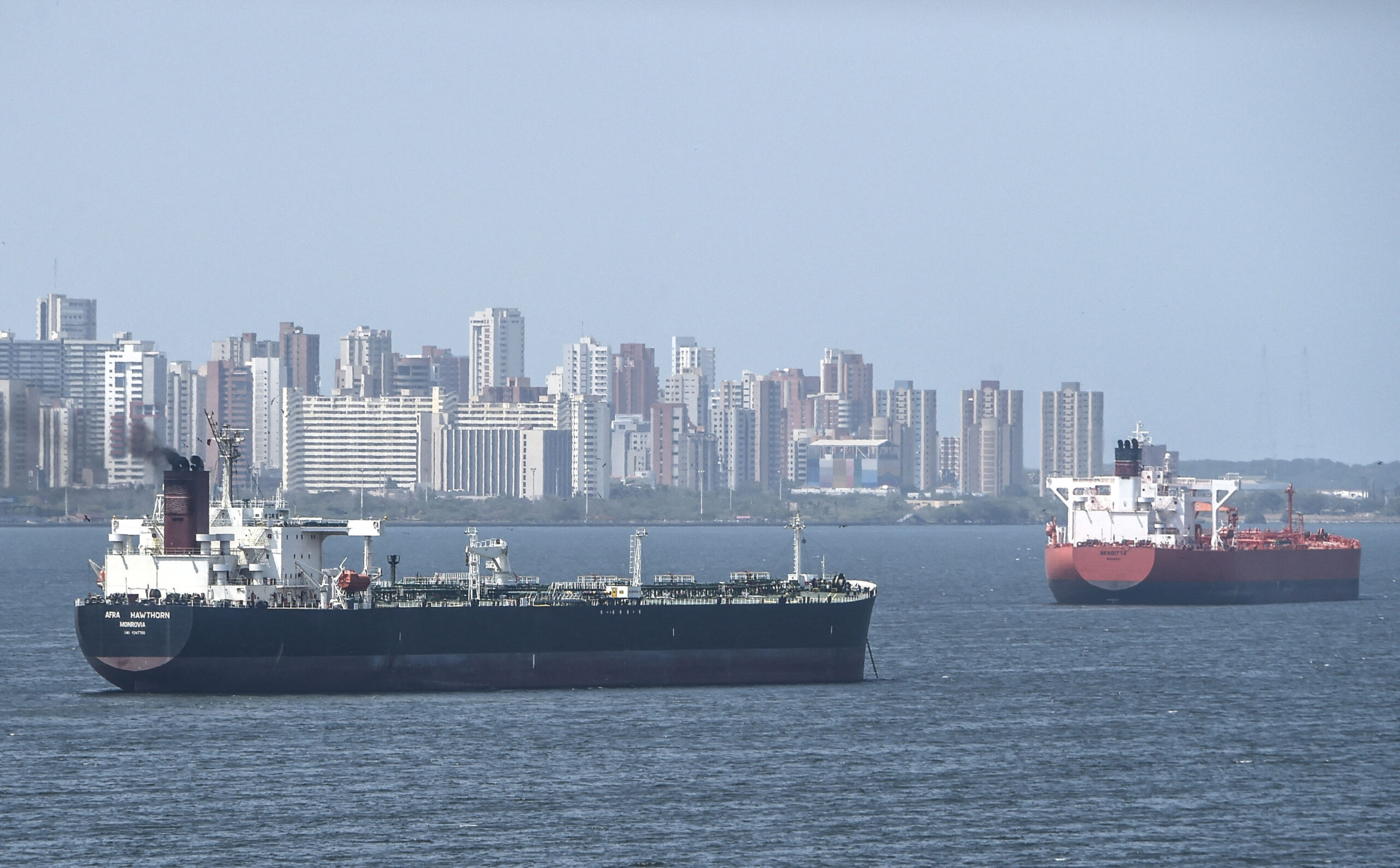
Venezuela could stop producing 300,000 barrels per day and have less dollars to contain the devaluation. But what other effects would trigger the suspension of the oil licenses announced by the president of the United States, Donald Trump? We consulted experts and this told us.
Venezuela could stop producing about 300,000 barrels per day, 25 % of its production, and have less dollars to contain the devaluation, after the United States's decision to revoke oil concessions that allow the giant Chevron Corp. pumping and exporting Venezuelan oil.
For the oil economist and analyst, Rafael Quiroz Serrano, this “would have an effect and impact basically on Venezuelan oil production, as it would be reducing it around 650,000 barrels per day, because you have to subtract the 280,000 barrels per day that Chevron is producing, and that represents 25 % of all Venezuelan oil production”.
The non -renewal of licenses to Chevron by the United States as of March 1, 2025 is due to the “breach of electoral and immigration agreements by the Government of Nicolás Maduro”.
“I order that the ineffective and breached 'concession agreement' of (Joe) Biden is terminated from the renewal option of March 1,” said President Donald Trump, on Wednesday, in a Publication in Truth Social.
“While PDVSA could assume the production of short -term Chevron, progressive deterioration is expected at production levels from 2026. Venezuela will lose access to the US market, which will force PDVSA to look for new markets and possibly resort to the black market,” said the firm Albus Data, in a text message shared to customers.
The license expanded to Venezuelan oil had been approved by the administration of Joe Biden in November 2022.
Neither the Department of the Treasury nor the White House have still published the text that ends the license, so Chevron would have until August to close its operations in the country.
“The effect is not so great”
“The effect is not so great,” explains the energy and financial consultant Gilberto Morillo, former manager of Petroleos de Venezuela, PDVSA. “In the sense that all the oil that Chevron took (…) was taken to the United States, an oil that was not given to PDVSA.”
And “I would not be at all affecting the national treasury, that is, the income that the State receives for oil production and export,” says Quiroz
Experts, remember, for example, that said license had been granted “with conditions.”
The authorization granted in 2022by the Joe Biden administration, it prevented PDVSA from receiving profits for oil sales from the Chevron subsidiary.
Then, “the entire oil bill, except, of course, of the payroll and payments of some instruments on the platforms and installed in the production wells, all that would go to cushion the debt that Petróleos de Venezuela has with Chevron.”
“So it is not true that that would directly affect the Venezuelan population,” says Quiroz.
Experts emphasize that the Venezuelan State “does not have been receiving any penny (…) any income in terms of oil exploitation by Chevron.”
According to Quiroz, “only Chevron is pointed out to have granted 300 million dollars last year, but that was via commissions and others and practically almost violating the license he had received from the US government.”
Less dollars “to contain the devaluation”
However, Morillo, former manager of Petroleos de Venezuela, clarifies that the revocation of the license to the Chevron company could affect the currency market in the country.
“Chevron needed dollars in Venezuela to pay salaries, pay contractors all their local activities. Then those dollars were sold by the Central Bank and obtained bolivars. ”
“That helped the exchange rate because the Central Bank had more dollars and could offer them to the market to contain the devaluation, which has been quite difficult,” he explains.
“Now, without those dollars of Chevron that they used to maintain, which are not all their income, but a small part to maintain the operation in Venezuela, pay contractors the salaries, salaries, local taxes, because then we will not have that income and there could be an effect on the very important exchange market,” he continues.
“Harmful and inexplicable”
The Maduro administration rejected the decision of the US on Wednesday and described it as “harmful and inexplicable.”
“By announcing sanctions against the American company Chevron, pretending to do damage to the Venezuelan people, in reality damage to the United States, its population, and its companies, also calling into question, also calling into question the US legal certainty in its international investment regime,” Rodriguez said in written communication.
In addition, he said, “these types of failed actions promoted migration from 2017 to 2021 with the widely known consequences.”
It is not clear what will happen to contracts with other oil companies such as the French Maurel & Prom and the Spanish Repsol, who also operated under licenses. But if reached by revocation could worsen the situation of Venezuelan oil production