
GDR escape films and works in which the topic Escape(plans) occurs at least marginally, are a long-running favorite in this country. However, in terms of quality, they are as different as the way they are implemented. Roland Suso Richter’s gripping event two-parter “The Tunnel” (2001) is unforgettable, as is Michael Bully Herbig’s “Ballon” from 2018. Both productions work excellently as entertaining, stylishly staged thrillers. The cliché-laden East-West examination “The Wall Between Us” (2019) and the political melodrama with few surprises “We Wanted to Go to the Sea” (2012) are significantly weaker. Two films that showed how the well-known subject can be processed. Namely as a coming-of-age love film and as a political melodrama.
“Village Punk” director Lars Jessen, who is filming here again with his star Charly Hübner after the hit film “Mittagsstunde”, is taking a different path stylistically and in terms of genre approach with “Walk to Syracuse”. The 57-year-old from Kiel directed his seventh feature film as a mix of documentary character study, travel report and tragicomedy about a protagonist suffering from wanderlust. He used the story “The Walk from Rostock to Syracuse” by Friedrich Christian Delius (1995), which is based on true events, as a model. Jessen’s film is the opposite of “The Tunnel” or “Balloon” in that the suspense elements are kept to a minimum. The film, which is entirely tailored to the psychology of its most beloved, laconic main character, has a cast that is in top form.
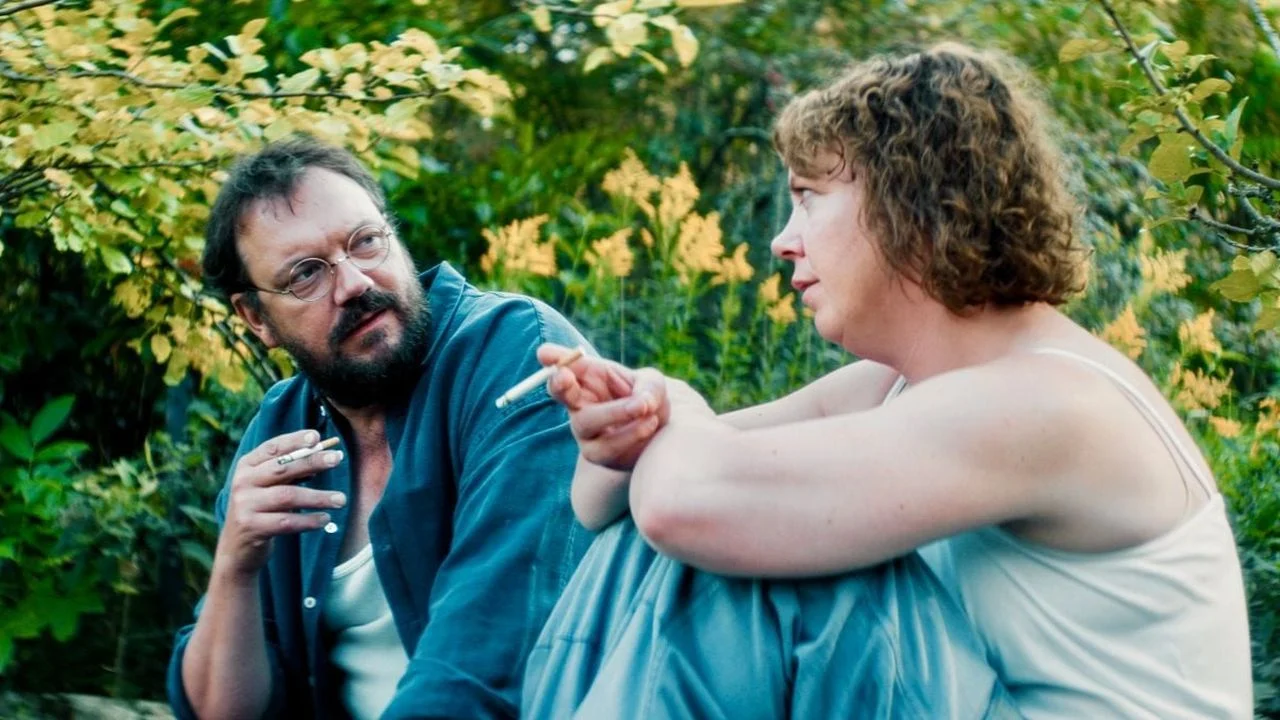
The biggest challenge for Paul (Charly Hübner), who wants to escape, is that his wife is not allowed to find out about his plans for her own protection.
Paul Gompitz (Charly Hübner) from Rostock has a wish: he finally wants to leave the stuffy GDR and visit his dream place of Sicily. He was inspired to do this by the poet Johann Gottfried Seume, who once hiked thousands of kilometers to Syracuse. But this undertaking is easier said than done for Paul. After all, it is 1982 and the state leadership is planning a maximum holiday on Lake Balaton or the Baltic Sea for its long-suffering citizens. But Paul sticks to his goal and plans to escape. In order not to make his wife Anne (Lina Beckmann) an accomplice, he doesn’t tell her about his plans. He prepared for the adventure for many years until he got on the boat in 1988.
It takes almost seven (!) years from the first plans to the actual implementation. Before that, Paul first has to put money aside in order to be able to afford a sailboat. And then you still need to laboriously save up reserves for the trip to Italy – after all, the “capitalist foreign country” is expensive. In between, the main character learns to sail in the local Bodden waters and gains specialist knowledge of military and radar technology. Jessen describes all of these events truthfully and in detail – like a dutiful chronicler. However, with the unfortunate consequence that the plot drags on for many minutes without any events and what is shown feels very slow.
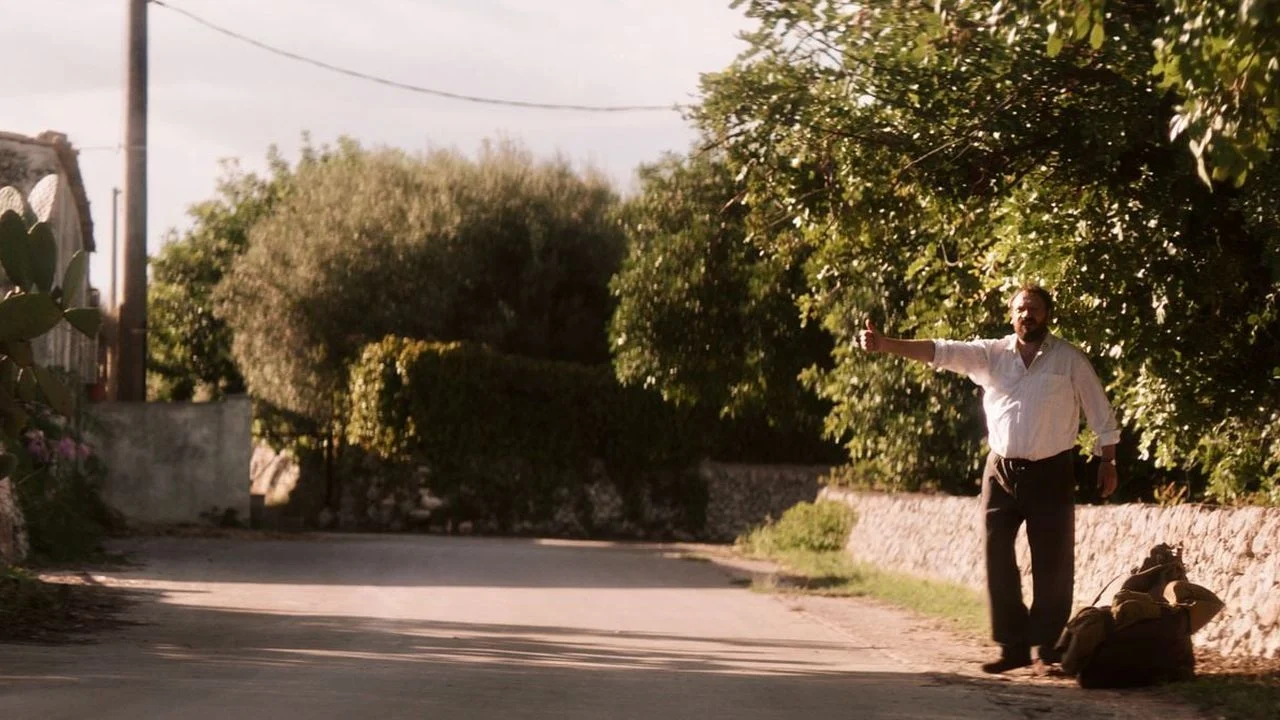
Paul is plagued by persistent wanderlust – even though he actually has no plans to leave his home behind him permanently.
A full 60 minutes, almost two thirds of the running time, pass before Paul escapes across the Baltic Sea and Denmark and thus the “Walk to Syracuse”, which is already promisingly announced in the film title. Escape and the trip to Italy do not form the narrative core, it is mainly about the years before and the planning. Therefore, a film title à la “Preparing for the Walk to Syracuse” might have been more appropriate. Although: Strictly speaking, Paul Gompitz is not even a refugee. At least that’s not how he sees himself. He often emphasizes that he does not see crossing the border as an attempt to escape. After all, he just wants to leave his homeland behind for a moment to convince himself that there is more to the “free world” than Rotkäppchen sparkling wine, Bautz’ner mustard, prefabricated building dreariness and nudist swimming. True to the motto: Just have a quick look, then quickly go back home to the woman you love.
This view of his own roots and homeland, in which an oppressive and inhumane one-party system is installed, distinguishes Paul from the protagonists of GDR films with similar content (see first paragraph). He is a multi-faceted, interesting character, not free from contradictions and inner conflict. That’s exactly what makes him human and approachable. On the one hand, he is disgusted by the restrictions and the standstill in the GDR. At one point he aptly speaks of the “agony in his own country”. On the other hand, he is permeated by a deep connection to his homeland – and a deep love for his Anne, with whom he has found private happiness. And he never wants to give this up.
The brilliant lead duo saves the film
Lina Beckmann and Charly Hübner are the highlight of the film. Their intimate bond is reflected in their otherworldly, moving play; after all, the two are married to each other in real life. This circumstance in turn has a direct impact on the chemistry of the couple in the film. Beckmann and Hübner shine with a strong presence and sensitively reveal the sensitivities of their characters – without drifting into sentimentality or unpleasant sentimentality. And Paul has people on his side simply because of his subversive, subtle humor. Few actors embody the type of the odd and taciturn, but deeply melancholic and lovable North German as perfectly as Hübner. Here he proves it again.
In the last third, “Walk to Syracuse” becomes a smooth, feel-good film that revels in sun-drenched dolce vita aesthetics. In the style of a travel documentary, Jessen uses picturesque postcard motifs of beautiful Italian nature and common sights in Naples, Rome and Verona. There are also creative visual ideas and optical gimmicks, such as when Paul merges directly with the animated postcards and maps in small trick sequences. All of these elements are designed for pure feel-good mode and unabashedly use a number of (tourist) clichés – but they don’t hurt anyone and are therefore at least as charming as they are lovingly nostalgic.
Conclusion: Escape with return – “Walk to Syracuse” is not an exciting GDR escape thriller in the style of a “Balloon”. Instead, Lars Jessen’s historical tragicomedy with travel documentary pieces is a sensitive look at topics such as wanderlust, rebellion, self-assertion and the desire for belonging. The character-centered film, garnished with fine humor, lives from its actors, but is – especially in the first half – a real ordeal. Instead of building dramaturgical tension, he works through a seven-year escape preparation chronologically, slowly and rather unimaginatively, like a walk in slow motion.