
Anyone who has seen “Gloria!”, the feature film debut of Italian pop icon Margherita Vicario, knows: In Venice in the 17th and 18th centuries there were orphanages where girls learned to play musical instruments and then made music together – invisible to the audience – at church services and concerts. But where Vicario put forward the strong thesis that pop music was invented on this occasion…
…Damiano Micheletto's drama “Vivaldi and I” is about the connection between the brilliant composer Antonio Vivaldi and his most talented student in the Ospedale della Pietà orphanage. However, the focus is not on Vivaldi, but on the girl and her fight for independence and self-determination. The result is a pleasantly understated, musical coming-of-age drama – with mandatory wigs and more or less well-known Venice images, but above all with a wonderfully rebellious charm.
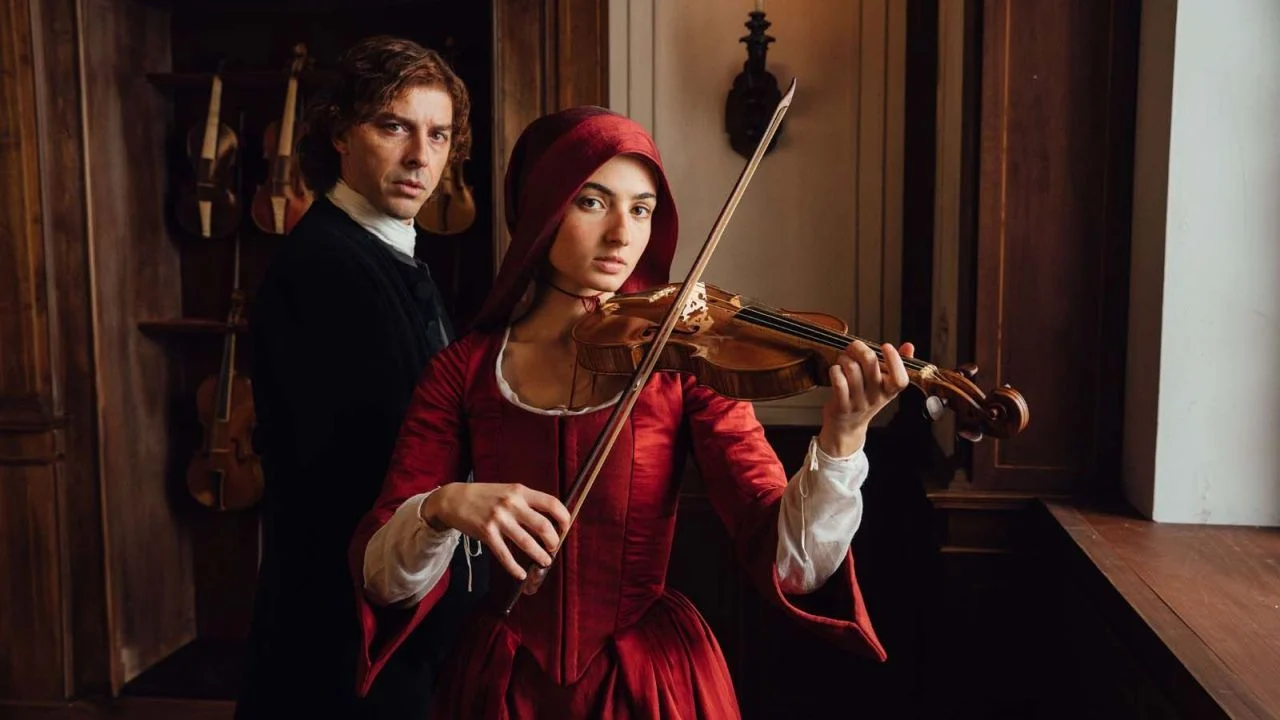
Only with the new conductor Antonio Vivaldi (Michele Riondino) does the talented violinist Cecilia (Tecla Insolia) gradually gain self-confidence.
Cecilia (Tecla Insolia), a highly talented young violinist, has lived in the Ospedale della Pietà practically since birth. While the orphanage celebrates musical excellence, it hides female individuality behind masks. The girls in the orphanage work hard. Those who are lucky have the opportunity to learn an instrument and make music in the community. But the real goal for all “inmates” is marriage – arranged by the orphanage and at a purchase price agreed upon through tough negotiations.
The girls are actually sold off like at a cattle market. However, as married women they are no longer allowed to make music. With the appearance of the new maestro Antonio Vivaldi (Michele Riondino), a monk who works as a music teacher and conductor for the girls in the orphanage, Cecilia begins to suspect that her life might have more in store than children and a husband. For them, music becomes a symbol of independence and freedom…
From Adagio to Allegro
Director Damiano Michieletto, who is known internationally primarily for his opera productions and is making his cinema debut with “Vivaldi and I”, is filming the novel “Stabat Mater” by Tiziano Scarpa here. And not as a tourist picture book Venice historical cinema, but as a musically composed emancipation fantasy. At the beginning the music only resonates gently – but its importance grows the longer the film lasts. At the beginning, Cecilia seems childlike – a girl who dreams of finally being picked up by the mother she has never met. She secretly writes letters on music paper. She submits to life in the orphanage, the lack of individuality and privacy as well as the excess of work.
It is only through Vivaldi's influence that she changes. Cecilia becomes more adult, more demanding. She develops pride and dignity – two qualities that do her more harm than good in the orphanage. Later, some scenes seem like musical variations of this development, emotions resonate with each other, and there are also wonderfully beautiful images of Venice and the surrounding area, sometimes photographed like paper cutouts. With Cecilia's increased self-confidence, not only does her violin playing become more perfect, the music also becomes louder and more powerful. The film increases, so to speak, from Adagio to Allegro.
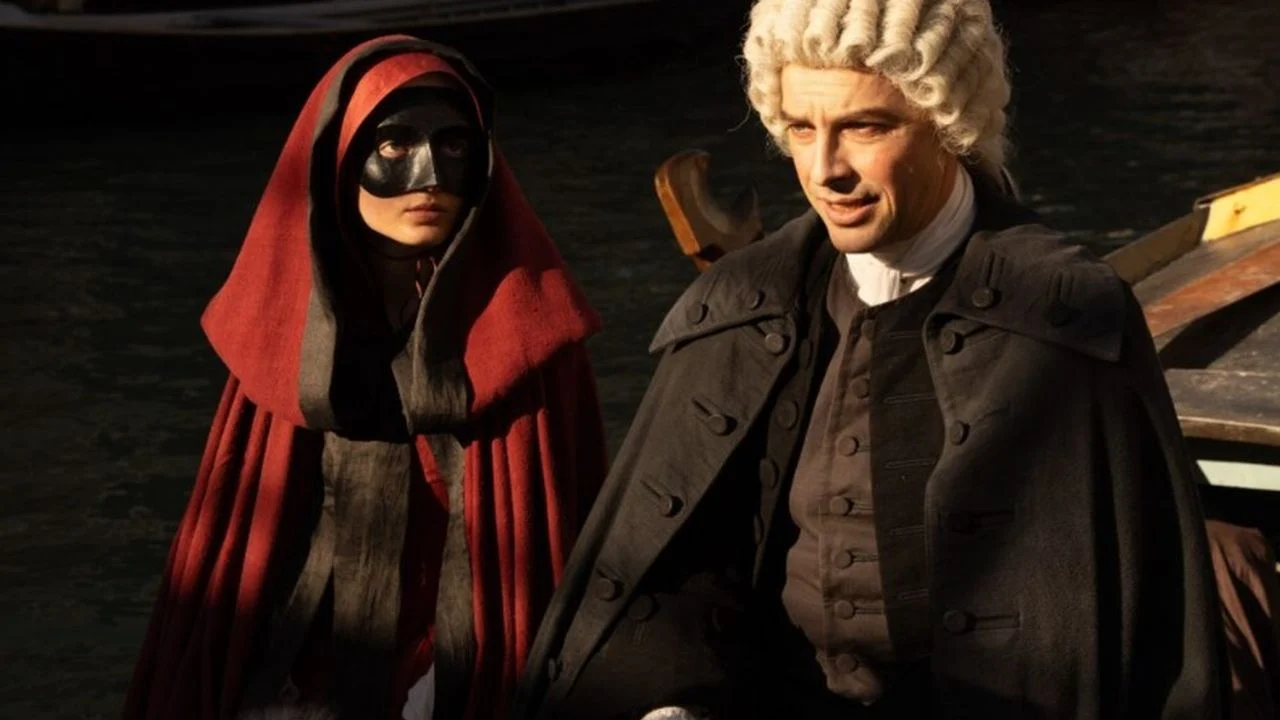
The girls at the orphanage are allowed to make music, but they have to hide their faces behind a mask.
Vivaldi chooses Cecilia as first violin – making her the de facto leader of the orchestra alongside the conductor. The reason he chooses her is not because of her ability or possibly because he fell in love with her. Instead, like her rivals, she doesn't play just to be praised. She plays because she lives in the music and becomes more and more alive through it.
Michieletto shows this development rather casually, just as he characterizes Vivaldi rather casually, which is an original idea: Michele Riondino plays him as a humorous, handsome man, weakened by illness but unwavering in his drive. Tecla Insolia delivers an enchantingly tender fluidity as Cecilia, a serious child who only seems to smile when music is heard.
A slow start
Thanks to Vivaldi, she learns the iron will that drives her to artistic perfection. Nevertheless, she still needs Vivaldi's support, because the impending marriage could abruptly end all her ambitions. “Vivaldi and I” surprises at exactly the right moment with a twist that is as unexpected as it is brutal. Especially towards the end it becomes clear how cleverly conceived the script is, how it plays with expectations, wishes and clichés. Until then, however, the film requires a lot of patience and the willingness to get used to the slow pace and the cool atmosphere at the beginning.
Visually, “Vivaldi and I” rejects the expected postcard romance. Daria D'Antonio often lets the camera wander through magnificently furnished rooms and halls in which the power of the church and money becomes palpable. In contrast to this are the semi-dark rooms in which the girls live and work. In terms of content, “Vivaldi and I” is clearly aimed at female self-determination. But it's also, in a very elegant way, about the art itself – about the gift of talent, which can also be a curse.
Conclusion: A clever, sensual drama with a lot of music and a fascinating main character, only seemingly a fragile, delicate elf who ultimately rebels against her own teacher.