
Since he appeared at the Cannes Film Festival for his first film “Samson & Delilah”. Camera d'Or was awarded for Best Debut, the Australian Warwick Thornton is considered the voice of the Aborigines. Until then, the continent's indigenous people were mostly only subjects in films by white directors, but Thornton tells the story on an equal level, especially since he himself is also responsible for the always haunting camera work in his films. This is also the case with “Wolfram”, a loose sequel to his great success “Sweet Country”. It's less of a direct continuation and more of another story in the same world. So it's back to the 1930s in the Northern Territory of Australia, where Aborigines live in slave-like conditions and have to work in the mining industry. A harsh world, but this time Thornton doesn't portray it as darkly as his predecessor. Instead, the film strikes a surprisingly optimistic tone despite the many deaths.
At the beginning of the 1930s in the Northern Territory, the region in the north of Australia rich in mineral resources. The Aboriginal siblings Kid and Max work in a mine and have to crawl into the narrow tunnels to get the valuable mineral tungsten, with which the white settlers make a lot of money. This is also what the two outlaws Casey (Erroll Shand) and Frank (Joe Bird) want, who force their presence on their relative Mick (Thomas M. Wright). Mick lives in a lonely cabin with his now 18-year-old son Philomac (Pedrea Jackson), the most important connection to the previous film “Sweet Country”. Fate soon brings Kid, Max and Philomac together, who have to make their way in a world dominated by white supremacists. At the same time, Aboriginal woman Pansy (Deborah Mailman) is looking for her children, who were taken away from her years ago by her abusive husband…
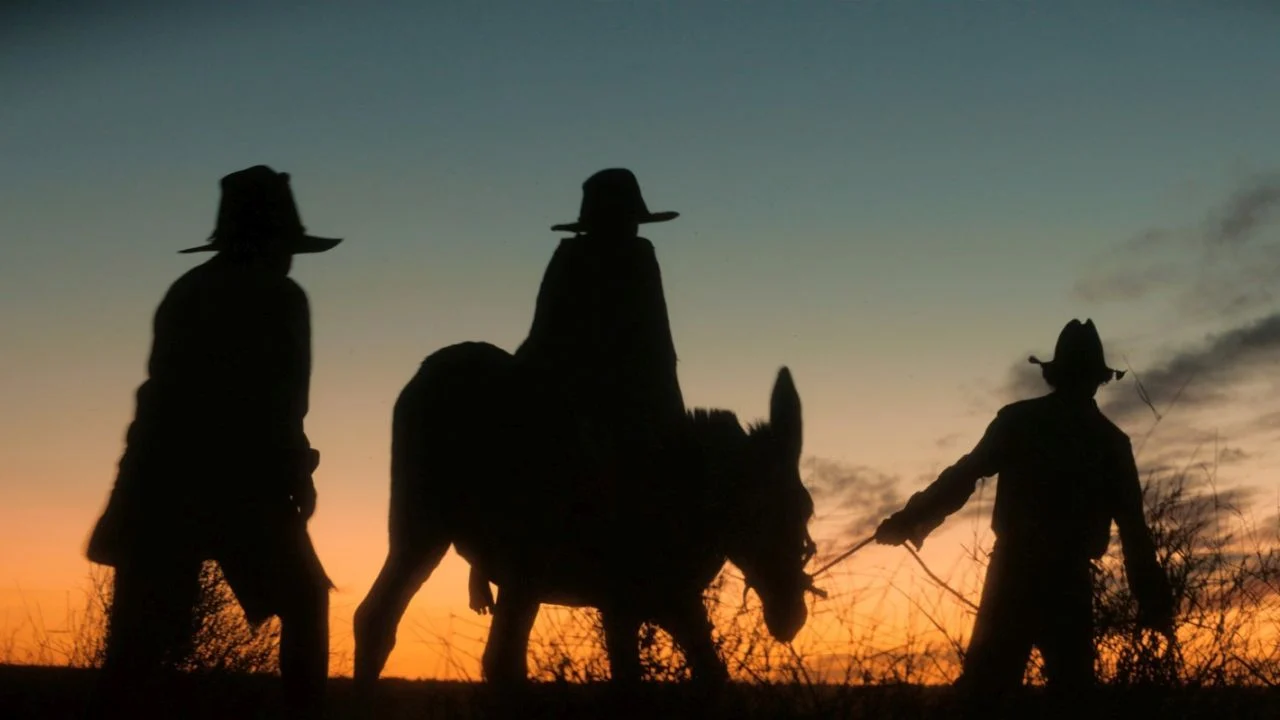
As always with Warwick Thornton, the magnificent recordings in “Wolfram” are beyond any doubt.
The Aborigines call their view of the world, the cosmos and everything that surrounds them dreamtime. For them, events do not follow one another in a linear fashion; instead, they believe in a spaceless and timeless world in which the past, present and future exist virtually simultaneously. Things that happened in the past are inscribed in the soil and the land. So they are still noticeable today, which is why the country itself – similar to the Native Americans in North America – is attributed a special, spiritual value. Warwick Thornton, himself Kaytetye-Belonging to the tribe, the dream time varies in his film. It doesn't tell a clear, linear story, but rather unfolds a network of characters that seem to be connected in a mysterious, almost magical way and come together according to a kind of dream logic. L
For a long time the relationships between the characters remain unclear; if connections are only hinted at, the characters seem far apart not only in space but also in time. Sometimes we see Pansy in front of rock formations that other characters have passed before (or after?). Apparently she sees in her sleep or a vision what has happened (or will happen) here. And all of this is almost always associated with violence, with casual murders by white people of the Aborigines, of the Black Fellows, as it is disparagingly called. This horror is etched into the land, even today, which is why it is so important for modern Aboriginal people to have control over their ancestral lands. A country that is – one is tempted to say unfortunately – rich in raw materials, including tungsten and gold.
Not your typical sequel
Here, too, the story is similar to what happened in the American West: settlers opened up land that only appeared to be untouched, exploiting the raw materials without regard to losses. This dark side of Australian history was not present in the cinema for a long time, but that has thankfully changed in recent years. Nevertheless, “Wolfram” is not just a variation, but in some ways even a counterpart to its predecessor “Sweet Country”.
Despite the title, it was anything but sweet, but downright brutal. The ending was correspondingly dark. “Wolfram”, on the other hand, seems almost lovely, as its brutality mostly takes place outside of the picture and, despite the obvious misery in which the characters live, it also allows a lot of hope to shine through. Not all white people are hardcore racists, some behave humanely towards them. But above all there is a third group: Chinese migrants. On the one hand they are outsiders themselves, but on the other hand they are not without rights like the natives, and the Aborigines find unexpected care among them. In the end, Thornton leads his story in the blazing sun of the Australian steppe to an astonishingly conciliatory conclusion, which perhaps seems a bit sweet given the historical reality, but why not: things are changing in Australia too, the view of the past is becoming more differentiated, voices that were previously often suppressed are given space. You can certainly spread a little hope there.
Conclusion: In his outback western “Wolfram”, Aboriginal filmmaker Warwick Thornton varies the themes and motifs of his successful film “Sweet Country”. He shows a world characterized by slavery-like exploitation, which he once again stages in a breathtaking way – but this time with a surprising degree of optimism.
We saw “Wolfram” at the Berlinale 2026, where it was shown in official competition.