
When Denis H. Johnson published his novella “Train Dreams” in 2011, a lot of praise followed. Literary critics recognized the spirit of the great American novelist Ernest Hemingway (“The Old Man and the Sea”) both in the story of a man who was as lonely as he was taciturn and in the simple and direct sentences. The work, which was nominated for the prestigious Pulitzer Prize in 2012, also left a lasting impression on “Jockey” director Clint Bentley (Oscar-nominated for his script for “Sing Sing”), who read it overwhelmed shortly before graduating from college – and then literally devoured all of Johnson's other (short) stories and texts.
Bentley, who adapted the literary original for the big screen together with Greg Kwedar, immediately recognizes this burning passion for the material. And it is precisely on such a screen that the independent drama, which was highly praised by critics after its premiere at the Sundance Film Festival (a whopping 97 percent positive ratings on RottenTomatoes), belongs – which is why Netflix fortunately decided to have a (mini) cinema release shortly before the streaming release. With enormous visual power and beautifully photographed, Australian Joel Edgerton (“The Green Knight”) is in Oscar-worthy top form in the midst of a top-class cast.
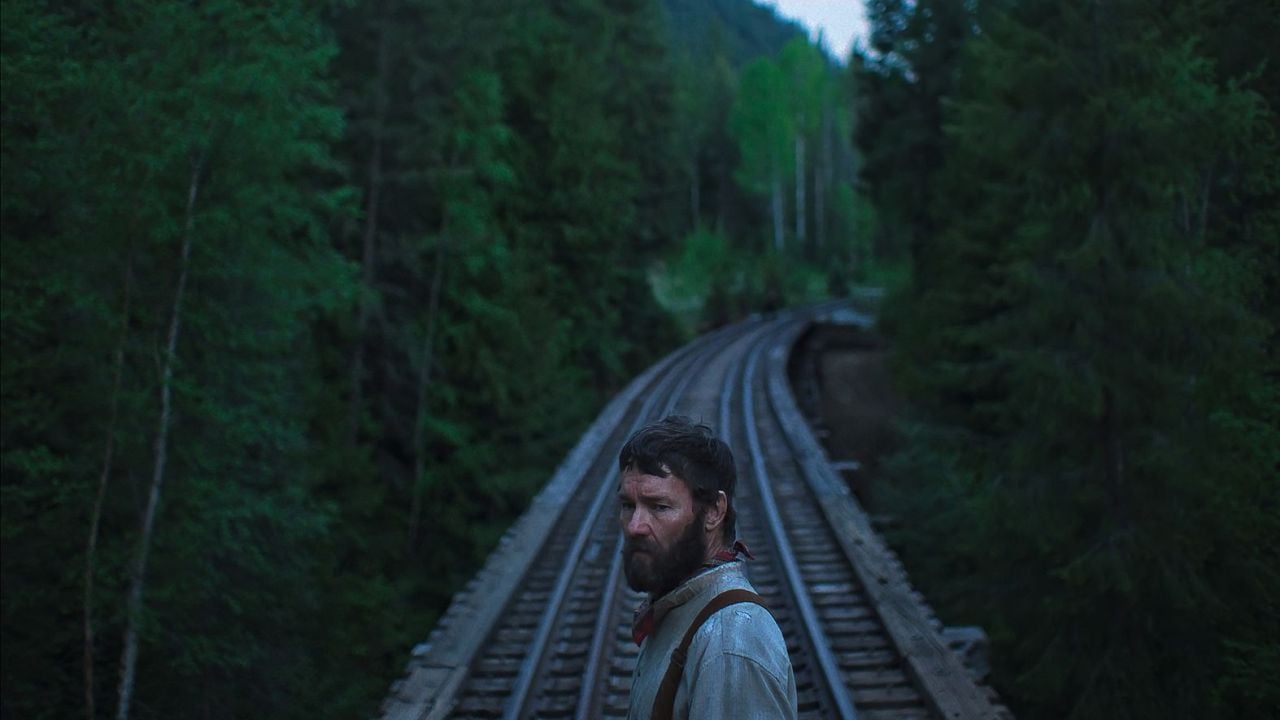
The dreamy trains from the title are not just a metaphor, but actually play a central role in the plot.
1917 in rural Idaho: Day laborer Robert Grainier (Joel Edgerton) meets and falls in love with Gladys (Felicity Jones) during a visit to the town. The couple builds a small, remote wooden house on the banks of the Moyie River. In order to look after Gladys and soon also her daughter Kate, Robert travels across the country for lucrative jobs as a lumberjack. A few happy years pass until Robert returns during a raging forest fire that also destroys his cabin – there is no trace of Gladys and Kate. The widower, who also had to reorient himself professionally, was left with his grief for decades. Only his friend and shop owner Ignatius Jack (Nathaniel Arcand) gives him support…
Great pictures
At first glance, the plot of “Train Dreams” does not seem new: after all, the life story of a grieving widower with deep regional roots, whose work lays the foundation for industrial progress that later overwhelmed him, was already told in the moving Alpine drama “A Whole Life”. But Clint Bentley and Greg Kwedar also took the other themes of the literary original into account in their adaptation: While the rough treatment of Chinese guest workers is dealt with quite quickly and casually, especially in a depressing murder scene, the ghostly apparitions of Gladys and Kate are given much more space. In combination with the extremely tactile images, they give “Train Dreams” a mystical and epic touch.
Intense color textures with earthy tones and lush greens make the magic of the forests and wilderness vividly tangible, even if the lumberjacks, a quasi-reincarnation of the cowboys, continually destroy them on their conquest of the West accompanied by railroad tracks. Adolpho Veloso placed great emphasis on natural light in his dynamic camera work. He films tirelessly and beautifully against the delicate pink of the evening sky – which means that all the family scenes, from playing by the river to making plans for the future, appear natural and also develop a great deal of human warmth and intimacy.
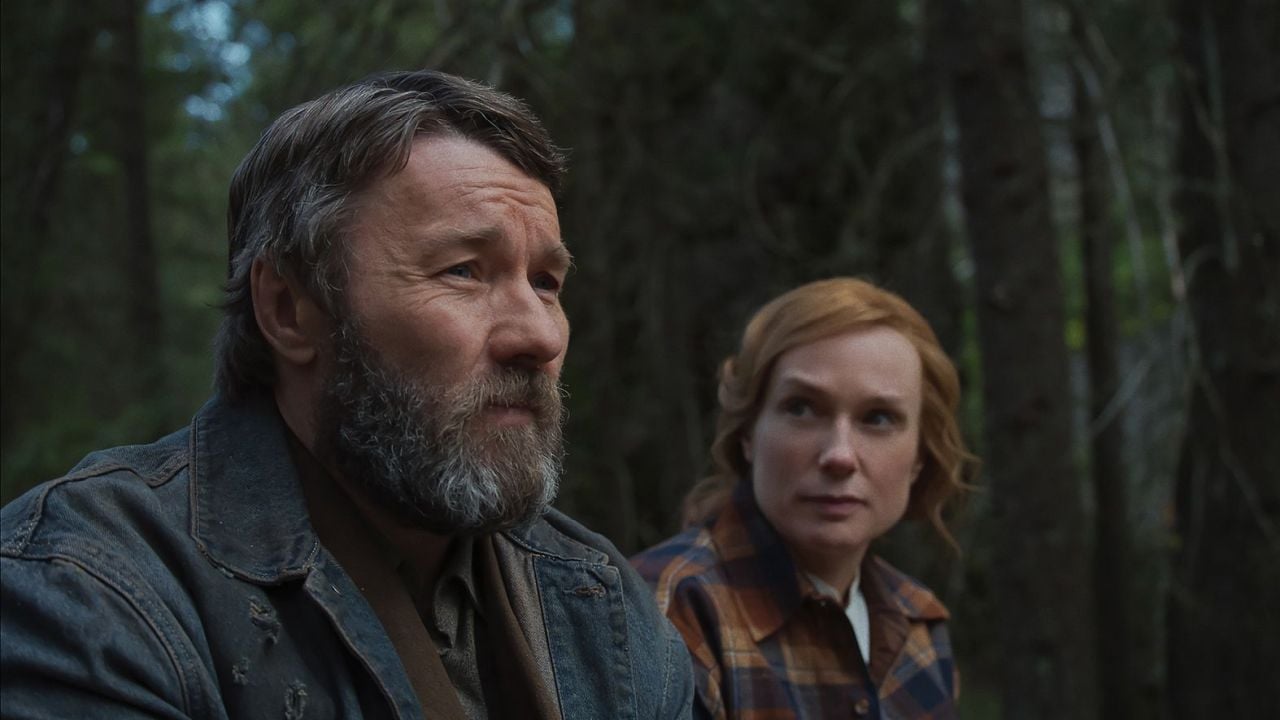
After many years of silence, Robert (Joel Edgerton) can at least open up to the geologist Claire (Kerry Condon) to some extent.
Even though his increasingly uprooted character hardly speaks about his closed inner life (which is made up for by a voice-over narrator), Joel Edgerton acts as strongly as he does movingly. He presents his modest, perhaps even somewhat dumb figure in a reserved manner, with hardly any words, but all the more tears of despair that break out of him. There is great chemistry between Joel Edgerton and Felicity Jones (“The Brutalist”) as a pragmatic and thoughtful wife and mother who confidently learns to use a weapon. That's why it's particularly sad that she almost completely disappears from the film after just a few scenes and after the first third of the running time.
The other supporting roles are also top-class: William H. Macy (“The Running Man”) contributes a welcome amount of humor as a wise-cracking demolitions expert who prefers to sit back and talk during hard physical work, while Kerry Condon (“F1 – The Film”) as a tough geologist and employee of the forestry authority, Robert's confidant, to whom he opens his heart, is introduced late on. But like Robert's late trips to a theater or an airport, it too remains just a side note in a life story that sometimes tends to open up a few plot threads too much.
Conclusion: Even if some subplots largely fizzle out, “Train Dreams” is a melancholy as well as moving and strongly acted drama that lets you almost physically experience the magic of old coniferous forests with its absolutely Oscar-worthy images.