
“62 is the new 50”, the geriatric nurse Rita (Anke Engelke) once said by her colleague Gitti (Maria Hofstätter). And in general: Most women of their age would feel much younger anyway. But she does not, Rita replies, and indeed: as an element of energy and vitality, Engelke's figure is by no means created in “Then life” by director Neele Leana Vollmar. This Rita lives with her husband Hans (Ulrich Tukur), a headmaster shortly before retirement, less together than next to him.
You know about an earlier affair in the colleague, but no longer talks about it. The adult son has long since been out of the house, only reports rarely and certainly does not tell what is going on in his life. A normal German married life is probably: you don't know anything about each other and with the rest of life – instead you wish you vague that everything would be somehow different, tank a little, day, day out, and otherwise simply remain silent.

Rita (Anke Engelke) and Hans (Ulrich Tukur) have been living side by side rather than with each other.
This routine-resigned side side is shaped by the first hour of the film, even if Neele Leana Vollmar also scattered some drastic breaks: Hans is retired, son Tom (Lukas Rüppel) comes to visit-and finally opens when he can no longer hide it that Rita and Hans will soon become grandparents. However, only after departure on the phone. Just don't talk to each other, such unwritten family laws are always passing from generation to generation.
So one or the other happens in the first half of “Then life happens” – only life, that doesn't happen. For this, everything – dramaturgical, staged and acting – seems much too lifeless. And then, halfway, something actually happens that the film in the second, less than a short hour, in terms of content: a car accident, and just not life, but death.
Where has the liveliness remained?
But everything looked a bit dead before. Neither crushed feelings of guilt nor the rediscovering of one's own liveliness owed to the valid art house cliché in the face of mortality (here at best, at best accurately accompanied), the events can somehow emotionally enacted. Basically, “then life” holds a single basic mood from the first to the, well, the penultimate scene: muffled, speechless, lifeless, in a shovel duster half -dark, because the electrical shutters that the bourgeois home isolate in the opening sequence can then no longer be opened at all. Attention: symbol content!
“62 is the new 15”, this maxim could probably be suggested for the position that “then life happens” in the director of Neele Leana Vollmar. So far, this is more known as a director of a whole series of wonderful children's and youth films, from “Rico, Oskar and the Treeshadten” to “My Lotta Life: All Bingo with Flamingo”. However, their liveliness, freshness and wit, while at the same time seriousness, where they need to be needed, is in vain with the magnifying glass, because the leap from the children's comedy into adult drama unfortunately fully fails.
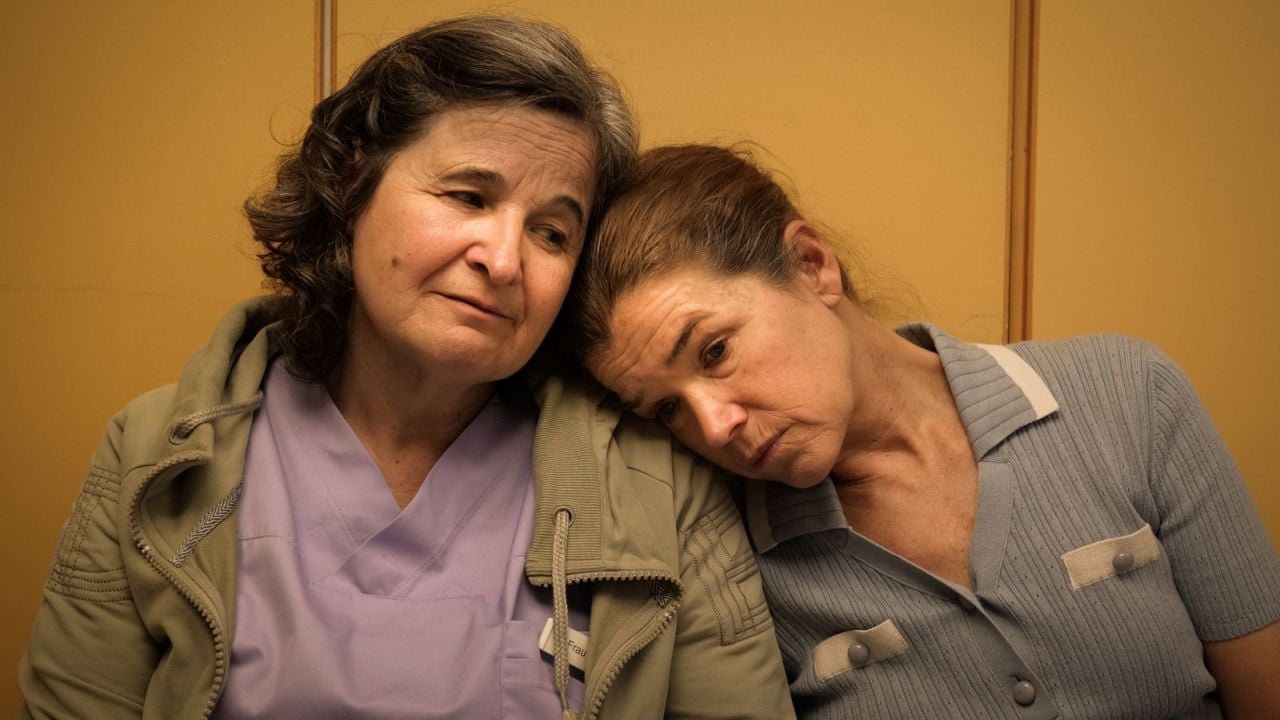
From her colleague, Rita gives the encouraging indications that “62 is the new 50”.
In general, one wonders why this generation jump had to lead directly into the best-agent drama from primary school age: children and pensioners, are these the two remaining conceivable target groups of German cinema? One must probably suspect that “then life” is a heart project for Vollmar, and not just an order work, it is also responsible for the script in addition to the direction.
A real car film – but one in which one hopes that he shouldn't take a whole new work phase. Now Neele Leaner Vollmar certainly doesn't have to prove her talent as a filmmaker – she already has far too many wonderful films on the notch. This failed, joyless excursion to the best-agor-Hedrama, however, would like to be forgotten again directly and hope for the return of childlike, youthful energy and injection in Vollmar's future films.
Conclusion: A lifeless and joyless marriage rama, somewhere between a theatrical two-person piece and medium-sized television film that has strayed into the cinema. In the children's and youth cinema, the highly talented Neele Leana Vollmar has already presented a whole series of wonderful films, but unfortunately you now have to consider your trip to the pensioner drama as largely failed.