
64 percent of all users who joined extremist groups on Facebook were made aware of this by the site’s recommendation algorithm: This was the result of an internal study by the platform in 2016, which was leaked five years later with further secret documents by whistleblower Frances Haugen and finally made known through a 17-part series of articles by “Wall Street Journal” reporter Jeff Horwitz called “The Facebook Files”. In the form of a classic conspiracy thriller, Aaron Sorkin’s “The Social Reckoning” traces the years-long path of these revelations, which should have permanently damaged the reputation of Mark Zuckerberg’s technology group, but ultimately only led to the mundane brand renaming to Meta Platforms.
The idea of a social network is actually a personal mission for computer scientist Frances Haugen, played with alert nervousness by Oscar winner Mikey Madison (“Anora”). As a product manager, she works for Facebook’s Civic Integrity team, a department that studies the platform’s impact on its users and aims to counter the spread of hate posts and fake news. Your task is to refine an algorithm: If different risk vectors are triggered in comments, the post should be automatically classified as questionable and taken down using appropriately coded classifiers.

Frances Haugen (Mikey Madison) works as a product manager at Facebook – and soon makes a shocking discovery.
Frances notices inconsistencies: Instead of addressing them, the algorithm rewards posts that polarize and generate angry reactions with increased visibility. With six closely written index cards on both sides full of observations and notes, she addresses her immediate work colleagues and ultimately her supervisor. However, he doesn’t appear alarmed either, pointing out to Frances that no one wants to work with a Cassandra who says “Fire!” shout if none are burning. But in Greek mythology, Cassandra is actually – Sorkin’s script will use such dramatizing cultural references several times and will hammer them all too clearly into the audience – a fortune teller who no one pays attention to because she tells a truth that no one wants to hear.
In the office of Wall Street Journals In 2019, the end of print journalism can be observed in San Francisco: When investigative journalist Jeff Horwitz (Jeremy Allen White) sets up there to pitch a report on Facebook, hardly anyone is there to work. Although he is actually a political reporter and knows little about technology, Jeff wants to look behind the facade of the decadently growing social media company. His editor-in-chief (Betty Gilpin) gives him two interns and a deadline of 90 days: enough time to familiarize himself with what exactly encrypted messages are. He writes to Facebook employees via LinkedIn in the hope that someone will be willing to talk about everything the company doesn’t make public. One night Frances answers him.
This doesn’t have much to do with “The Social Network”.
There is very little in this story that reminds us of David Fincher’s masterpiece “The Social Network” about the rise of Mark Zuckerberg from a programming student to a billionaire entrepreneur, for which Aaron Sorkin once wrote the screenplay and which is now considered one of the defining films of the 2010s. For years, Sorkin pitched a sequel for which he was ultimately unable to win over either the original director or the former leading actor Jesse Eisenberg, who no longer wants to be reduced to his portrayal of Zuckerberg as a mysterious tech bro. What is remarkable is the obvious change in tone: Fincher told the story with amused irony as a modern comedy of manners full of ambivalences, while Sorkin, as director, now continues it dryly and with dialogue in the form of a sincerely motivated investigative drama with a penchant for an overly clear message.
This initially works quite well when the film unwinds the well-known standards of a well-oiled conspiracy thriller: the tentative approach to contacting the informant, the clandestine meetings in a remote park, a carefully woven web of paranoia and revelation, which is carried quite quickly for a while by Sorkin’s proven knack for easy-going, quick dialogue. But with the appearance of Jeremy Strong as the strangely over-aged Mark Zuckerberg, the film gets into a big mess.
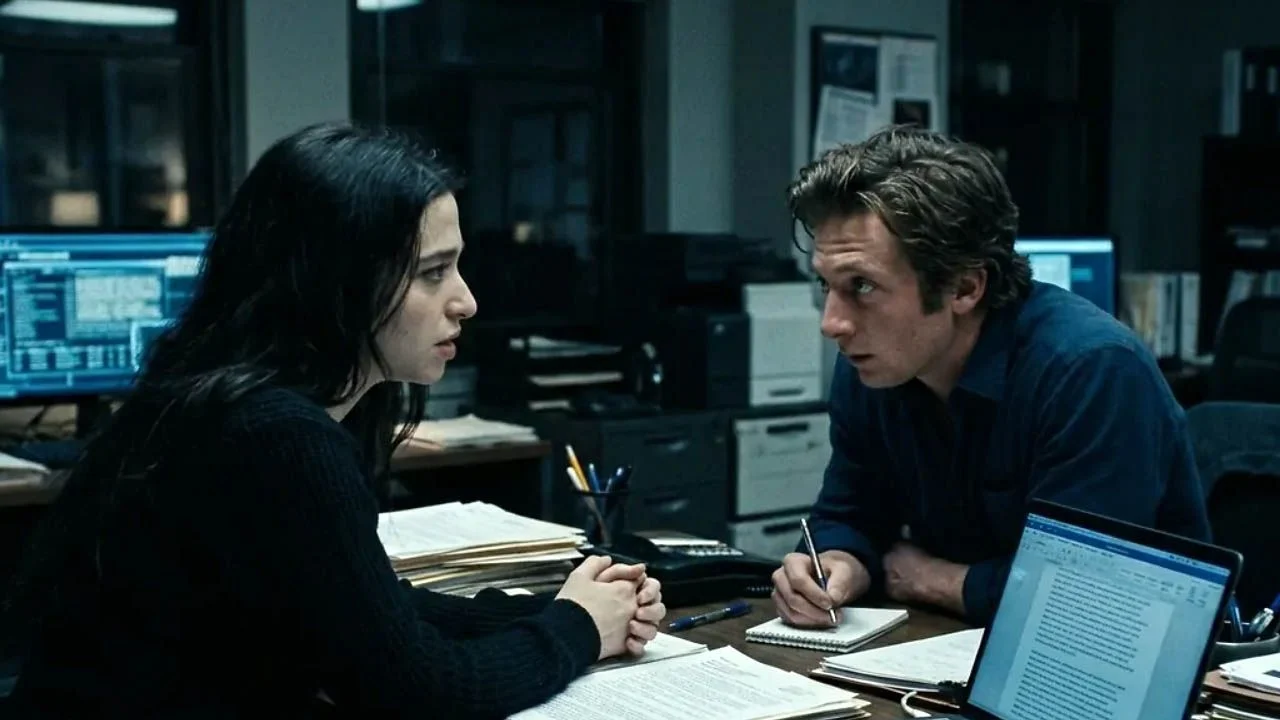
As a classic conspiracy thriller, “The Social Reckoning” works quite well for a while…
On a second temporal level, “The Social Reckoning” tells of the conflict-laden preparations for a congressional hearing that Zuckerberg had to face in 2021. A crisis manager trains him for the impending state of emergency: The American paragraph 2-30 is to be changed, which means that websites can be held liable for what is published on them – for Zuckerberg, an attack on his company’s core brand of enabling free expression of opinion in an unfiltered manner.
Strong plays the libertarian billionaire with a penchant for cramped method acting overcompensation. A lifeless drawing board figure who remains in an upright sitting position and emotionlessly utters mnemonics about his company: “We are not the referee, we are the public space!” This one-dimensional embodiment of uncontrolled tech capitalism becomes a welcome projection surface for the intrusively didactic pathos into which the film builds in its second half.
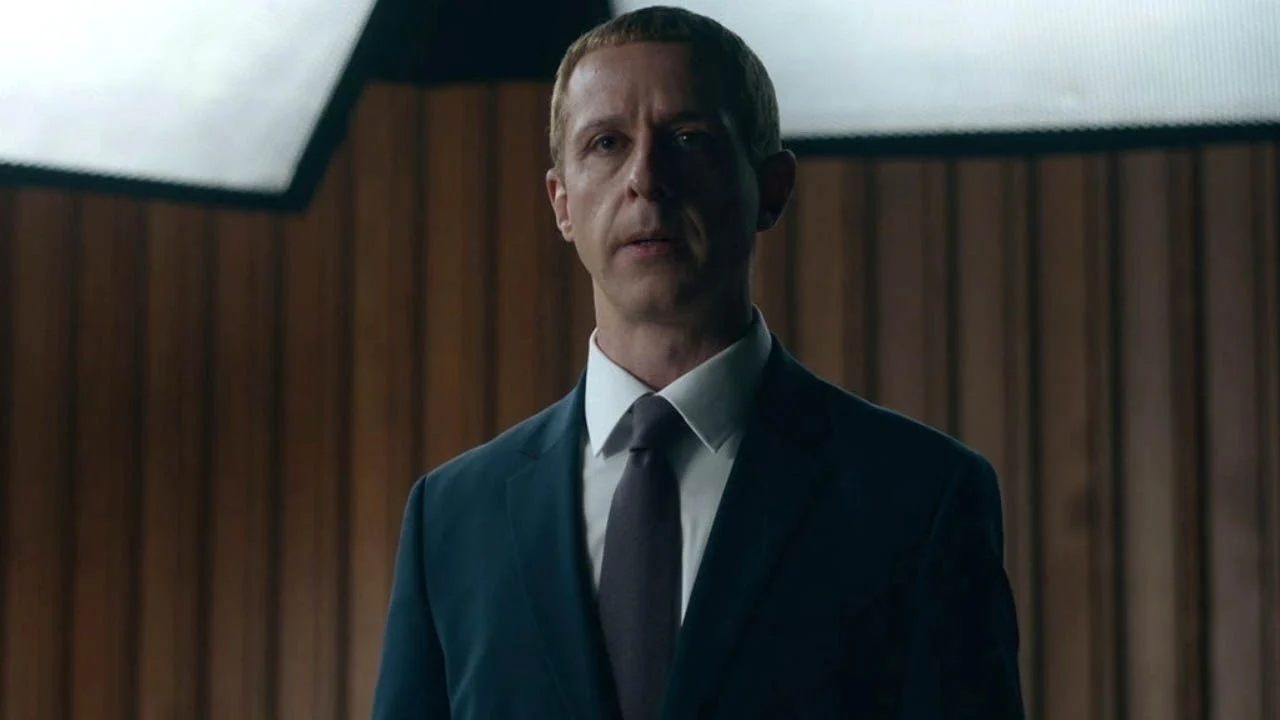
… until Jeremy Strong comes into play as Mark Zuckerberg!
He contextualizes the violent storming of the Capitol in Washington by supporters of presidential candidate Donald Trump in January 2021 as a consequence of uncontrolled social media guidelines that promote polarization and radicalization. This is where something like this comes from, Aaron Sorkin shows meticulously and consistently using dramatized case studies: Whether you expect more from a film than just a certainly accurate diagnosis will determine how successful you ultimately find “The Social Reckoning”.
Conclusion: Aaron Sorkin’s “The Social Reckoning” is initially a gripping conspiracy thriller about the dangers of social media – but the closer the film gets to its message, the less interested it is in nuances. Where “The Social Network” shone with satirical irony and ambivalence, this time Sorkin relies on clear characters and theses.