
The historical intrigues and war strategies of “Shōgun” combined with the brilliant investigative mind of master detective Sherlock Holmes: cult director Kiyoshi Kurosawa (“Before We Vanish”), who specializes in breaking genre boundaries, brings these two ingredients together in “The Samurai And The Prisoner”. The adaptation of Honobu Yonezawa’s multi-award-winning bestseller impresses not only with its outstanding features and strong images, but above all with its versatility.
Kurosawa pairs whodunit puzzles with a gripping psychological duel – and tells an incredible amount about feudal Japan along the way. However, the first samurai drama from the filmmaker, who was once known for the horror film “Cure”, also demands a lot of patience from the audience. Extensively long dialogue passages, a sometimes visible disinterest in battles and the rather bloodless fights slow things down again and again. There is also something schematic about the structure in four chapters. But if you get involved and find an approach, you will be richly rewarded.
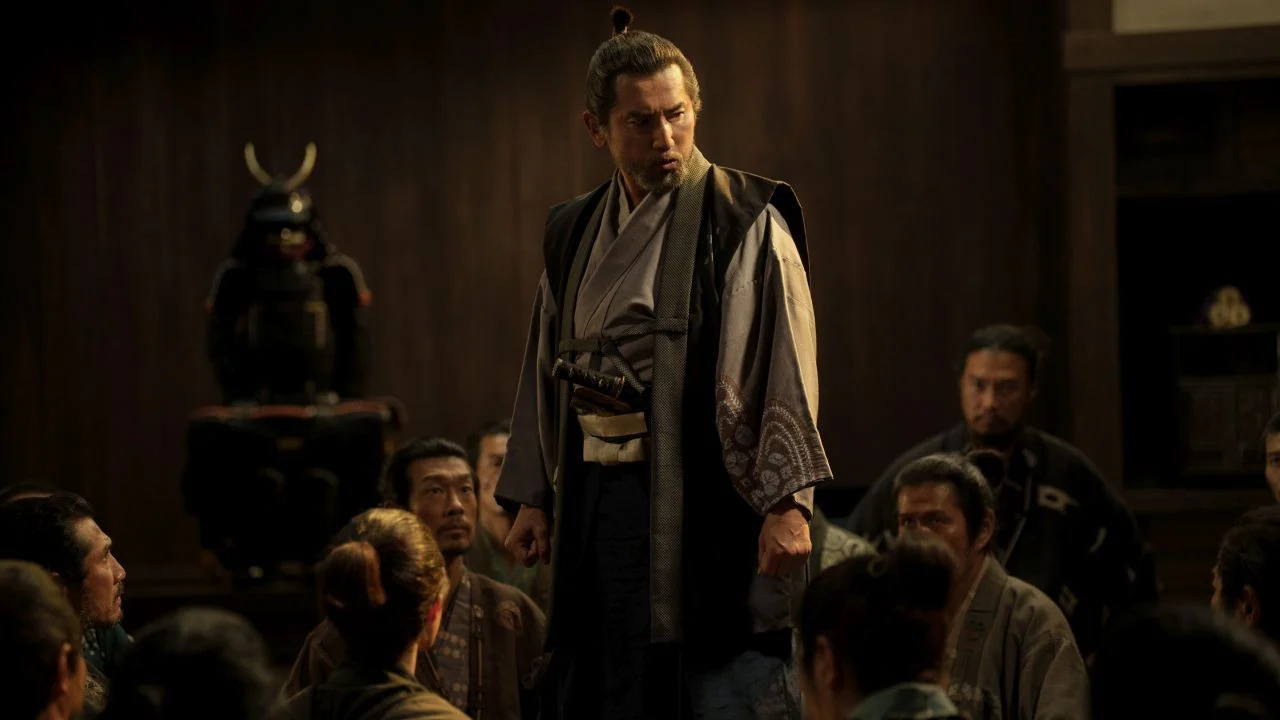
Samurai prince Murashige (Masahiro Motoki) always has to ask himself who he can trust anymore.
In 1578, during the Japanese Sengoku period, the influential samurai prince Araki Murashige (Masahiro Motoki) unexpectedly decides to rebel against his powerful feudal lord Oda Nobunaga (Bando Shingo). From now on he has to hole up in his castle Arioka, which will soon be besieged by Nobunaga’s troops. Before that, the envoy Kuroda Kanbei (Masaki Suda) tries to persuade Murashige to give up. Contrary to samurai customs, the rebelling lord does not kill him, but instead throws the messenger into the dungeon.
Over the next four seasons, mysterious incidents occur within the walls. A murder is committed that seems almost impossible. The identity of a severed head that has suddenly become mysteriously deformed must be determined. During a double murder, a valuable tea set that was supposed to help gain new allies disappears. And then even the wrath of God himself seems to strike. When it comes to all of the mysteries, Murashige initially bites his teeth into it. His only way to find a solution leads, of all people, to the brilliant strategist Kanbei down into the prison cellar…
New setting and still a real Kiyoshi Kurosawa
The fact that Kiyoshi Kurosawa is delving deeply into historical samurai cinema for the first time in his career does not mean that he is leaving his familiar themes behind. The besieged castle turns out to be a typical setting for the director, who likes to play with isolation and paranoia. In this case, the paranoia may even be justified – because it’s not just the first murder that proves that Murashige has every reason to worry.
The simmering tensions are cleverly highlighted again and again. The numerous smaller lords and their clans who have actually sworn allegiance to Murashige pursue different interests. Various religions – including different interpretations of Buddhism and Christianity – harbor additional potential for conflict. Each new mystery is likely to weaken the morale of the troops or turn previous subordinates into enemies. So in his time of need the prince has to turn to the brilliant analyst in the dungeon again and again.
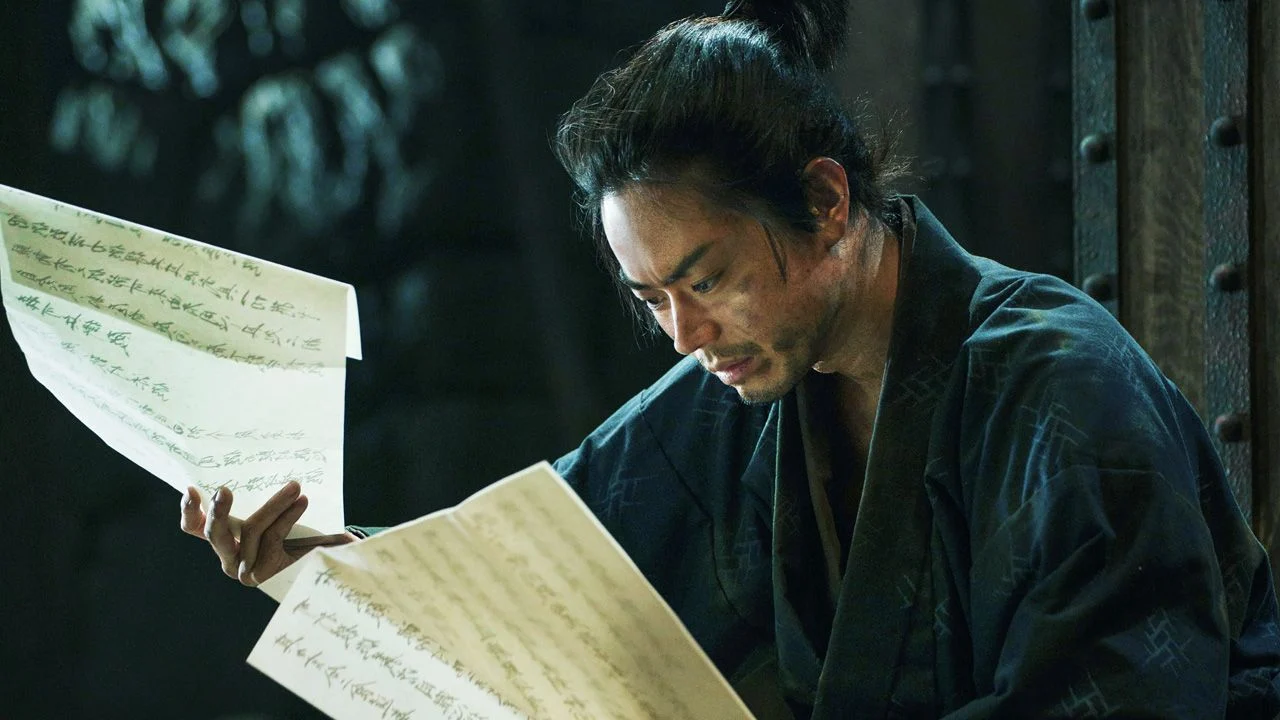
The prisoner Kuroda Kanbei (Masaki Suda) once again receives the files of a case that he should solve as quickly as possible.
The relationship between the two protagonists is somewhat reminiscent of the legendary investigative duo Sherlock Holmes and Dr. Watson – but with the opposite sign. The evidence is not collected by the assistant, but by the warlord, who should actually have the upper hand. Holmes revenant Kanbei, on the other hand, sits in the dungeon and only draws his brilliant conclusions based on the detailed protocols. However, he only presents the solutions in the form of puzzling clues, so that the investigation continues even afterwards.
Murashige and Kanbei are ultimately also adversaries – and so a psychological duel ensues despite the willing investigative help. The prisoner always knows how to use his intellect for manipulation. For example, he can get rid of a guard who regularly brutally tortures him – and he doesn’t even have to take off the chains on his limbs. The encounters between the two protagonists are few and far between, but prove to be the absolute showpieces of the epic work over the impressive running time of 147 minutes.
A test of patience that is rewarded
The conversations at eye level are an integral part of a somewhat schematic structure. There are four chapters – corresponding to the seasons winter, spring, summer and autumn. In each episode the same stations are covered: the siege gets worse, there is new strife within the walls and the lord of the castle has an important conversation with his wife Chiyoho (Yuriko Yoshitaka). Added to this is the mystery of each section, the detailed investigative work, the prisoner’s conclusions and finally the official denouement.
“The Samurai And The Prisoner” is also a test of patience. The discussions and dialogues often get out of hand. Many conversations about honor, moral guilt or the willingness to die for the Lord are dry. A lot of time is spent designing this world with its rituals and power mechanisms – but without explaining them to the audience.
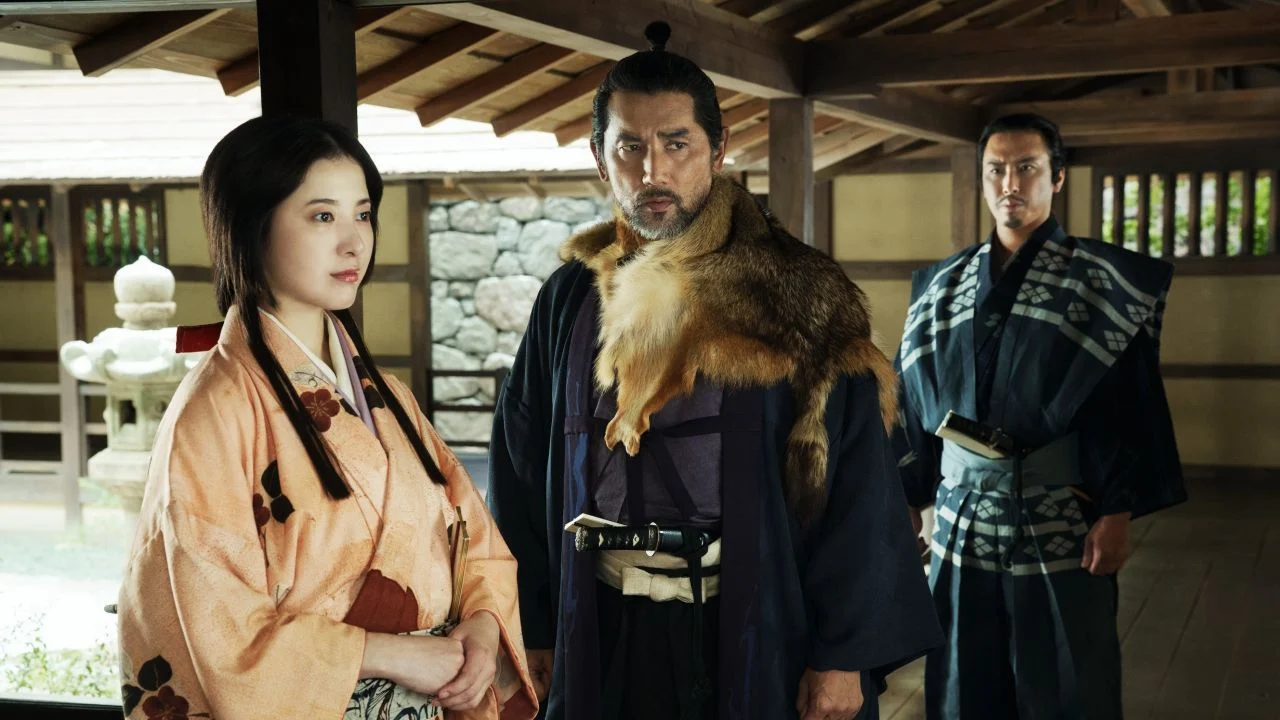
Murashige (Masahiro Motoki) discusses the next steps primarily with his wife Chiyoho (Yuriko Yoshitaka).
Even though it’s a samurai film and also about a castle under siege, Kurosawa is hardly interested in bloodshed. Even if a battle does break out, the turmoil of war is filmed from a certain distance. There seems to be a conscious effort not to emotionally engage the audience in such a direct way. It is more the consequences of death that interest the filmmaker – and the impact that the battles have on the political and moral structure of the castle community.
This makes “The Samurai And The Prisoner” brittle at times, but at the same time a captivating chamber piece in the guise of a great historical film. As reduced as the action is staged, you can clearly see how big this film is intended to be. The equipment, costumes and locations are consistently magnificent and make it easier to get involved in the action. Whoever succeeds in this will get a remarkably different samurai film that very attractively combines the power games of the time, detective work and Kurosawa’s sense of underlying threat.
Conclusion: Kiyoshi Kurosawa’s first samurai film is not an action-packed battle epic, but rather a patient, cleverly constructed and visually impressive historical crime chamber piece. “The Samurai And The Prisoner” particularly impresses with its dense atmosphere and the strong psychological duel between the two title characters.
We saw The Samurai And The Prisoner at the 2026 Cannes Film Festival, where the film had its world premiere in the Cannes Premiere section.