
Even if she died almost 30 years ago, “Mother Teresa” is still a household name. The sister, who came to India at the age of 18 and worked there until her death, is still the epitome of the selfless supporter of poor and starving, especially children. On the other hand, one of her predecessors, Francesca Xaviera Cabrini, who went to New York as a nun at the end of the 19th century, is significantly less known.
Cabrini was later the first US citizen. She founded numerous orphanages, schools and hospitals – a huge performance for a woman who had to assert herself in a man and church dominated by men. “The Messenger of the Pope”, a biopic about the life of the Francesca Xaviera Cabrini, is now primarily due to its first years in the USA – and the countless adversities that the religious met with a lot of pragmatism.
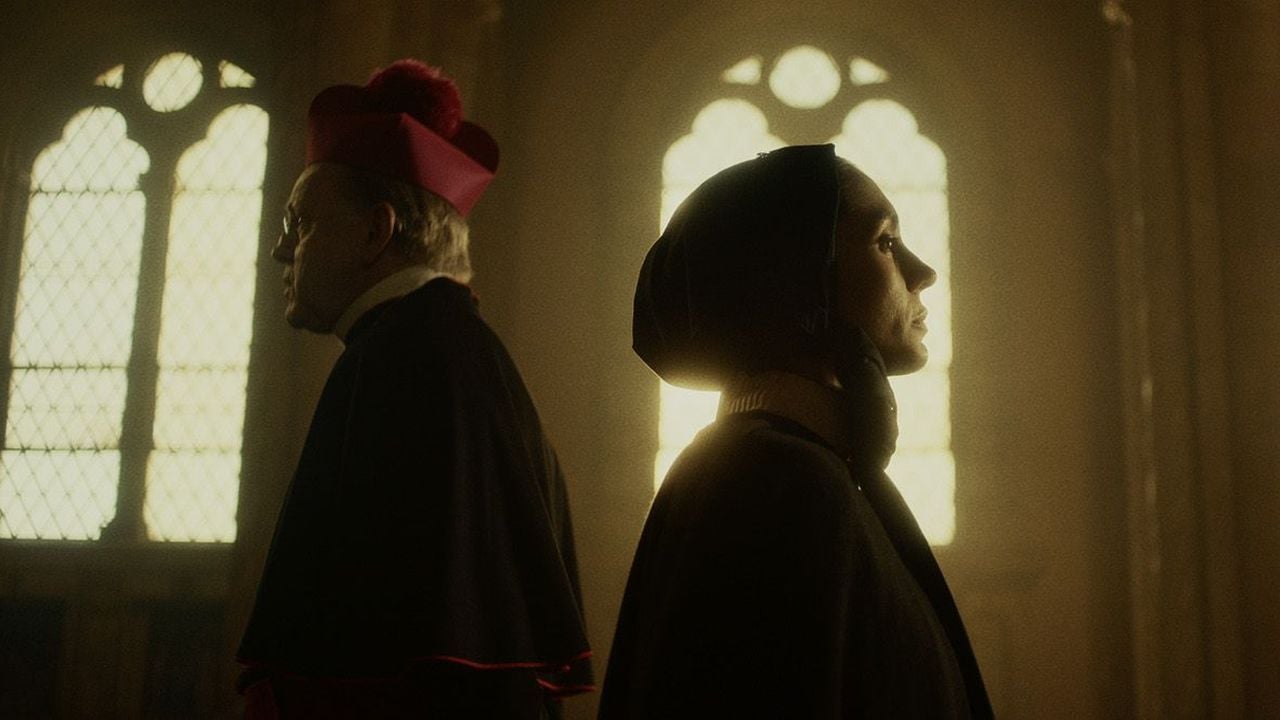
Francesca Xaviera Cabrini (Cristiana dell'anna) are particularly in the way of the men in her mission.
The most interesting thing about this melodrama is probably the critical examination of the “American dream”, which for many, if not for most European immigrants at the end of the 19th century, promised – and unolkable -. At the beginning, the film shows a desperate little boy who pushes his dying mother on a cart through the dirty and overcrowded streets of a New York army area, and the passers -by in Italian for help. But nobody helps him, the hospital does not accept Italians – and the mother just dies.
Little Paolo becomes a street child, one of many who hide in the sewage system with their countless underground passages and tunnels under the metropolis. Paolo's path seems to be prescribed, because his home “Five Points”, the notorious slum in Lower Manhattan, is one of the breeding grounds for criminals of all kinds. Francesca Xaviera Cabrini (Cristiana dell'anna), meanwhile, starts with some of her religious sisters. It is on behalf of Pope Leo XIII. On the way, which she was able to impress with her energy and willpower so much that he sends her to New York to support the Italian population living in poverty.
First the mission, then the means
There she will meet little Paolo (Federico Ielapi) soon after her arrival. He becomes one of the first residents of her orphanage, which, despite all resistance, opens in New York. The boy develops into a mediator between Cabrini and the suspicious population of “Five Points”. The same applies to the young whore Vittoria (Romana Maggiora Vergano). Most newcomers from Italy end up in the dilapidated quarter – and many will stay in rat -contaminated, overcrowded and overpriced accommodations.
In her struggle for the countless immigrant children of the city, Sister Cabrini, especially the men of New York stand in the way: arrogant politicians and church superiors at a time of upheaval at which an unchecked predatory capitalism blooms, plus an established citizen who hits violent prejudices against all immigrants, but especially against people from Italy. But Cabrini cannot be stopped. Her motto is: “Start with the mission and the funds will follow.”
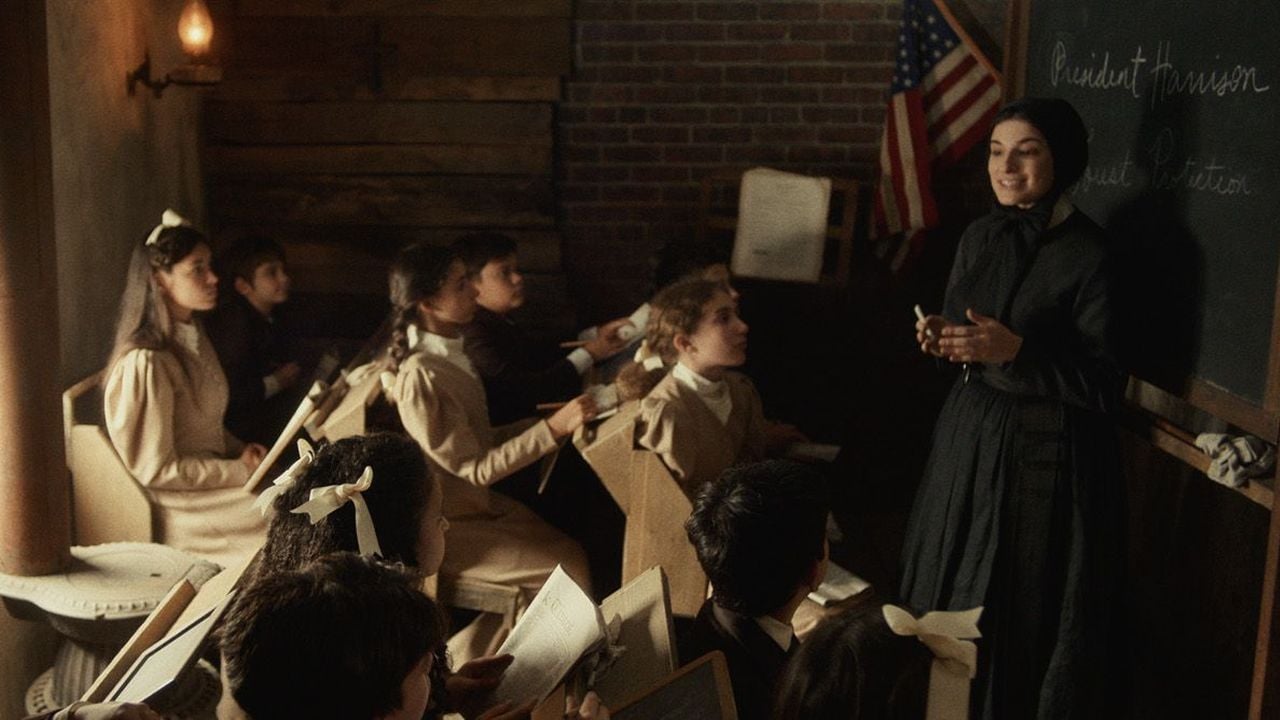
Francesca Xaviera Cabrini (Cristiana dell'anna) is the first US citizen to be canoned-and not without reason!
“The Messenger of the Pope” seems to confirm a trend: the melodramatic stirring piece as an expression of the unchecked, uncritical homage of women who actually lived and have somehow became known. The result this time is a kind of feminist SoAP-OPERA, a modern “gazebo” filming: According to a pre-drawn pattern, it is about a woman as a model with commendable humanistic principles that has to prevail in an enemy world of men. While two other women's biopics in recent years, “The widow Clicquot” and “Maria Montessori”, still show the development of a woman to the heroine, Francesca Xaviera Cabrini does not develop without any development.
Alejandro Monteverde, whose mega-successful film bombiography “Sound of Freedom” about the human rights activist Tim Ballard, due to possible research errors and dubious connections to conspiracy theorists, did not remain undisputed, the Catholic religious sister shows as a perfect personality-a woman with tender health and iron will, combative to self-exposed and full Empathy. So it is from the beginning, and so it stays. Unfortunately, the predictable act is overlaid by an overly sultry soundtrack including shoe choirs.
Strong pictures!
The fact that boredom rarely arises despite the impressive term of 145 minutes is due to the enthusiastic camera work with many light-dark contrasts and partly scissors-like compositions. In addition, there are atmospheric film sets in which the New York of the 1890s will be resigned in all its opposites.
Only more praise is due to the main actress: “Gomorrha” star Cristiana Dell'anna plays Cabrini as upright and, for all determined personality, kind to the mark. Narrow and pale, sickly, but with a straight back and raised chin, always in an eye contact with the opponent, and there is plenty of that. Monteverdi turns her an over-woman whose religiosity is less in the foreground than her humanism. She is not a prayer, but a tough woman who knows how to assert herself. Not because, but even though it is a nun.
Conclusion: “The Messenger of the Pope” celebrates Francesca Xaviera Cabrini in wonderful pictures as an idealized female figure, which was a Catholic nun, whose religiosity does not play a major role in the film. The approach could be feminist, there would not be this thread after taste of lore novel and melodramatic stirring piece.