
At the beginning of the 1950s, Science Fiction replaced the horror film as the most successful representative of the fantastic genre at the box office. In the age of the Cold War and the nuclear threat, spectators were less interested in diffuse threats from shadow beings than in the destructive potential of rational science. One of the key films of the era remains Jack Arnold's “The Incredible History of Mr. C” (1957), in which a family man is exposed to a strange fog and pesticides, then shrinks and has to take up the fight against formerly harmless homelands such as cats and spiders.
Many scenes from the film still have an iconic character, and it is surprising that Hollywood has so far left the fabric left on the left. Against the background of current nuclear business games worldwide, the material could be certified. Now the French were faster – and Jan Kouns (“39.90”) has rediscovered the story with Jean Dujardin (“The Artist”) in the leading role. Even if the original serves as a blueprint, according to “The man who got smaller and smaller”, according to the director's own statement, one has special attention to the loyalty to work on the novel by Richard Matheson, “The Shrinking Man“*, Placed.
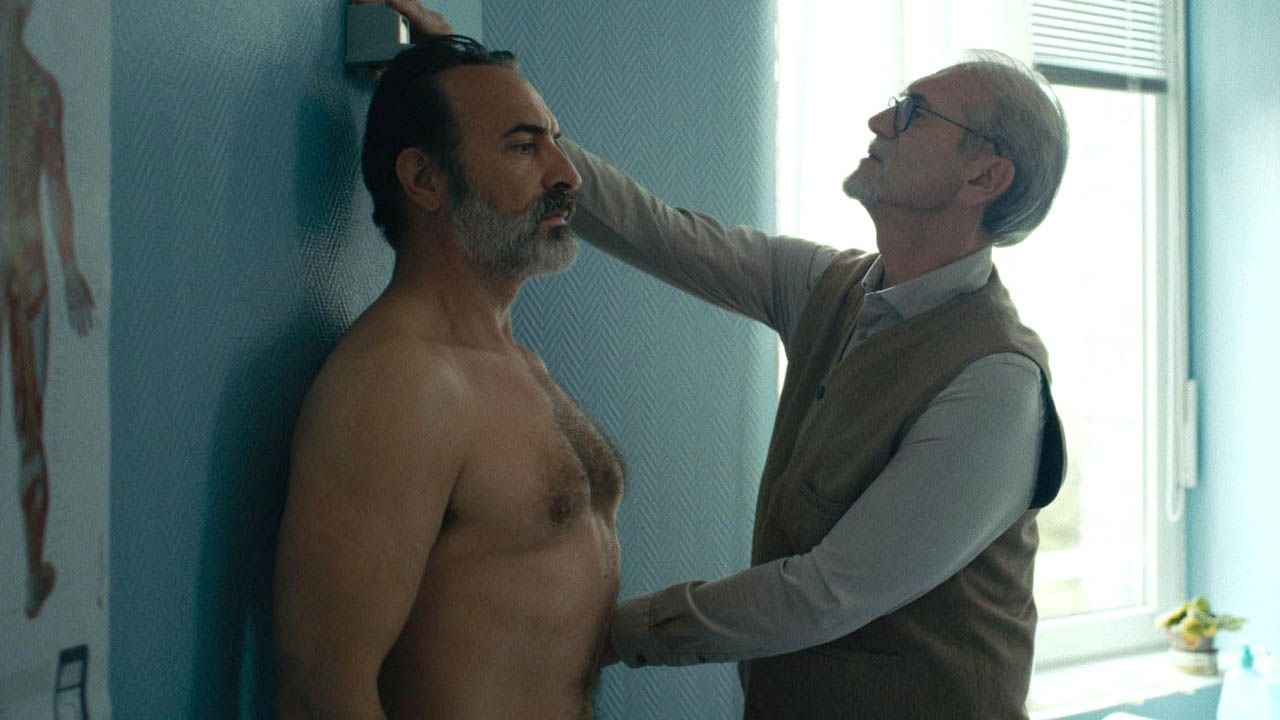
Family man Paul (Jean Dujardin) is getting smaller – but no doctor finds a cause of his unusual suffering.
At first, little changes in the starting situation. Paul (Jean Dujardin) is a shipbuilding entrepreneur and leads a cozy picture book life with his wife and daughter on the French coast. In his swimming rounds in the ocean, he occasionally observes strange weather phenomena, but does not think anything about it. One day he realizes in the morning ritual that many of his shirts no longer fit him – the crawls are too far, the sleeves too long.
He initially ignores the phenomenon, but when it becomes unmistakable that it falls more and more in himself, he completes an odyssey through various health facilities. However, the doctors cannot find the cause of his suffering, all physical examinations do not result in a suspicious finding. And yet Paul continues to shrink. Soon he will be so tiny that he moves into his daughter's doll house and the domestic cat becomes dangerous for him. The formerly idyllic family life is becoming more and more a nightmare …
From home drama to the sci-fi spectacle
Jan Kouns stormed into the film scene in 1997 with the wild and bloody European tarantino derivative “Dobermann” with Vincent Cassel and Monica Bellucci in the leading roles. Later he could hardly build on his first success, his career as a director then led him from comic films about artist biographies to French comedies. A clear manuscript was rather limited. In the current case, experience in different genres pays off with a pleasantly old -fashioned calm and formal versatility.
Kounen initially imagines the film much more than Arnold as a domestic claustrophobes drama, which seems almost completely cut off from the outside world. The exhibited media circus of the original film is completely missing, doctors and family react with a shrug at Paul's situation at best, the socio-economic aspect at some point is completely in the background. In contrast to the original, there are no explanations for Paul's situation – the weather phenomena mentioned at the beginning remain a footnote.
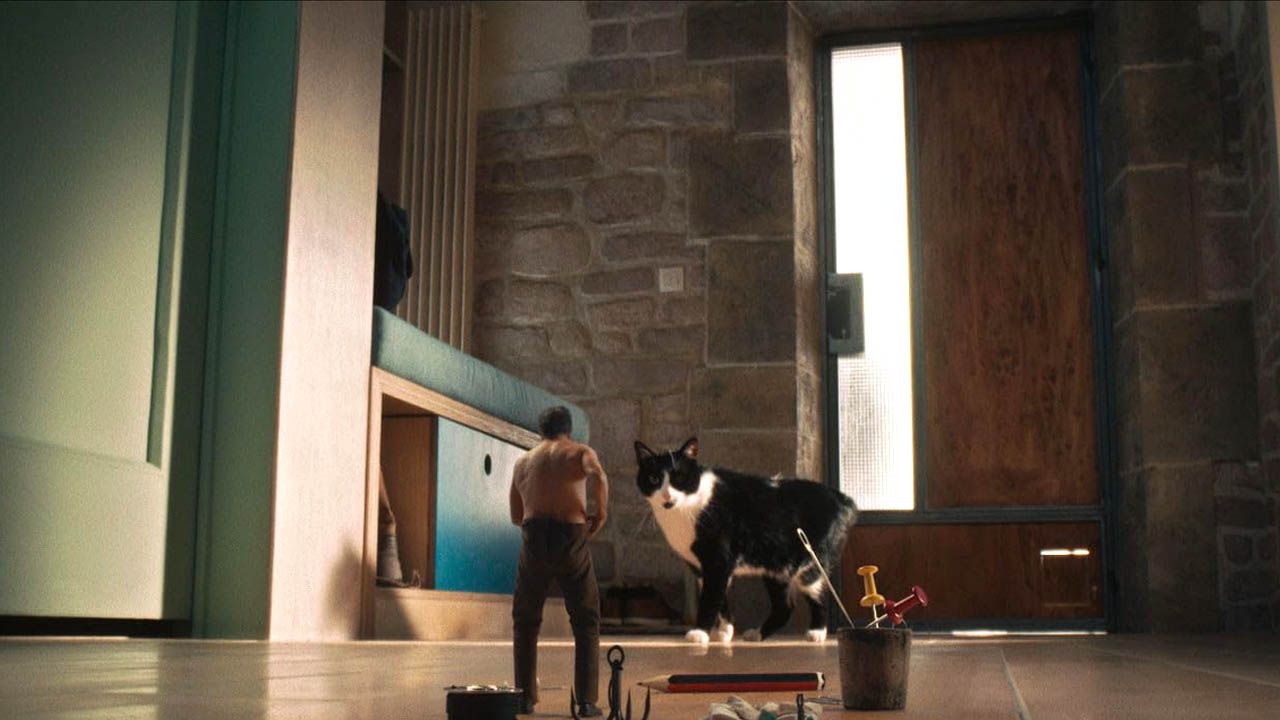
Soon Paul will even have to flee from his own cat!
The film indicates some explanations, but does not formulate any of them. The fact that as a hero we have a middle -aged man who shrinks into insignificance in front of wife and daughter could also be read as a comment on the crisis of masculinity. But you cannot nail the new interpretation on it. First of all, it is crossed by a melancholic-existentialist atmosphere, which even works through the film-staged action and tension moments.
Formally, the film offers some qualities. The WidScreen camera of Christophe Nuyens attractively captures the light-flooded rooms and external shots in the early third of the film and masterfully masters the switch to dark rooms in the last third. She is close to the protagonist, but still agile and scores with varied perspectives. This is expressed in rapidly staged but always clear action scenes. The two-time Oscar winner Alexandre Desplat (UA “Grand Budapest Hotel”) also controls a memorable, albeit sometimes a bit too loudly sounding score, and the equipment and the effect work can also be convincing.
Jean Dujardin is the highlight of the film
The biggest special effect of the film is, however, its main actor, Jean Dujardin. He bravely inserts the blows of fate that beat him up never becomes as angry as his counterpart in the original and thus offers an ideal projection surface for existentialist world pain. You feel and suffer with him every second of the film. Some will certainly disturb the melancholic note, which repeatedly dampens the blockbuster ambitions of the film. She took me more for the film.
Conclusion: Jan Kouns and Jean Dujardin deliver rapid entertainment in the French update of the US science fiction classic, which may sometimes be a little too undecided between parabolic mysticism and big budget action. For this, the film scores with a formally careful staging and a well -placed leading actor.
We saw “the man who got smaller and smaller” at the Fantastique Film Festival in Strasbourg.