
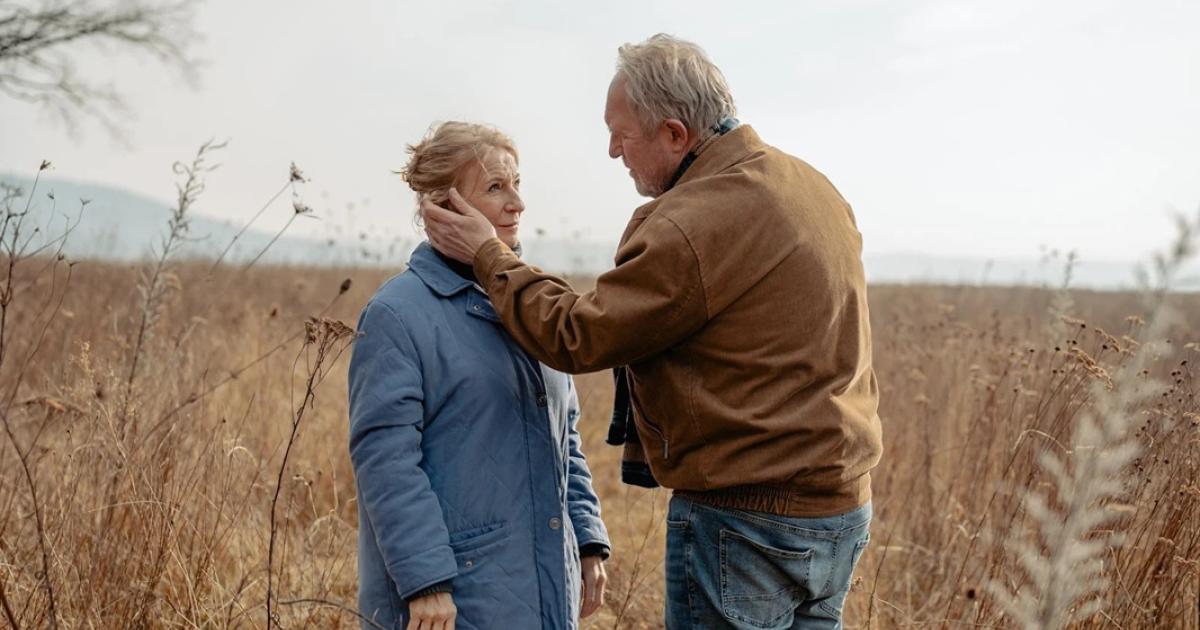
A special feature film debut without clichés and kitsch about a man suffering from dementia, in which Harald Krassnitzer shines.
With “The Lost Man”, director Welf Reinhart creates a remarkably sensitive feature film debut, told with his own tone, which approaches a topic that often oscillates between sentimentality and clinical distance in the cinema. At the center is a complex love triangle between Hanne (Dagmar Manzel), her husband Bernd (August Zirner) and her ex-husband Kurt (Harald Krassnitzer), who suffers from dementia.
What initially seems like a tragicomic starting point – a man who has forgotten that he has long been divorced – quickly develops into a finely observed study of love, responsibility and identity. The film never focuses on the disease dementia itself, but sees it, as Krassnitzer aptly put it in an interview with spot on news, “more as a means of transport” for larger questions such as: “What does love mean? What does friendship mean? When do we actually start to take life seriously and into our own hands?”
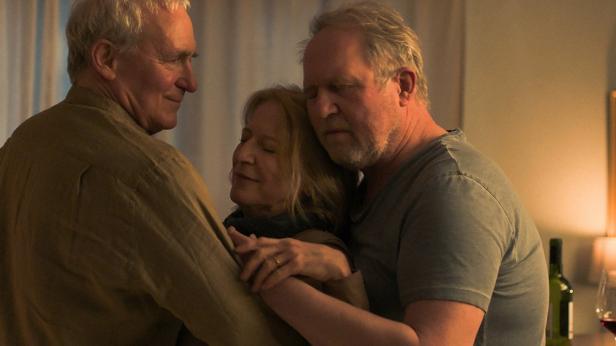
Scene from “The Lost Man”
Not a “dementia film”
It is precisely this perspective that makes the film so worth seeing. Because “The Lost Man” consistently refuses to be easily categorized as a “dementia film”. Instead, it unfolds an emotional field of tension in which memory and the present, a sense of duty and longing wrestle with one another. When Kurt stumbles through everyday life with almost youthful ease, an irritating ambivalence arises: his illness destroys – and at the same time opens up moments of closeness and immediacy. Krassnitzer describes this impressively: “There are many moments within this situation that are very lively, warm and lovable.”
The script by Reinhart and Tünde Sautier strikes an impressive balance between tragedy and quiet humor. The scenes in which the characters try to deal with Kurt’s reality are particularly strong – for example when Bernd invents the absurd but functional lie of an “open marriage” to Kurt. This is where the film’s great strength becomes apparent: it observes instead of evaluating.
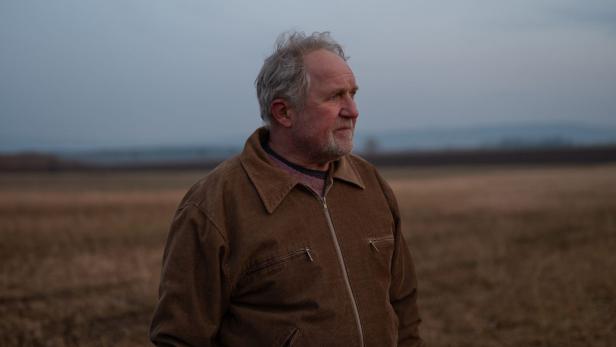
Scene from “The Lost Man”
Krassnitzer without clichés and kitsch
The ensemble of actors is appropriately cast. Manzel gives Hanne a quiet torn between old love and new commitment, while Zirner plays the increasingly insecure Bernd with subtle reserve. And Krassnitzer? He shines in his portrayal, which avoids any form of cliché and kitsch. Instead, he shows a man who slowly “loses” himself without ever completely losing his dignity. Maybe that’s why his statement has such an impact: “Everyone is afraid of this state of losing oneself, of dissolving oneself. And also of the dependence, which we find degrading – when one is no longer able to control or correct oneself. That contradicts our understanding of a dignified life.”
Visually, the film relies on calm, almost contemplative images that capture rural isolation as well as the inner states of the characters. Nature repeatedly becomes a mirror of emotional processes.
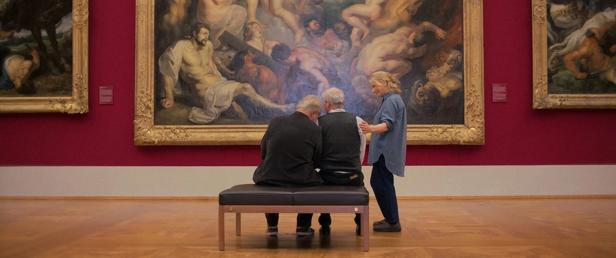
Scene from “The Lost Man”
Little moments of happiness
However, “The Lost Man” is strongest in its nuances. It shows the excessive demands on relatives as well as the structural problems of an overloaded care system without becoming too graphic. At the same time, there is room for tenderness, for small moments of happiness – for what Krassnitzer describes as “incredible intensity and tenderness”.
In the end, this film is less a story about forgetting than about what remains: relationships, feelings, fragments of a shared life. And perhaps also the uncomfortable realization that love doesn’t disappear – even when memory does.
4 out of 5 unforgettable movie moments