
“The Photographer” with Kate Winslet was a real arthouse hit in 2024. In Germany alone, more than half a million people saw the biopic about war photographer Lee Miller in cinemas. These are promising signs for the film “The Girl with the Leica,” which was shot primarily in German; after all, it is about Gerda Taro (Emilia Schüle), the first war reporter in history who was killed while doing her job.
When she was hit by a tank at the Battle of Brunete in 1937 at the age of 26, around 100,000 people came to her funeral in Paris, which also served as a demonstration against fascism. But it’s not just their profession that the two women have in common, but also the fact that they would probably have been completely forgotten after their death if fortunate accidental discoveries hadn’t brought them back into the collective memory.
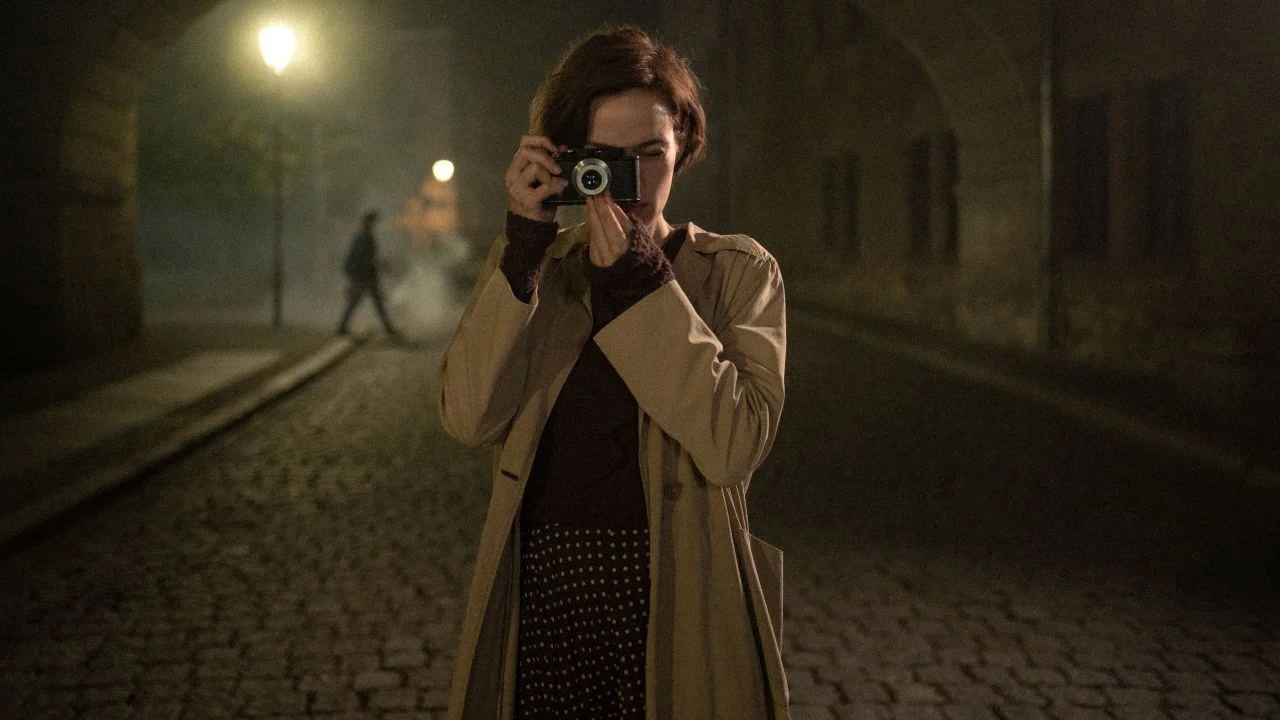
It was only 60 years after her death that the world finally learned what Gerda Taro (Emilia Schüle) actually achieved as a war photographer.
In Lee Miller’s case, it was her son and daughter-in-law who discovered boxes containing more than 60,000 negatives in the attic in 1977. In the case of Gerda Taro, the rediscovery took 20 years longer – but it was also much more spectacular. When her work was supposed to be smuggled out of Paris after her death, the suitcase probably ended up in the Chilean embassy instead.
It wasn’t until 60 years later that the photographs suddenly reappeared – in an attic in Mexico, of all places. Two war photographers, two attics, but then two very different films; Because where “The Photographer” turns out to be a largely typical, melodramatic, off-the-shelf Hollywood biopic, the Italian director Alina Marazzi (“9×10 Novanta”) opts for a much more experimental approach.
Snatched from oblivion
Alina Marazzi is considered one of the most influential feminist voices in contemporary Italian cinema. So their concern to give Gerda Taro – based on the award-winning novel of the same name by Helena Janeczek – the visibility she deserves is only more understandable. After all, the Jew, born Gerta Pohorylle in Stuttgart in 1910, not only had to give up her birth name in order to have international success as a photographer, she also always published her work under a common banner with the later world-famous war photographer Robert Capa (also a marketing pseudonym for Endre Ernő Friedmann).
After her death – as so often in history – the rest of the world naturally assumed that the photos could only have come from the man. Alina Marazzi finally clears up this misjudgment that has persisted for decades and shows Gerda as someone driven by her insatiable thirst for freedom and her anti-fascist stance, which sweeps everyone around her away like a human hurricane. Unfortunately, this absolute drive rarely reaches the audience.
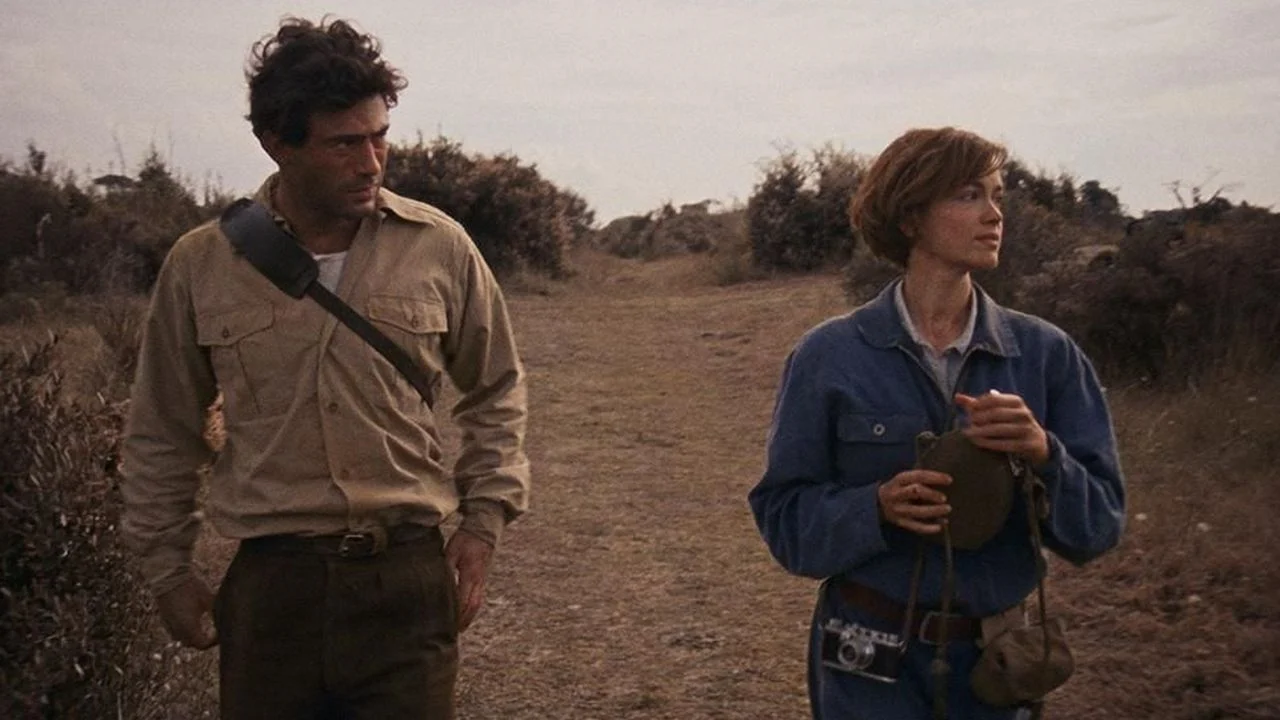
Even against the advice of her friends, Gerda is drawn back into the increasingly brutal Spanish Civil War.
The pure game scenes in particular sometimes seem like the chamber play-like reenactment inserts in TV history pieces – stiff, staid, with dialogues in which the characters mainly tell each other what they are currently doing or planning to do. So the spark doesn’t fly for this fascinating personality. However, things always get exciting when Alina Marazzi, who wove private home videos into a portrait of her mother in her most famous film “For One More Hour With You,” incorporates contemporary archive material. Sometimes the choice is obvious, for example when we go to the cinema to see the Bertolt Brecht film “Kuhle Wampe” we also see excerpts from the work that would later become an authoritative document of the labor movement.
But even more often it happens purely associatively. A figure turns around and instead of the typical counter-cut, we suddenly see historical film clips or news snippets that convey the current mood almost better than an actual recording of the location ever could. And once, in the midst of her meditation on the power of memory, the director even finally dissolves the boundaries between time and space when there is suddenly a demonstration against advancing fascism in Paris with the rainbow flag and the Ukrainian flag.
Conclusion: Alina Marazzi brings a whole range of elements from her formally experimental documentary work into “The Girl with the Leica”, especially when it comes to incorporating original photographs and film recordings. And these are exactly the moments that work best. The pure, often chamber play-like game scenes, on the other hand, seem stiff and museum-like, so they don’t fit the driven, freedom-loving protagonist at all. Only when there is dancing do the characters – and with them the film – really come to life.
We saw “The Girl with the Leica” at the Venice Film Festival, where it had its world premiere as the opening film in the Orizzonti series.