“He/She is a 10/10, but…” begins a popular TikTok meme, in which a seemingly perfect person suddenly appears in a different light because of a single irritating trait. These are usually so-called “icks”, i.e. small, actually banal peculiarities or behaviors that suddenly and instinctively trigger a feeling of aversion. The Norwegian director Kristoffer Borgli (“Sick Of Myself”) takes this principle to a possible extreme in “The Drama – Again” – and yet doesn’t go particularly far with it. Even after the first screenings, reports began circulating about a particularly disturbing twist that should under no circumstances be revealed in advance…
… and in the run-up to the press screening that I attended, the journalists present were reminded that they should avoid spoilers at all costs. But it’s not a plot twist in the strictest sense: the big reveal comes after about 20 minutes – and is less a twist that rearranges the events and more the actual foundation of the plot. Writing about Kristoffer Borgli’s second English-language film after the Nicolas Cage dream madness “Dream Scenario” without going into detail is perhaps not impossible, but at least quite a challenge. Of course I still do my best.
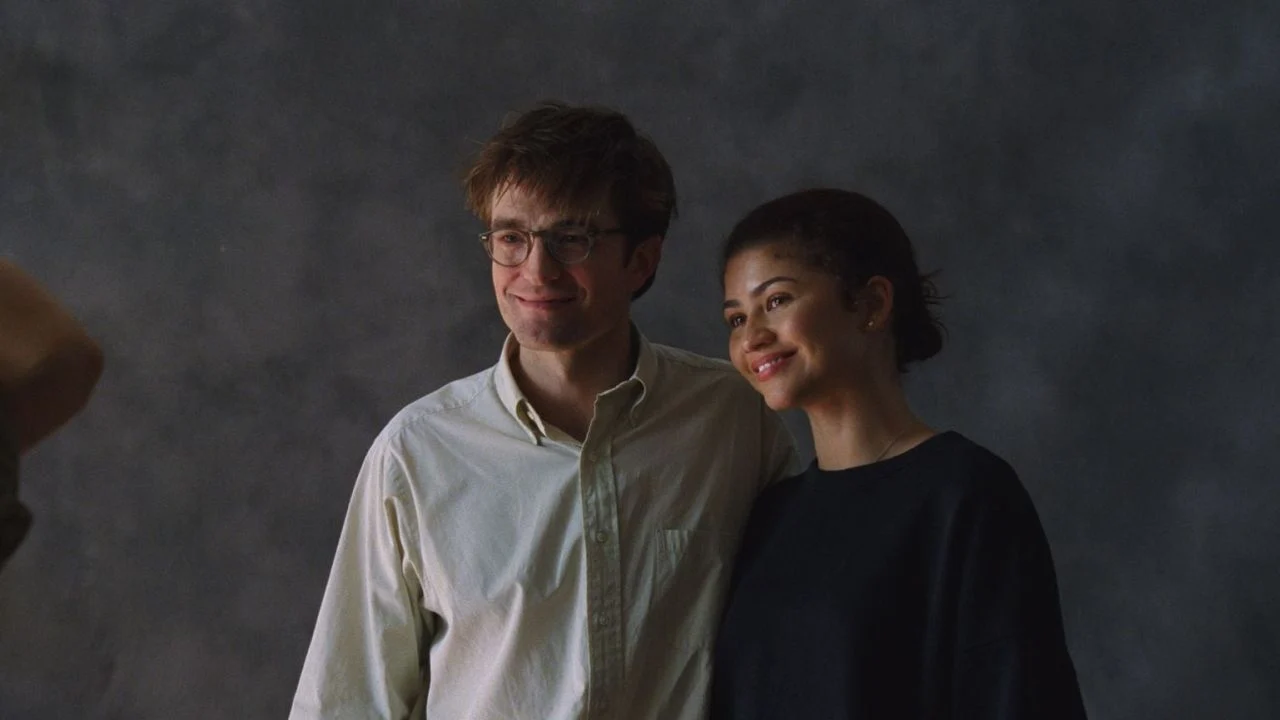
After Jennifer Lawrence in “Die My Love”, Robert Pattinson is now sliding straight into a relationship crisis with Zendaya a few months later.
But at least this much can be revealed: “The Drama” is certainly not a wedding comedy, as suggested by the previously published promo posters – even if Borgli lets the film begin as a kind of RomCom in fast forward. The Meet Cute in a hip coffee shop gives at least an idea of what a “real” romantic comedy with Robert Pattinson and Zendaya – two of the most attractive and charismatic Hollywood stars of the younger generation – might feel like. But Borgli makes the endearingly awkward introduction between museum curator Charlie Thompson (Pattinson) and bookseller Emma Harwood (Zendaya) uncomfortable from the start.
On the one hand, he works with Jump cutssound dropouts and atonal clarinet sounds that move as nervously twitching as the constantly tense Pattinson. On the other hand, the relationship begins with a first small transgression or lie: When Emma briefly disappears into the toilet, Charlie takes the opportunity to quickly photograph the book she left on the table – and then make her believe that he has also just devoured the novel.
Scenes of an impending marriage
The fib is discovered during the first date, but it works – Charlie and Emma become a couple. Starting with Charlie’s preparations for his wedding speech, “The Drama” unfolds the first two years of the relationship in a quick, temporally fragmented montage: good sex, familiar lounging around, inside jokes that are becoming established, marriage plans – scenes of a harmonious partnership. However, that all comes to an end when Emma and Charlie meet in a restaurant with their friends Mike (Mamoudou Athie) and Rachel (Alana Haim) to plan the wedding menu.
They try out different dishes, the rosé wine flows freely – and at some point Mike suggests a game: everyone present has to reveal what the worst thing they’ve ever done was. Rachel, for example, tells the group that she locked her mentally impaired neighbor boy in the closet in a forest hut and left him there. But it is Emma’s story – which, as I said, cannot be revealed here – that changes the mood in a lasting way, far beyond the events of the alcohol-soaked evening.
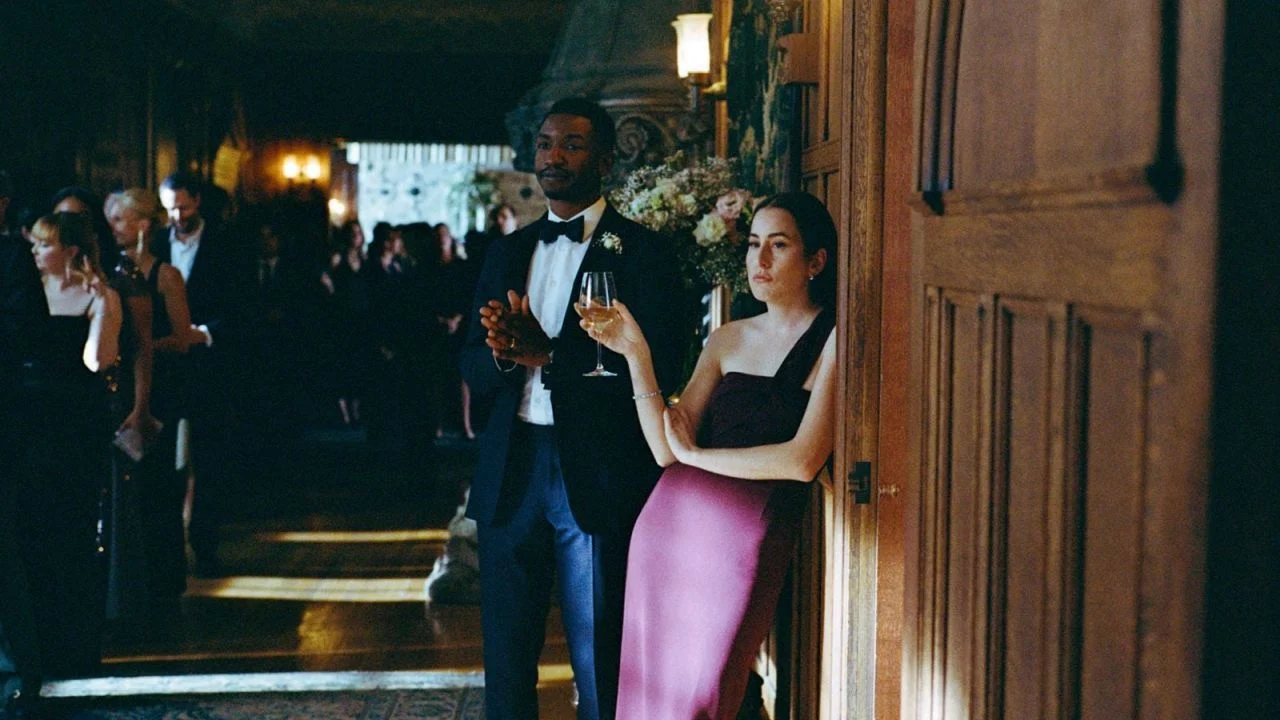
With the US singer and “Licorice Pizza” leading actress Alana Haim, there is a third star with cult appeal in “Das Drama”.
From now on, not only the relationship but also the planned marriage is up for grabs for Charlie. Emma’s revelation raises numerous questions that – as the stars have repeatedly emphasized in interviews – should, if possible, continue to be discussed after the credits have ended: How well can you really know the person you share a life with? What significance does a person’s past have for their shared present and future – and where is the limit of what is acceptable? Does the moral weight of a planned act weigh as much as that of one actually committed?
The way Pattinson slips further and further over the edge of a nervous breakdown from scene to scene is great – as is Zendaya, who consciously plays with her star persona. She is an ideal person to like, appears charming and winning, but at the same time you can never quite get to the bottom of her. Charlie’s growing fear that he might be about to marry a psychopath would be the ideal starting point for an escalating farce or even a real thriller. But as with “Dream Scenario”, in which the whole world suddenly begins to dream about Nicolas Cage, Borgli has the right ensemble and an attractive premise at hand – but he does surprisingly little with his big serve.
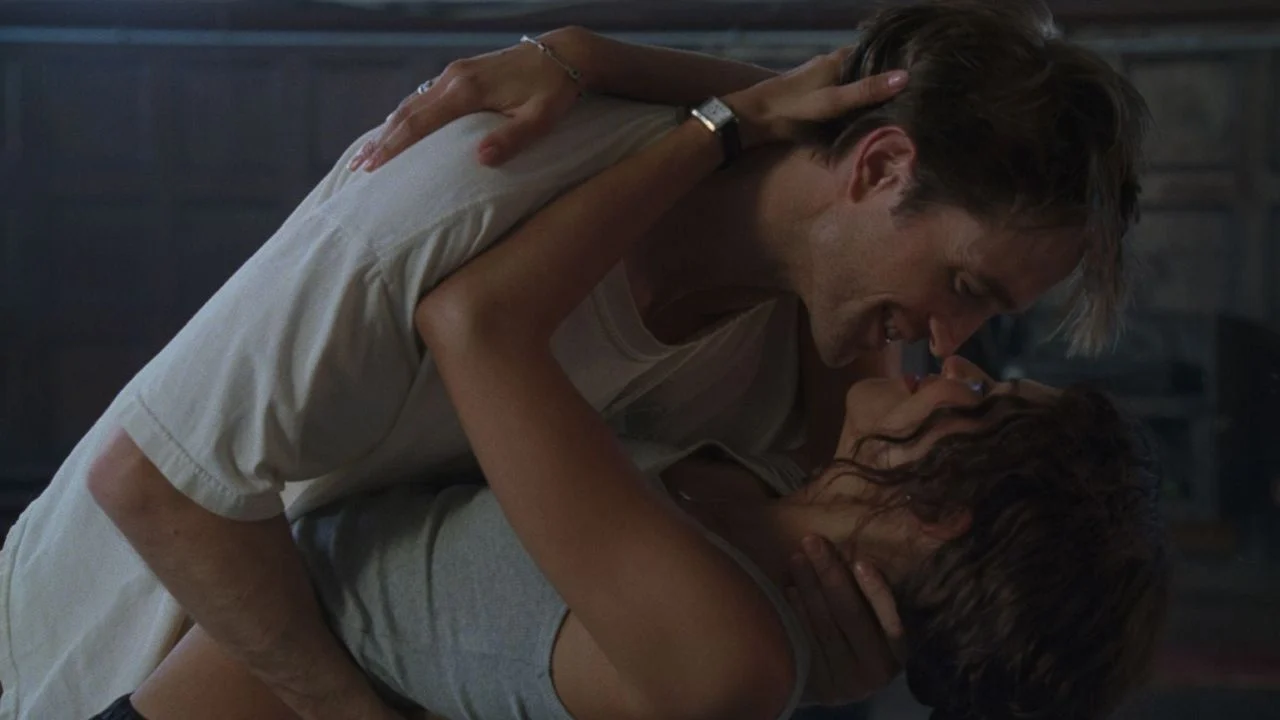
There is certainly passion in the relationship. But just in time for the planned wedding, all that’s left is cringe.
The poster of Ingmar Bergman’s “Passion” on the wall and Charlie’s mention of Louis Malle’s “Lacombe Lucien” not only reveal something about the educated middle-class background of the protagonists, but also point to a certain European auteur filmmaking tradition. Against this background, “The Drama” can be read not least as a targeted provocation for a US mainstream audience (or what the filmmaker imagines by that), in that the film adapts the charisma of its stars and the culturally strongly coded surface of a romantic comedy in order to dish out smug, half-baked barbs at specifically American sensibilities and sensibilities. The staff is transported from one unpleasant situation to the next – largely without humor, apart from a few parodic miniatures about wedding rituals.
The cringe is Borgli’s basic mode, but the whole thing is clearly not intended to be fun – even the finale Meltdownwhich the film is inevitably heading towards, “The Drama” cuts off prematurely, in keeping with the overall rather joyless production. Until then, the initial situation hardly develops any momentum of its own; rather, the script continually constructs artificial traps and refers to its own talking points. Borgli certainly doesn’t like to hear that, but: Especially with Pattinson and Zendaya in the lead roles, one would have actually much preferred to see the romantic comedy that was only pretended – which is exactly what “The Drama” has in common with the anti-romcom “What is Love Worth – Materialist”, which was released just a few months ago? After all, the RomCom genre is far too dead to continue working on it so seriously.
Conclusion: Interesting premise (which cannot be revealed), plus two charismatic stars – but in the end, “The Drama” still remains a rather unsatisfying cinematic experience.