
Anyone who wanted to buy a manure excavator in Germany in the 1950s may have come across the products of the Bavarian company Mengele Agrartechnik-and at the same time also financed the life of one of the most notorious war criminals of the Third Reich: Josef Mengele, the fleeting son of the internship family, also known as death in Auschwitz. After the end of the Second World War, he escaped thanks to the so -called rat line to South America, where – like many other National Socialists – he was recorded in the dictatorships from Argentina to Brazil.
“”The disappearance of the Josef Mengele“” Leto “director Kirill Serebrennikow has called his biographical black and white drama after the factual novel of the same name, but strictly speaking cannot be mentioned. After all, the risk of being discovered was not too great for a long time. However, what Mengele never stopped fleeing in growing paranoia and self -pity embodies by August Diehl in a grandiose, disturbing performance.
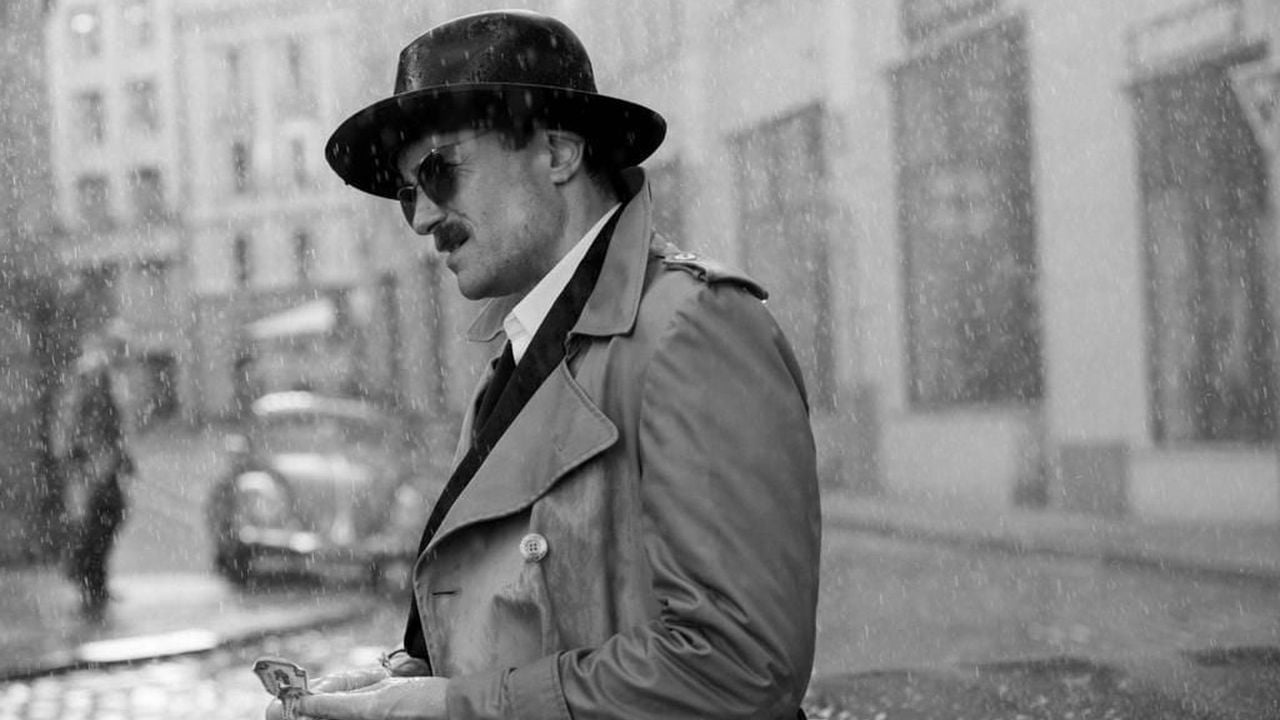
Once, Josef Mengele (August Diehl) even dares back to Germany for his family in Günzburg in Bavaria.
Buenos Aires, 1956. After the fall of Juan Perón, times in the Argentine capital have changed, and German war criminals who live here are no longer protected by the regime. Reason enough for Josef Mengele to break off the tents and leave the country. With the help of a network of German exilants, most of the National Socialists you die -up, some also war criminals, Mengele succeeds in finding new places again and again where he can immerse yourself with changing names – Georg or Peter, José or Don Pedro.
He even dares to take a detour to his family to Germany. The interest of the Federal Republic of dealing with its past is still low. In 1977 this changed at least a bit: Mengele now lives in São Paulo in Brazil, where he is visited by his son Rolf (Maximilian Meyer-Bretschneider) and confronted. Like so many representatives of the post -war generation, Rolf also wants to get answers to what his father did in the war …
The best time of his life
After an hour of an hour, Kirill Serebrennikow puts a great cut in a perfidious way: In two or three scenes, Rolf Mengele had already pressed his father to finally tell him the truth about what happened in Auschwitz. And now it finally seems to be ready: the camera is close to Mengele's face, you already suspect that a flashback is now coming-and a cut transports from the late 1970s filmed in black and white, where Mengele in front of them vegetates in front of them like an animal in front of them, to a picturesque lake, in which Mengele and his wife Martha plan and then on the ceiling in the sun.
“I could put an end today,” says Mengele to the delight of his wife, who is looking forward to dinner together with subsequent blue cake. Inevitably, one has to think of Jonathan Glazer's grandiose “The Zone of Interest”, who described the banality of evil with very similar pictures (possibly even exactly the same lake). And you also have to state in the case of Mengele: his time as a warehouse doctor in Auschwitz, where he divided the prisoners into work capable and worthwhile, while he also organized his perverse “medical” experiments, were obviously the happiest months of his life.
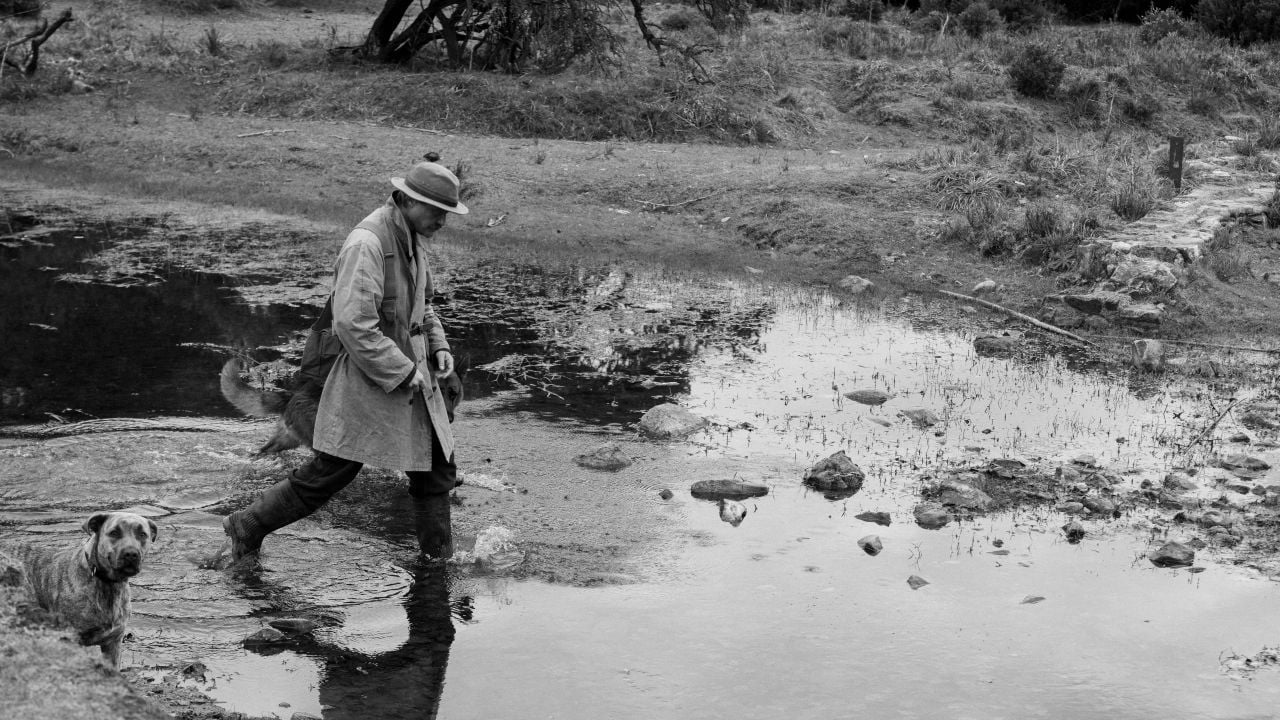
Josef Mengele can actually live freely in South America. Nevertheless, he is increasingly always paranoid …
Based on the precisely researched factual novel by Olivier Guez, the Russian Kirill Serebrennikov, who has lived in exile in exile for several years, designs the psychogram of a conviction in the service of his country: It even goes so far that he has talked himself out of saving life with the selection at the ramp in Auschwitz. He also still considers his experiments of twins, small or others in any way differing from the norm to an important service for science. A self -deception that is emblematic for the lie of an entire country, which, even after the war, preferred to escape in excuses and apologies than to deal with his past.
When the Nazis in exile in South American dream of a resuscitation of the empire, according to celebrations, blush their combat songs, while a wedding cake decorated by the local staff with swastika flag, they behave as if the Holocaust never existed. You should slowly draw a line under the past, Mengele demands – and it may have spoken out of the heart of quite a few Germans of the time (and probably also the present).
An enthroned performance
The performance, especially from August Diehl (“The Master and Margarita”), is simply terrific: over a period of more than 20 years, he plays the initially still Nazi, who is increasingly falling, who at some point may hardly look at the mirror who is going to the Hungarians in scolding tirades, which grant him (and earn a lot of money). All South Americans are also subhumans for him, only the Germans are considered a men's breed. If Mengele evades critical questions, you may see a certain understanding of your own guilt, but you can't expect something like remorse from such a man. In often minutes -long planning sequences, Serebrennikow Mengele approaches, surrounds him, but never really gets him to grasp, which may be exactly the point.
He was not a super -evil weight, but a scientist who, like so many Germans of his time, fell into the madness of the National Socialist doctrine and committed unspeakable crimes. Banal and frightening at the same time, this man, who escaped the judiciary and in 1978 – also very banal – drowned when swimming. Years after his death, the possible bones of Mengeles were discovered and in the early 1990s actually identified without doubt. In the meantime, in São Paulo, they serve as a teaching of forensics. A pretty irony for the last remains of a perfidious researcher who sent tons of deformed skeletons from Auschwitz at universities in Germany, of course only in the service of science …
Conclusion: In his biographical film “The disappearance of the Josef Mengele”, in which August Diehl shines as the face of the banality of evil, Kiril Serebrennikow approaches the Death Angel of Auschwitz with a fragmented narrative of his decades of fleeing flight through several South American countries. The focus is on the growing paranoia and the slow drifting into the final madness of one of the worst war criminals in the Third Reich – at the same time we always know that Serebrennikov always includes the history of a repressed nation.
We saw “The disappearance of the Josef Mengele” at the Cannes Film Festival 2025, where he celebrated his world premiere in the Cannes premiere section.