
At first glance, Julianne Moore’s character in The Debut may seem similar to her role in the Douglas Sirk-based melodrama So Far from Heaven. But the tragicomedy, written and directed by Jesse Eisenberg (“The Social Network”), who also plays a supporting role, quickly takes a different course. The film vividly combines a touching character portrait with sometimes light-hearted, sometimes sympathetically exaggerated situational comedy, razor-sharp dialogue and an authentic look behind the scenes of the world of provincial musical theater that is so widespread in the USA.
It’s not just Julianne Moore and her primary scene partner Paul Giamatti (“The Holdovers”) who can have legitimate hopes for Oscars thanks to their excellent acting. Filmmaker Eisenberg also impresses with an original script and strong production – and on top of that he also presents himself as a capable composer of catchy songs!
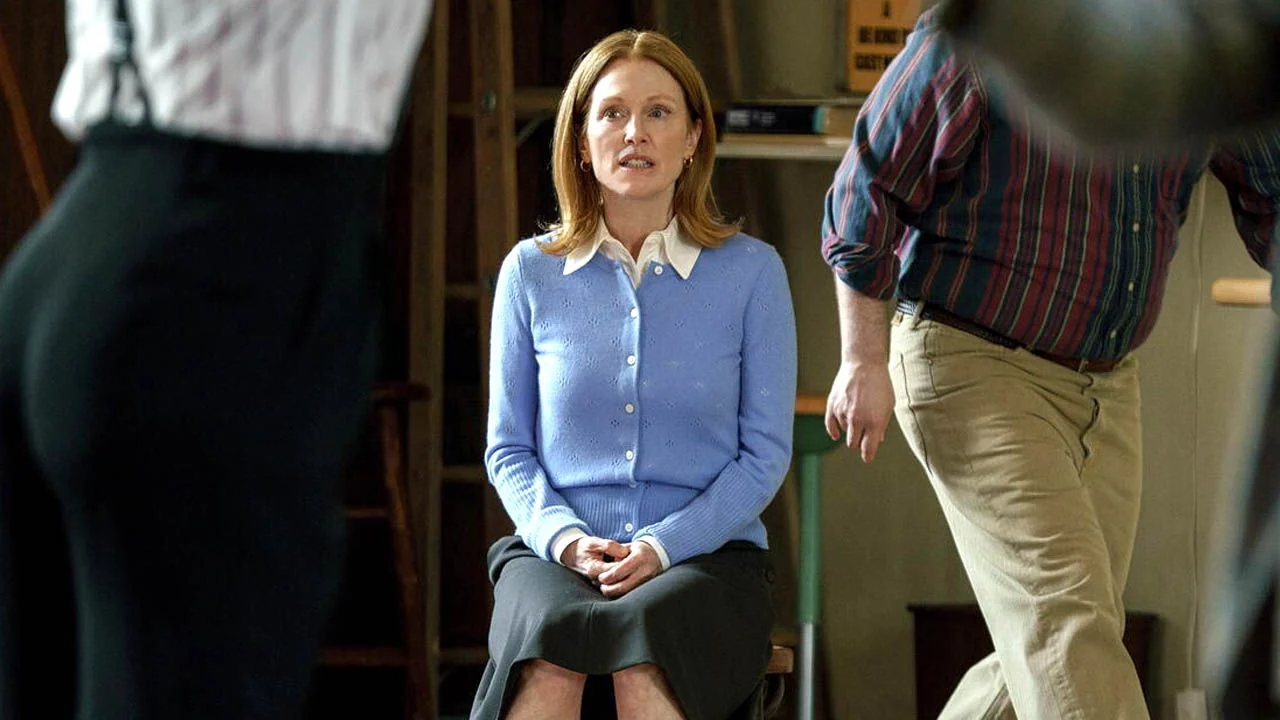
The shy housewife Mona (Julianne Moore) ventures into the colorful, hustle and bustle world of the local community theater for the first time.
Mona Friedman (Julianne Moore) is a housewife and mother in a small town in New Jersey. For years she has been ignored or taken for granted by her husband Howard (Patrick Fabian) and their almost grown twins (Jonah Diamand and Becca Suskauer). On a whim and an act of sudden courage, shy Mona goes to the public casting for a new musical at the local community theater.
Director Jerry Blankenbuehler (Paul Giamatti), who is not impressed by her performance, doesn’t even let her finish her song before he abruptly sends her away. Instead, Broadway veteran Serena Cherry (Bernadette Peters) gets the part. However, when she dropped out of the production just a few weeks before the premiere because of a more prestigious offer, the desperate Jerry called the only person who had auditioned: Mona. After a very shaky start, the stage newcomer is ready to throw herself into her role with everything she has under the strict eyes of Jerry. However, it soon threatens to overshoot the target…
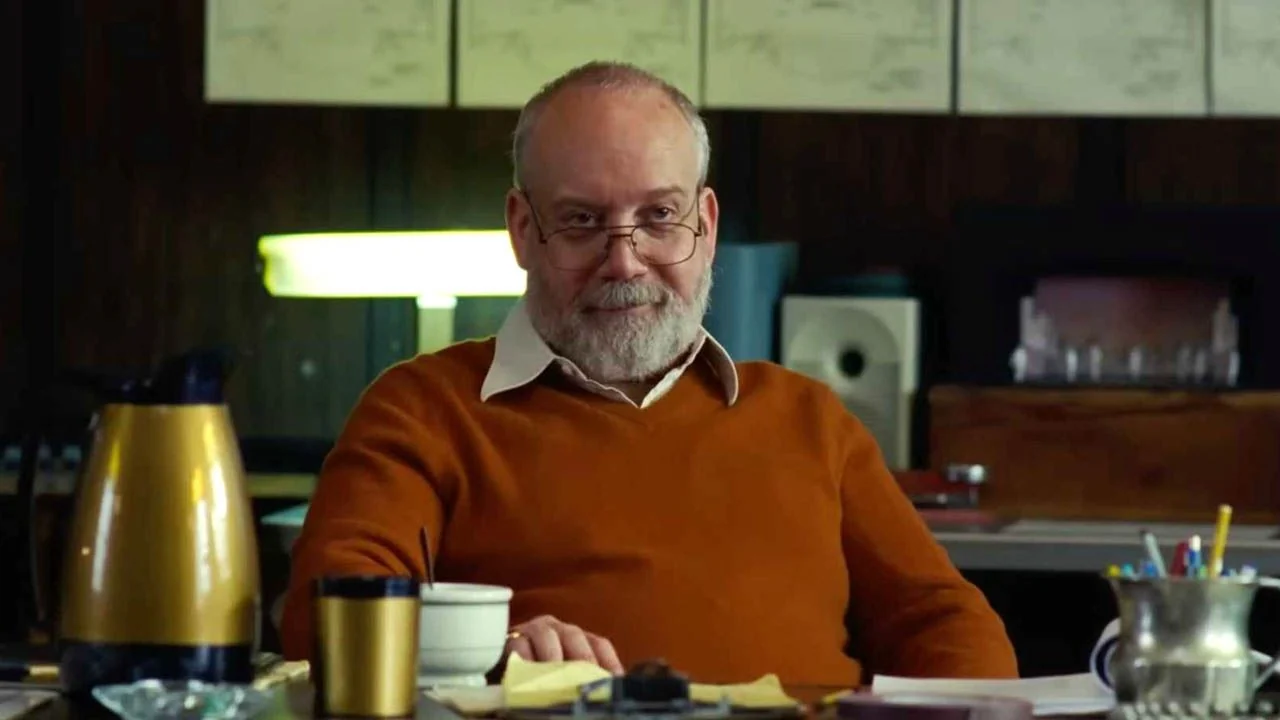
With stoic rigor, director Jerry (Paul Giamatti) pushes his ensemble members – and especially newcomer Mona – to their limits.
It is heartbreaking to see how little her family appreciates the protagonist’s dedication, work and love. And we’re not even talking about a film whose story (like the aforementioned “So Far From Heaven”) is anchored in the 1950s, where this kind of behavior and thinking was probably still completely normal. “The Debut – Her Big Appearance” takes place in our present, and yet the character of Mona feels like a relic from times gone by. But they probably still exist: women who sacrifice themselves all their lives without receiving even a shred of appreciation in return.
After experiencing her in her private environment, even for us as viewers it is slightly strange, almost suspicious, how committed and warm-hearted Mona is received by the cast and crew members of the piece and how she is welcomed into their midst. In particular, the leading actress, played by Halle Bailey (“The Little Mermaid”), and assistant director Piotr (Eldar Isgandarov, “Club Kid”) make a touching effort to care for the nervous newcomer. It’s understandable why from now on Mona prefers to spend her time at rehearsals rather than at home with her family. Especially since she only notices her absence when dinner isn’t on the table on time. Julianne Moore conveys the balancing act between Mona’s depressing everyday life and the euphoria she feels in the company of her new acquaintances, who are always helpful and support her unconditionally, with both virtuosity and confidence.
Julianne Moore and Paul Giamatti are great together
Everything would be wonderful if the premiere day of the tabloid piece titled “Nosy Neighbors” wasn’t fast approaching. Because as beautiful as the surroundings are, Mona’s acting during rehearsals is mediocre. While her colleagues encourage her and surround her with affection, director Jerry mercilessly lets her know again and again how inadequate her performance still is. The once again brilliant Paul Giamatti seems to love being the merciless driver. In the US press, his Jerry was repeatedly compared to JK Simmons’ sadistic bandleader in “Whiplash” – but this was only partially true. Because Jerry comes across as a lot more human, also because he himself is much more vulnerable.
The best moment between the two stars is a key scene for Mona, in which the previously frightened wallflower shows significantly more self-confident features for the first time. Jerry asks her to finally convey “The rent is due!”, the main sentence of her character Miss Danielle, which has been repeated several times, in a credible and authoritative manner. She should say it so convincingly that even he would actually be willing to pay. In desperation, Mona then falls into a tantrum accompanied by tears and violent swear words. Jerry is finally happy, but Mona’s psyche takes a hit from which she can’t seem to recover.
Be careful, danger of earworms!
It should come as no surprise to those familiar with Moore and Giamatti’s filmographies that both deliver great performances. But Eisenberg’s work is also far more than remarkable. With his previous productions “When You Finish Saving The World” and “A Real Pain”, he had already shown, as a screenwriter and director, the ability to harmoniously combine absurd comedy and emotionally moving drama. For “The Debut,” Eisenberg went even further by writing all of the songs in the fictional musical at the center of the plot entirely himself. The total of six songs not only fit perfectly into the ambience and each take on new meaning with repeated use, they also catch the ear in an outrageous way.
Eisenberg’s film takes an often satirical look at so-called “method acting” – an acting technique in which some actors completely immerse themselves in their role and remain in it for the entire time of filming, including during breaks in filming and overnight. Your own personality is completely ignored. Marlon Brando, Robert De Niro and Daniel Day-Lewis are among the best-known users. Mona also takes her small supporting role far more seriously than the rather banal musical theater actually justifies. This leads to the boundaries between her real life and that of the stage character she embodies becoming increasingly blurred.
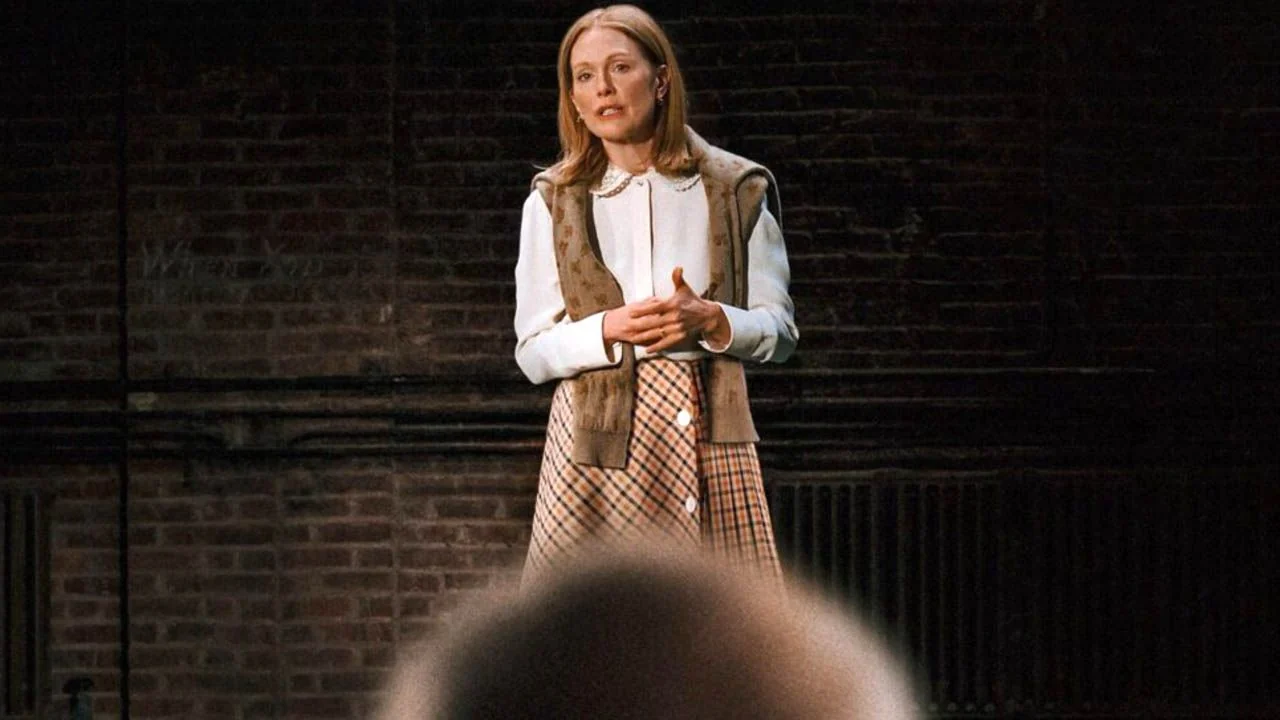
On stage, Mona grows beyond herself – and soon completely merges with her role.
Encouraged by Jerry, Mona tries out this technique – which leads to some pathetic to extremely embarrassing or even dangerous moments for her. Eisenberg could have been content to simply expose the character to ridicule at these points. But instead he always lets her retain her dignity, even in such passages. Mona’s story develops into a character study about a woman who was previously completely withdrawn and lost in life, who finds her voice and her own path both on stage and in her private life.
Conclusion: With her furious performance in this mix of emotional character drama and light situational comedy, Julianne Moore could already have the next Oscar nomination in her pocket. Because the audience will be only too happy to laugh and cry with her character before they leave the cinema completely satisfied, with one of the catchy songs of the comedy-drama in their ears or on their lips.