At least that about archery is true. At a considerable distance, Robin Hood (Hugh Jackman) shoots a fleeing little boy in the back of the head, so that the arrow emerges through the front of the eye. If you hear the name Robin Hood and immediately think of Errol Flynn (“Robin Hood, King of the Vagabonds”), Kevin Costner (“Robin Hood – King of Thieves”) or an animated fox (Disney’s “Robin Hood”), you will otherwise experience a blue wonder. Because compared to the first three quarters of an hour of “The Death Of Robin Hood”, even Ridley Scott’s decidedly rough “Robin Hood” action blockbuster with Russell Crowe in “Gladiator” berserk mode is downright harmless.
Michael Sarnoski (“A Quiet Place: Day One”) doesn’t just dismantle the legend of the Sherwood Forest outlaw who, with his companions, takes from the rich to give to the poor, he literally tears it apart! This Robin Hood has murdered men, women, sons and daughters for decades without ever giving them a second thought. Meanwhile, the children and grandchildren of his victims have grown up full of a thirst for revenge – and so the supposed folk hero has to kill them too before they get to him. In “The Death Of Robin Hood” there simply seems to be no way out of this eternal cycle of senseless murder.
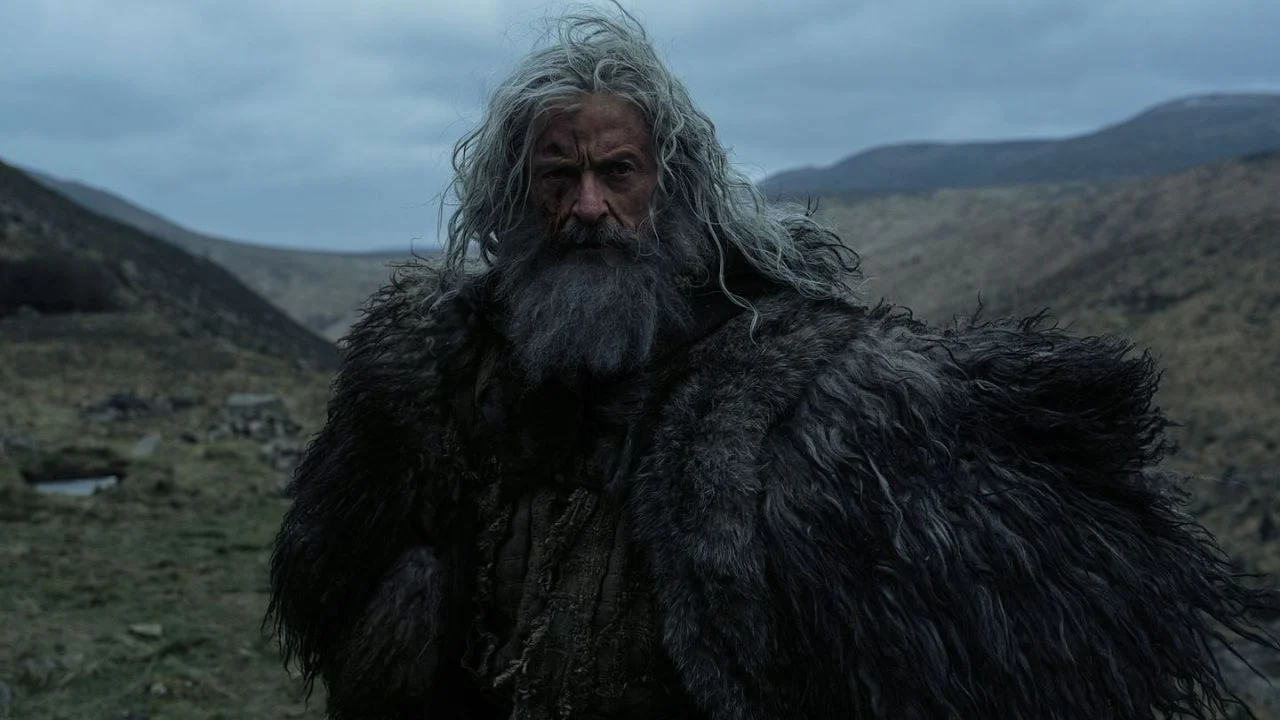
Hugh Jackman is the exact opposite of the Robin Hood we know from books and films!
It’s only been five years since Michael Sarnoski provoked storms of enthusiasm with his feature film debut: In “Pig”, Nicolas Cage plays Rob, who lives alone in the forest and only reluctantly returns to civilization when his beloved truffle pig Apple is kidnapped. That sounds like a “John Wick” variant with piglets instead of puppies, but it turns out completely differently: instead of brute force, culinary gentleness follows. Rob now becomes Robin – and the look is similar, including a wild beard and unwashed long hair. But even on the poster for “The Death Of Robin Hood” it’s bold and bold: “He’s not a hero!”
This time, behind the dilapidated hermit facade, there is no surprising master chef, but an ice-cold killer who has already wiped out so many lives in his lawbreaking career that he can no longer remember most of them. But then he gets another task: his old friend Little John (Bill Skarsgård), who had now built a middle-class existence for himself under the false name Edward, has been exposed. Since then, his wife and daughter Margaret (Faith Delaney) have been held hostage. Already tired of his own life, Robin Hood joins the liberation mission…
Not everyone can handle that much hardship
… and just like his non-hero, Michael Sarnoski takes absolutely no prisoners: When Robin Hood cuts carotid arteries or slits throats, you often hardly notice it, Hugh Jackman moves the small dagger so quickly and precisely. But it doesn’t stop with sneak kills like this – and then things get really intense. “The Death Of Robin Hood” may be visually reminiscent of earlier A24 productions such as “The Witch”, “The Green Knight” or “Lamb” with its harsh, threatening images of untamed, rocky landscapes, but when Robin and John storm the family farm, they are more likely to be competing with the “Terrifier” clown – including the lower jaw being torn out by hand.
At the Berlin press screening, the apparently unexpected level of violence quickly drove some colleagues out of the hall. “The Death Of Robin Hood” is anything but a clumsy gore-fest. Instead, the majority of the film takes place on a remote small island, where the nun Brigid (Jodie Comer) is as caring about her seriously injured, mysterious patient as she is about the stately orchard. From this place of healing, “The Death Of Robin Hood” develops into an intimate drama about the question of whether redemption is always possible – or whether there isn’t a point at which one has simply taken on too much guilt.
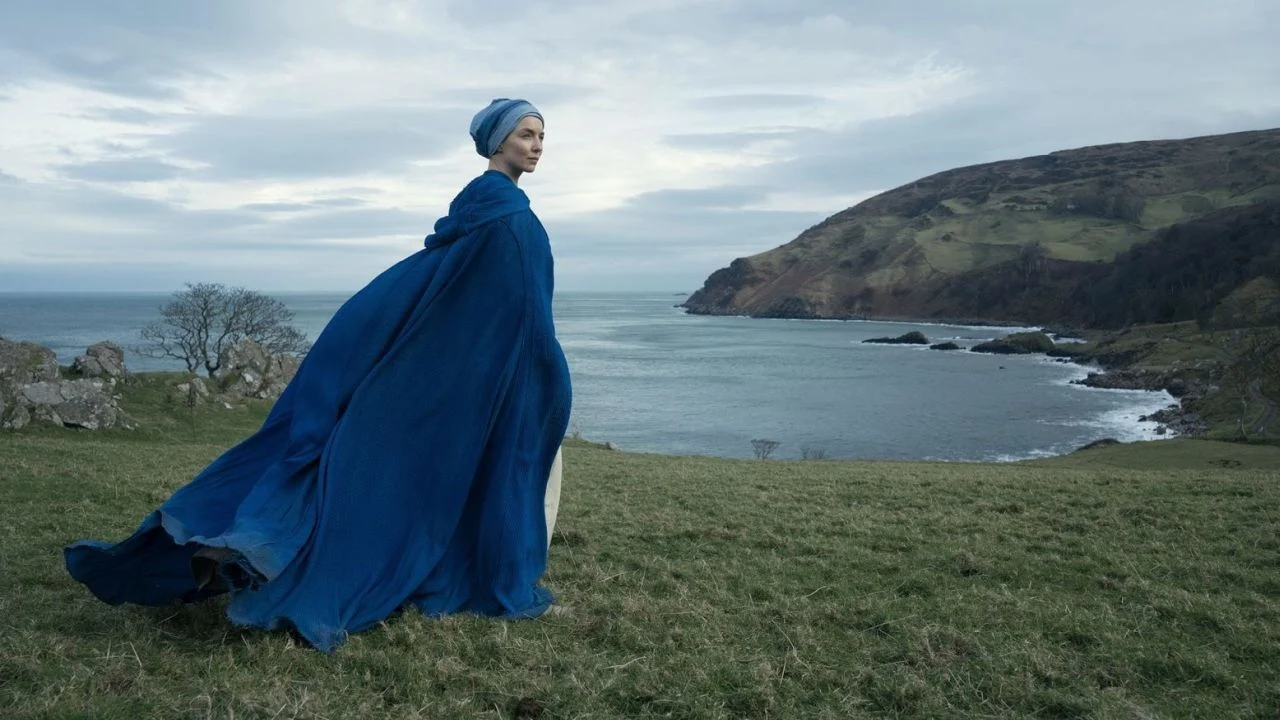
The kind-hearted sister Brigid (Jodie Comer) also seems to be carrying a dark secret with her.
At this point, little Margaret – who would probably win any Merida doppelganger competition – comes into play again. Embittered old men who suddenly have to look after children and thereby possibly find their way back to life – of course we know that from the cinema, just think of Clint Eastwood in the magnificent “Gran Torino”.
But it’s something different when it was explained in detail just a few minutes before that this grumpy old man had been cutting off the heads of even defenseless children his whole life. Hugh Jackman – he was just seen in the cinema as a good shepherd in “Glennkill: A Sheep Crime” – really has to bring all of his natural charisma into the balance in order to perhaps not necessarily get us on his side, but at least to conjure up ambivalent feelings in the audience.
Conclusion: A merciless reckoning with the popular legend of the noble robber in every respect, which is deeply disturbing with its extremely brutal opening, but which threatens to run out a little in its significantly more sedate second half, which is aimed at redemption.