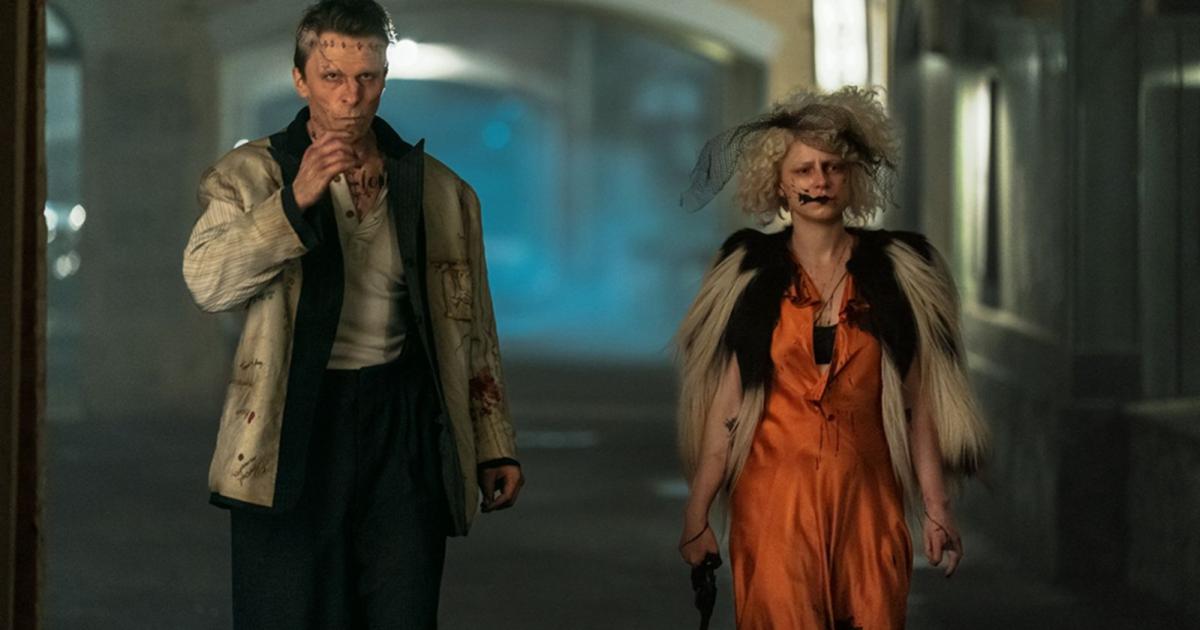
Beings who have overcome death experience a love in which the shreds of flesh fly, but the romance wins.
Jessie Buckley is everywhere right now – you just can’t get past her. Initially she has a good chance of winning her first Oscar for her “Hamnet” role as Shakespeare’s wife, but before that decision is made, we can admire her in another unusual film appearance. In “The Bride! – Long Live the Bride” she becomes a monster bride in Chicago in the 1930s. At her side, Chistian Bale is sometimes tough, sometimes tender, as a deeply in love Frankenstein creature who also likes film musicals and occasionally dances. This romance is made possible by Annette Bening as a scientist whose arts have defeated death.
In her second directorial work, Maggie Gyllenhaal chooses a classic horror film as a model and delivers a very free – but above all feminist – interpretation of “Bride of Frankenstein” from 1935.
Corpse parts in love
In the original film, the bride intended for the monster surprisingly doesn’t play that big of a role because she dies a second time just a few minutes after being raised from the dead. (If you want to know more: She recoils screaming at the sight of the monster and the sad creature then blows up the entire laboratory.) Gyllenhaal, on the other hand, has a heart for the assembled creature and treats him to a real love story: all of Frankenstein’s corpse parts are immediately attracted to the reanimated woman, and the so-called bride returns his feelings.
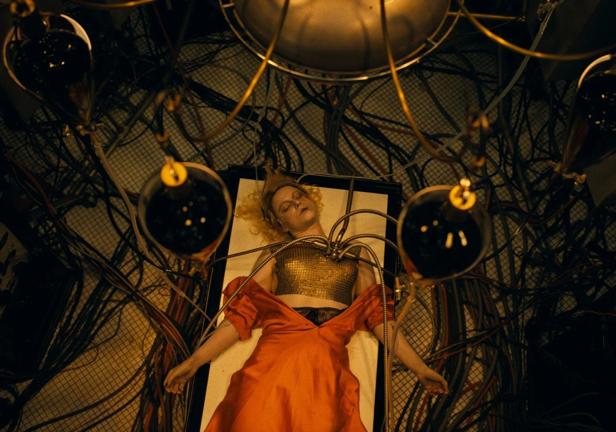
Scene from “The Bride! – Long live the bride”
B for bride
“I’d rather not do that” is a standard sentence the bride always uses – actually as a ventriloquist, because the “Frankenstein” author Mary Shelley (also embodied by Buckley in black and white sequences) took control of her from the afterlife and now speaks from her. This is a famous quote. Only recently “Zechmeister” director Summereder reminded us of Herman Melville’s narrative text with her essay film “B for Bartleby”. Now you could say that it should actually be called “B for bride”, because rejecting role models with the legendary words fits perfectly with the rebellious person who even unleashes his own movement.
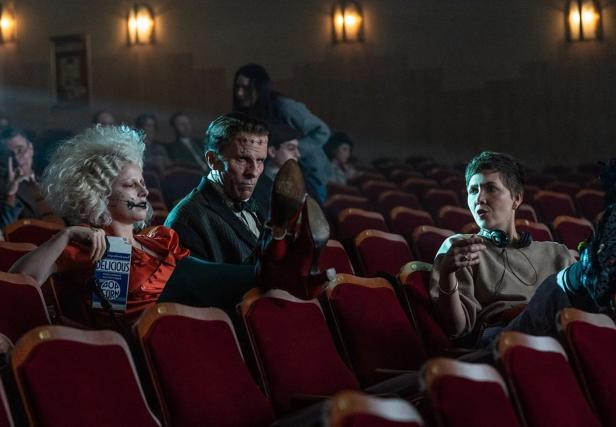
Scene from “The Bride! – Long live the bride”
Joker Suffragettes
Men really don’t fare well here: they are either incompetent sissies or inhuman sadists who vent on women by raping, killing and mutilating. The spectrum ranges from corrupt police officers to the psychopathic gang boss Lupino, who preserves the cut tongues of his female victims in jars. (Sebastian Fitzek pay attention: This is exactly the right material for the next novel “The Tongue Collector”.)
The bride rebels against these morbid machos and, for example, acts as a party crasher at a classy evening party. She reminds us of femicide victims because, as an ex-dead person, she has special knowledge. Her voice as an advocate for murdered and abused women does not go unheard, but rather creates her own emancipation movement. Her followers dress up just like her and don’t forget the other trademark: an irregular black spot that runs from the right corner of the mouth to the cheek and looks like a failed tattoo or a Rorschach test on the face. Thus, these women practically transform into joker suffragettes. (The film doesn’t show us exactly what the movement does.)
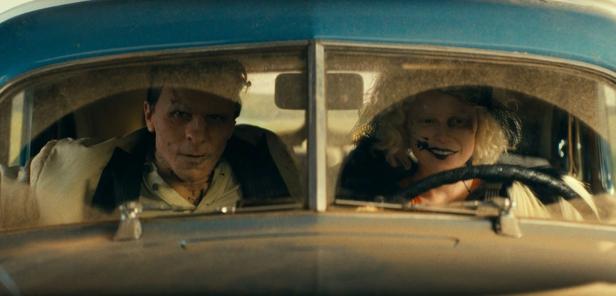
Scene from “The Bride! – Long live the bride”
Frankie & Bride
The unusual romance between the two creatures meets with resistance everywhere – so the couple is soon forced to flee, leaving a bloody trail behind them. Bonnie & Clyde become Frankie & Bride, so to speak. Another couple takes up the chase, in which the woman clearly dominates. Penelope Cruz plays a brilliant investigator who cannot assert herself in this man’s world and remains dependent on an incompetent partner who at least paves the way for her.
It’s apparently trendy for couples who didn’t get together in famous models to finally be able to live out their true love. This was recently the case in “Wuthering Heights” and is now the case with “The Bride!” just as. The film tells the story of an impressive woman who only discovers her true self-determination through death – and under the influence of another woman. At the same time, the work develops the utopia that the Me Too movement would break out in the 1930s. With a lot of humor, a wealth of allusions, dance and musical interludes (brother Jake helps a lot) and the power of persuasion, Maggie Gyllenhaal puts the Frankenstein myth on a new footing, which of course can sometimes be broken. And thanks to Buckley’s powerhouse acting, it’s not hard to transform yourself into a Bride suffragette advocate, too.
4 ½ of 5 black tongues sticking out