
“Isn’t there anything we can do about it?” the student, who is about to fail, flirts with her lecturer as if it were a scene from a bad porn film. But with the number she bites her teeth into her fundamentals of philosophy professor John Jorrisen (Jack Huston). So instead she makes one last desperate attempt: “I know what you are. I know what you have done.” In truth, she doesn’t know anything, but everyone has secrets – and her professor actually turns around briefly so that his student can steal the questions for the upcoming test from the desk.
So John feels caught and falls into a crisis. He had almost believed in building a future together with the single psychology professor Rebecca (Sofia Boutella). But now it all comes back, the piano lesson incident with Miguel Vasque, the gardener’s then 14-year-old son, who was in the US without papers, and how John’s father Melvyn (Bill Pullman) made sure that the whole thing went unreported in return for fully funding Miguel’s training. So now he would finally have to face his sexuality – or could he possibly find another way out in his philosophical readings?
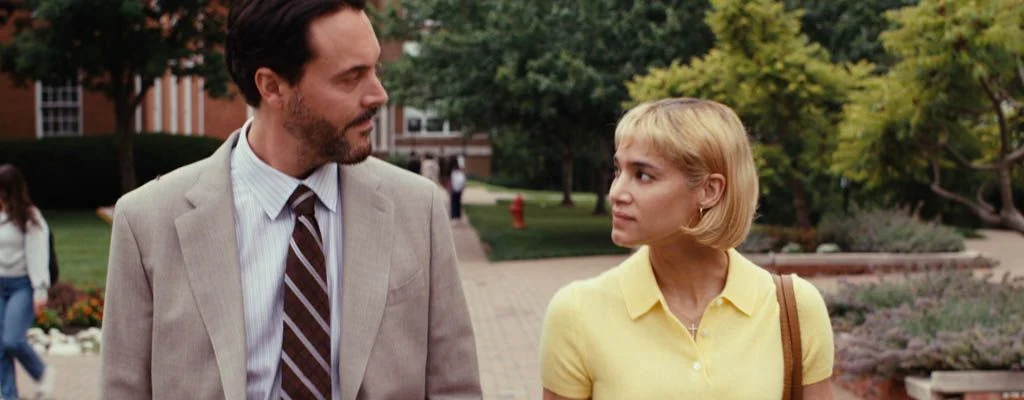
John (Jack Huston) may be having an affair with his university colleague Rebecca (Sofia Boutella), but he always finds an excuse when things need to get intimate.
Since his surprise, Oscar-nominated arthouse hit “First Reformed,” “Taxi Driver” author and Facebook bully Paul Schrader has primarily made films about broken men struggling to overcome a (supposedly) inexcusable past. Sometimes it ended tragically, like in “The Card Counter” or “Oh, Canada” – and he even gave ex-Nazi Narvel Roth (Joel Edgerton) a real happy ending in “Master Gardener”.
In “The Basics Of Philosophy” it now seems for a long time as if the now 80-year-old Paul Schrader, who almost died of Covid complications in 2022, is finally not only mild with age, but also noticeably sluggish. The central conflict doesn’t develop a real punch for a long time, but rather babbles along. Meanwhile, the black and white flashbacks to the earlier crime – probably also to make Jack Huston look younger without computer effects – are so overexposed that they have nothing accusatory about them, but rather something washed out and transfigured.
You only recognize the bite when you look back
Started thriller approaches such as euthanasia pills ordered on the dark web or a Sextortion– Attempts quickly came to nothing without a bang. Instead, John does a lot of things with himself at his desk at home: Apparently he chose the Dutch philosopher Baruch de Spinoza in particular because he was so moved by his thoughts on the question of whether it is even possible for a person to change.
At one point he even meets the imaginary Spinoza (Karl Glusman) on a park bench. But “The Basics Of Philosophy” actually seems pretty “basic” for a long time, a chamber play-like character drama with very cautious thriller elements, which in its treatment of the Closeted Gay Man Tropes but sometimes lags behind by a few years or decades (and sometimes comes dangerously close to equating homosexuality with pedophilia, which is why there was a lot of 0.5-star criticism after the press presentation in Venice).
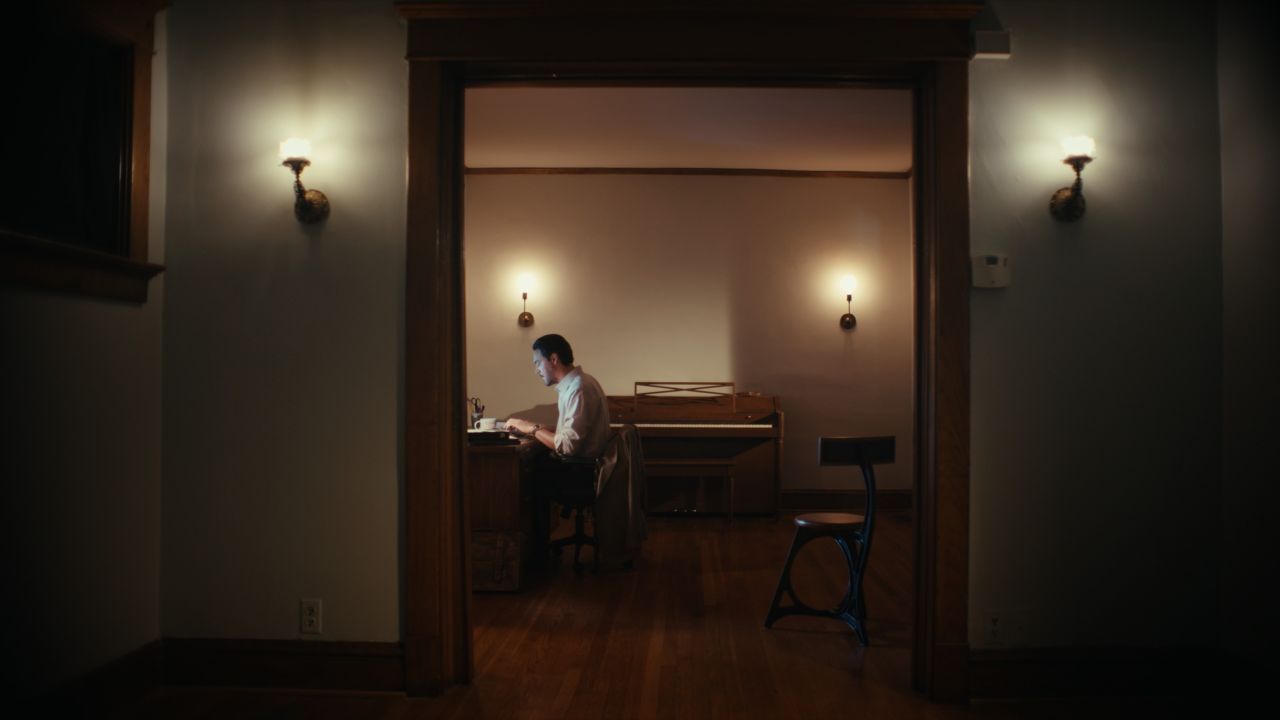
John is writing a book about the philosopher Baruch de Spinoza – and above all about the question of whether change is possible.
In addition, Paul Schrader suddenly acts surprisingly lenient and generous in his philosophical reflections on the topics of change and forgiveness, possibly also in view of his own approaching death. But then the very last shot throws everything out of the window once again: the supposedly conciliatory treatment of his characters turns into a bitterly angry, politically incorrect reckoning with pretty much everyone involved, which retroactively makes the entire film appear in a completely different light.
The simple decision of who the camera focuses on in this one brief moment turns a true Hollywood happy ending into a merciless punch in the gut. Paul Schrader wrote “The Basics Of Philosophy” specifically for Jake Gyllenhaal because he once said that he really wanted to work with the director. But it was probably precisely this bitter final punch line that made the “Brokeback Mountain” star gratefully decline.
Conclusion: The usual Paul Schrader punch takes longer than usual this time – but then it really hits!
We saw “The Basics Of Philosophy” at the Venice Film Festival, where it had its world premiere out of competition.