“Teenage Sex And Death At Camp Miasma” as a meta-film about camp slashers from “Sleepaway Camp” to “Friday the 13th.” to describe it would be the understatement of the century. The protagonist is Kris (“Hacks” star Hannah Einbinder), a queer director in her late 20s who scored a respectable success at Sundance with a film in the final third of which the plot of “Psycho” is retold from the perspective of the shower curtain. Now Hollywood is knocking: studio executives are desperately looking for a way to revive the eight-part slasher series “Camp Miasma.” Your problem: The franchise is obviously transphobic.
Their solution: Kris should develop a new origin story for the lance-wielding killer Little Death (Jack Haven), who wears an air conditioning duct as a helmet. This is how the woke mob on Reddit is supposed to be calmed down. But Kris has other priorities. She really wants this Final Girl of the first part to appear in their remake. Billy (Gillian Anderson) had already canceled the second and third films and has since completely disappeared from the public eye. But with the help of her agent (Sarah Sherman), the young director arranged a meeting anyway. When she arrives at her snowy destination in the middle of the world, Kris is surprised to find that Billy now seems to be living in the very same youth camp that was used as the backdrop for “Camp Miasma”…
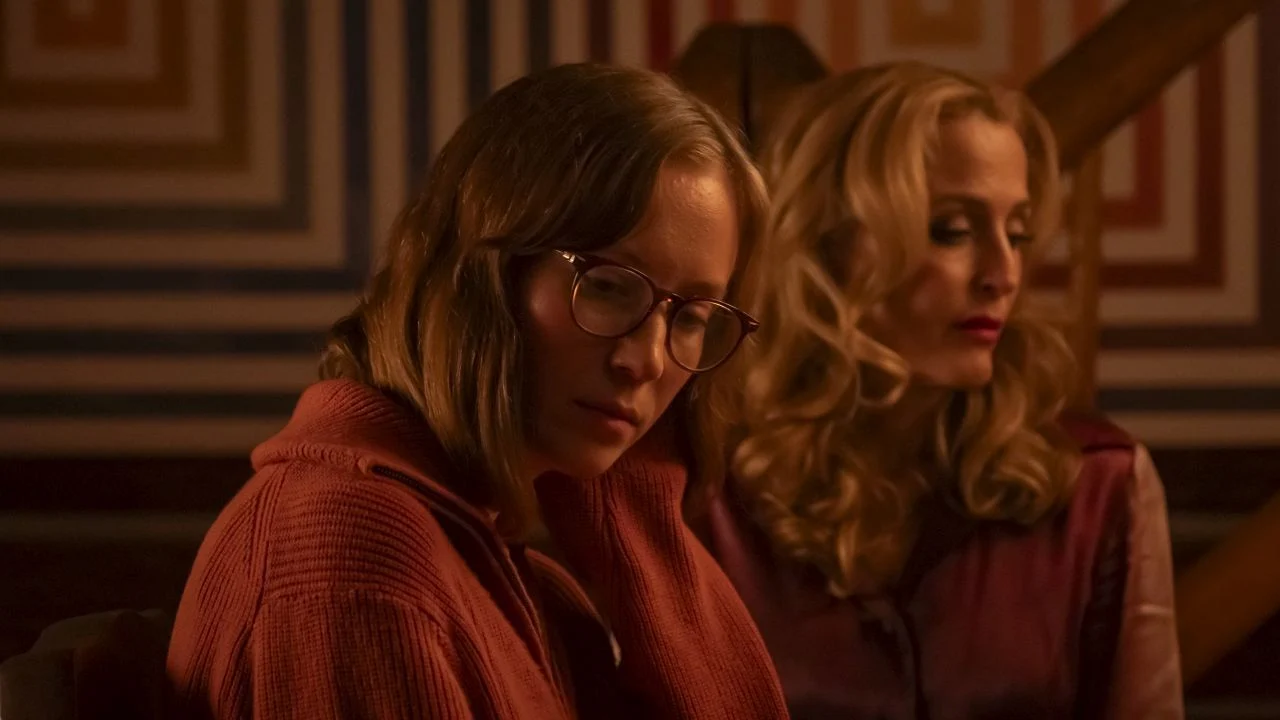
Kris (Hannah Einbinder) not only seems to admire ex-scream queen Billy (Gillian Anderson), but may also have a bit of a crush on her.
Anyone who has read this text including the description of the plot up to this point probably still imagines a film that is far too “normal”. Jane Schoenbrun, trans and non-binary, has previously directed two feature films: the digital experimental body horror “We’re All Going To The World’s Fair” and the We Love “Buffy” coming-of-age fantasy trans allegory “I Saw The TV Glow” (5 stars from FILMSTARTS). In comparison, “Teenage Sex And Death At Camp Miasma” has lost none of its academic rigor, but is much more accessible and should therefore appeal to one or two mainstream horror fans.
Especially since it starts with a wonderful declaration of love for the genre: not only the VHS covers of the previous parts are presented, but also board games and action figures from the fictional franchise. (There is even a complete double page of instructions for the game, which I am just writing here in the review so that later, when the film is released in the home cinema, I remember to press pause at that moment). When the fountains of blood shoot up a dozen meters or “X-Files” legend Gillian Anderson turns up her southern accent as if she wanted to move in as Norma Desmond’s roommate right on “Twilight Boulevard,” it’s easy to have a lot of fun with the film. Not to mention the almost manic placement of branded sweets – especially Kellogg’s breakfast cereals and fruit gums from all manufacturers.
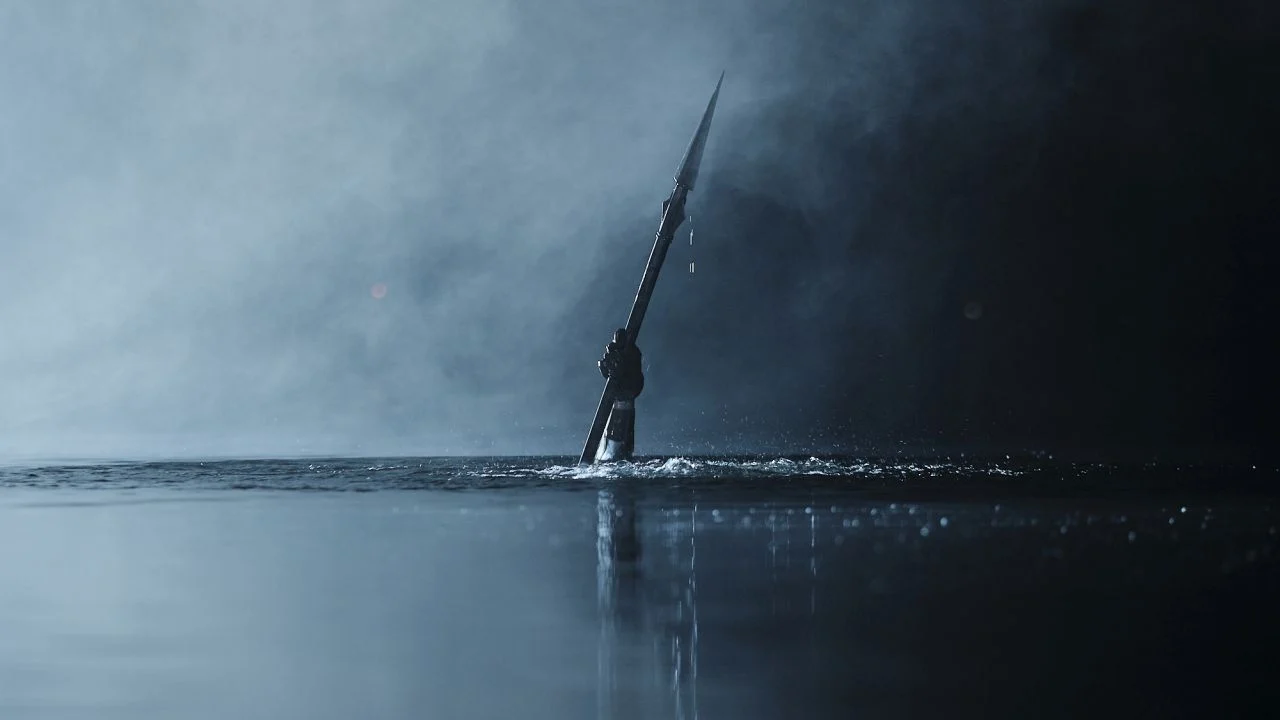
No matter what happens at the end of a film: Little Death always returns!
At the same time, on the meta level, it doesn’t just mean that the rules that have already been sufficiently worked through in “Scream” are simply chewed through. Although I saw Teenage Sex And Death At Camp Miasma at its world premiere in Cannes, I have to admit that it wasn’t until halfway through that I figured out why the killer was actually called Little Death. Derived from the French “La petite mort”, it is of course a metaphor for orgasm. Jane Schoenbrun really doesn’t do things by halves and doesn’t stop at the usual phallic findings that the stabbing weapons in slashers represent the male organ.
Instead, “Teenage Sex And Death At Camp Miasma” asks the question of how the sexuality of a girl who secretly watches a slasher at the age of eight and is confronted with sexual desire for the very first time – namely in the zoomed-in eye of the 19-year-old protagonist, who is not only experiencing her first sex, but at the same moment has a lance rammed through her body. We probably haven’t seen such a fucked-up, enjoyable game of perversion on screen since David Cronenberg’s “Crash”: uncompromisingly liberating and incredibly entertaining!
Conclusion: What could possibly go wrong with this title? At the core of “Teenage Sex And Death At Camp Miasma” there may be a gender theory seminar somewhere, but it is packaged as a shamelessly fun meta-horror experiment in which the psychosexual nuances of the slasher genre are discussed as well as the question of the best fruit gum brand.
We saw Teenage Sex And Death At Camp Miasma at the Cannes Film Festival, where it had its world premiere as the opening film of the Un Certain Regard section.