
With the end of the right-wing extremist NSU, the – slow – investigation of their murders began, and questions about possible failures of the authorities were raised, not only, but especially among Germans with a migrant background. It was often said that the authorities were blind in the right eye – this resulted in an understandable anger that quickly left its mark in artistic forms: In the field of film, for example, Fatih Akin's “Out of Nothing”, which spoke in a committed but also one-sided way about the failure of the authorities.
A few years later, Faraz Shariat made a very similar film, “Staatsschutz”, which tells the story of a young prosecutor of German-Asian descent who falls victim to a right-wing extremist attack – and, given the silence of her own authority, soon takes matters into her own hands. Which raises a variety of questions about what action seems justified in the face of acute danger. But also about which artistic means are acceptable despite noble moral standards and which are questionable.

Somewhere in Germany, Seyo Kim (Chen Emilie Yan) has recently started working as a prosecutor. She believes in the rule of law and in cases against right-wing extremists sometimes advocates for an acquittal and sometimes for a prison sentence, depending on the evidence. Despite this neutral attitude, she has made enemies and one day on the way to work she is pushed off her bike and has a Molotov cocktail thrown at her.
The external injuries heal quickly, but the internal ones smolder – because their own authorities are only starting the investigation very slowly, at least in the Aguen Seyos. They quickly identified the perpetrator: a well-known right-wing extremist who was apparently not the first to attack Germans with a migrant background or asylum seekers. Seyo investigates on his own, gains access to the court's archives and comes across numerous cases in the files in which the investigation into acts that were apparently committed by the right was stopped very quickly.
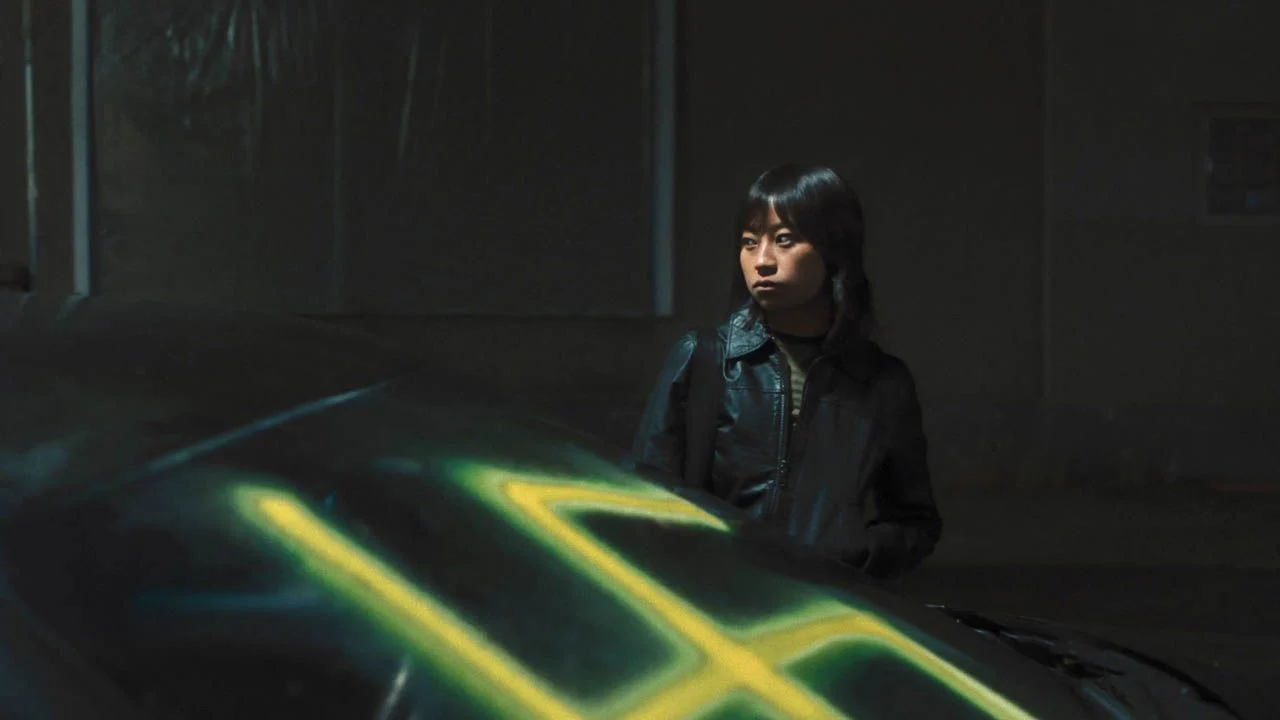
Seyo Kim delves deeper and deeper into a web of right-wing structures, official failures and possible cover-ups – and in doing so puts her own life in danger.
A few years ago, the Iranian-born German director Faraz Shariat attracted attention with his semi-autobiographical debut film “Futur Drei”, a film that gave a perspective on German reality that is still far too often left out of German cinema. At that time, Shariat was still co-writing the script. For his second film “Staatschutz” he is now filming a script that was not his own, but unfortunately one has to assume that he is all too familiar with some aspects of the story.
The script was written by Claudia Schäfer, who has often dealt with migrant perspectives, for example in her books on “Ellbogen” or “Naomi's Journey”, as well as Sun-Ju Choi and Jee-Un Kim. In addition to their work as authors, the two women of Korean origin are involved in numerous initiatives against racism, such as “korientation”, which they describe as “a (post)migrant self-organization and a network for Asian-German perspectives.”
Committed – but also successful?
All of this doesn't seem to be entirely unimportant, because “Staatsschutz” is a decidedly activist film that never hides its agitational intentions. Which also means: This is a film completely free of ambivalence or nuances – a film that questions the actions of its main character in one or two places, but in the end leaves no doubt at all that Seyo has the right on her side. Maybe not necessarily state law, but definitely moral law.
And yes, if you have read the news in recent years about attacks against migrants or Germans with a migrant background, about slow or delayed investigations and racist chat groups within the police, if you know what is meant by Hanau or the name Oury Jalloh – then you have to come to the conclusion that there is something wrong in the German legal system.
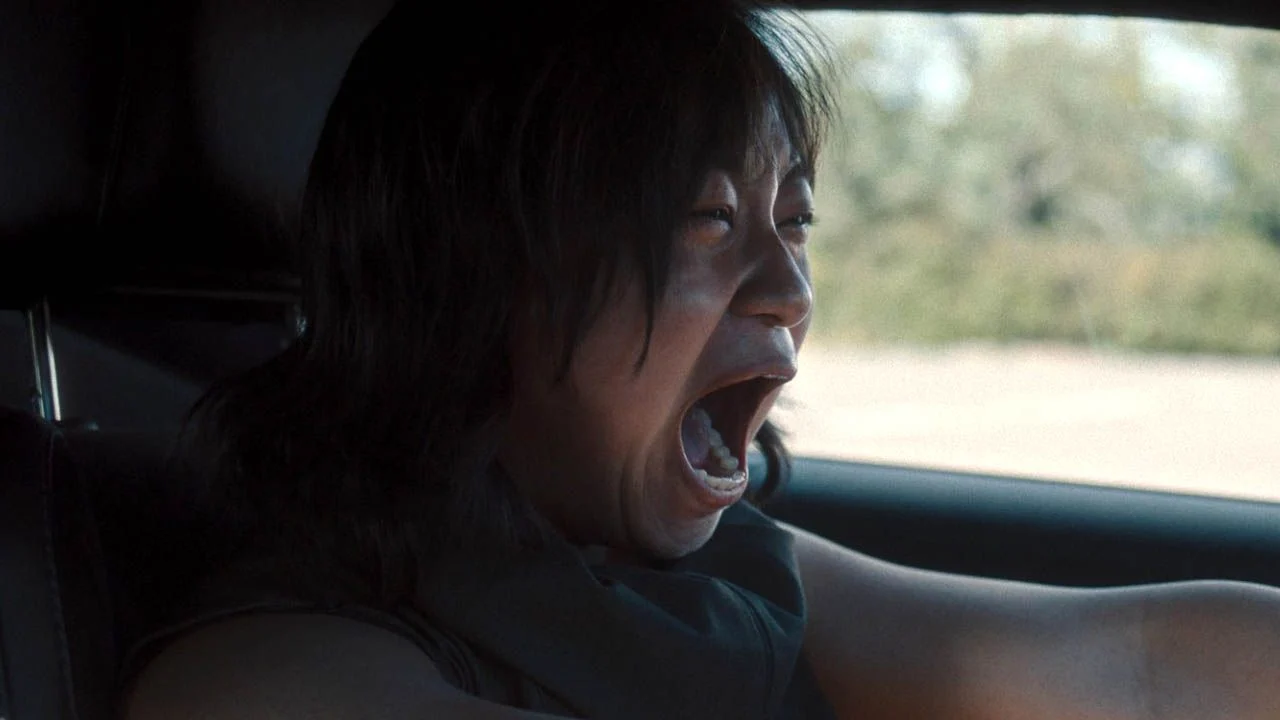
Seyo Kim has a lot of anger built up in her for good reasons.
Even as a white German who has never had problems with the police or the rule of law, the anger at these structures is understandable. However, anger is not necessarily the best advisor for an artistic work. In an effort to denounce the injustices of the system, Shariat and the screenwriters resort to overly schematic representations. They paint a picture of a fictional city in which a series of murders of NSU proportions is apparently swept under the table and open racism prevails in bakeries and official offices. Even the arrest and torture of a prosecutor by police officers has no consequences here. Similar to the middle part of Fatih Akin's “Out of Nothing,” the central court proceedings are a little like what you would imagine after too many courtroom series on TV.
Which in the end reveals a somewhat strange relationship with the legal system: the main character actually believes in the law and repeatedly tries to fight against right-wing grievances using the means of the constitutional state and the left-wing lawyer Alexandra Tiedemann, played by Julia Jentsch. But whenever she pleases, whenever it serves her cause, she breaks the rules and the law and of course gets away with it – after all, it serves the implicitly good cause.
Unfortunately not enough “Dirty Harry”
Almost like a young, female version of Dirty Harry, Seyo drives through the landscape in a fat sports car, shadows right-wing thugs and takes a stand against a system that doesn't do her justice. You can do it that way, it might even work and be convincing – if you dared to go really excessive, to tell the story of a character who consciously leaves the system and becomes a larger-than-life avenger figure. On the other hand, reconciling a penchant for vigilantism with a fundamental belief in the functionality of the German legal system is a much more difficult approach, and one that ultimately fails in Faraz Shariat's “state protection”.
Conclusion: Even if one fundamentally agrees with the statement of Faraz Shariat's “Staatsschutz” that the German legal system, the state and the police are sometimes blind in the right eye: a morally impeccable attitude is not enough to make a convincing feature film – because in the end this leads to an all too simple, agitational film without ambivalence.
We saw “State Protection” at the Berlinale 2026, where it celebrated its world premiere in the Panorama section.