The “micro” from “microaggressions” can be safely deleted, at least in the first half of “Something Very Special”. Hardly a conversation between the members of a Thuringian (patchwork) family, in which the grandparents Christl (Rahel Ohm) and Friedrich (Peter René Lüdicke) run a mountain guesthouse that is on the verge of bankruptcy, comes without a broadside. Between generations, siblings, genders – there is trouble everywhere. This is painful and darkly humorous at the same time. When I turned to the person next to me at the Berlinale press screening after a particularly harsh comment, he just shrugged his shoulders and said: “That’s just how it is.”
In her third feature film, “Everything is good” director Eva Trobisch creates an equally complex and open-ended construct of family dynamics that consistently surprise, shock, amuse, touch or even disturb. In the end, it's not that easy to distill between all the contradictory characters what this is actually supposed to tell us. Many of the reactions after the first Berlinale screening also expressed a certain frustration, which seemed to stem primarily from the film's openness.
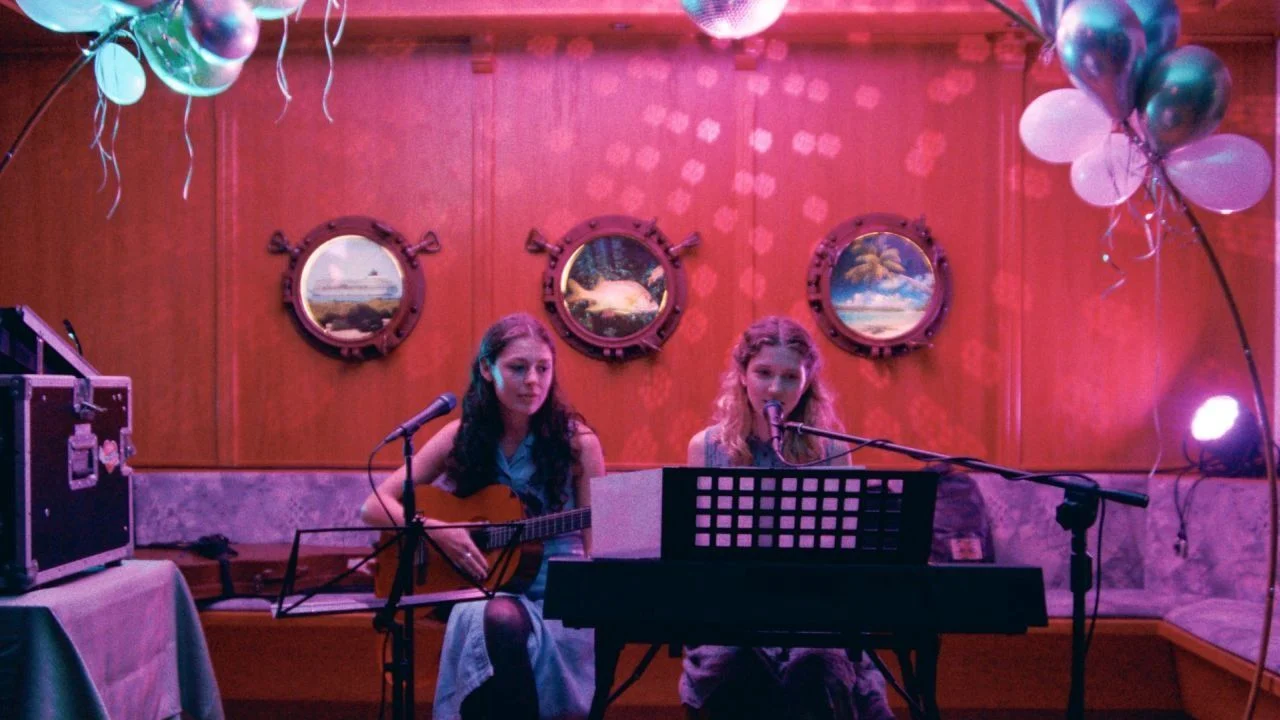
Until she got ahead on a TV casting show, Lea (Frida Hornemann) only ever appeared at local festivities with her best friend.
Eva Trobisch gives her audience two keys to decipher her fascinating ellipses: On the one hand, there is the student Lea (Frida Hornemann), who, with the help of her father Matze (Max Riemelt) and against the wishes of her mother Rieke (Gina Henkel), made it into the main round of a casting show – basically a mixture of “The Voice” and “The X Factor”. But when TV editor Raphael (Thomas Schubert) asks her the titular question about what's special about her for one of those typical inspirational clips, she simply doesn't know the answer, even after repeated probing.
At the very end we still get to see the clip – and it's a celebration: in 30 seconds the whole family history is brought to the point – in soft-focus images of the Thuringian mountains, as if it were a tourism commercial (in complete contrast to the grainy, analogue, 4:3 format look of the film itself). There are also animals that actually died long ago and couples that have since separated. Nevertheless, “Something Very Special” is not a film like “The Party,” which aims to expose and, if possible, expose the family members. Instead, it's more about recognizing the contradictions in the family (and your own biography) – and, at best, finding a way to deal with them.
Pros and cons family
After the 116 minutes, you really don't know whether Eva Trobisch is, to put it mildly, skeptical about the idea of ”family” – or whether she doesn't actually admire them for the way they all get along with each other for even five minutes. Even expressions of love often have something suspicious about them. So Lea sends her aunt Kati (Eva Löbau) cell phone videos of herself piercing her earlobe in her honor. After her divorce, Kati returned to Greiz from the West to run the city museum there – and that brings us to the second key:
For the museum redesign she curated, both the city palace, which had been used as a retirement home in the GDR, and the old textile factory were restored. Here the magnificence of the baroque stucco that has been exposed again (fortunately the ceilings had only been suspended), there the coffee cups that were draped for the visitors in the break room in such a way that it looks as if the workers had just been here. In one of the strongest scenes in the film, Christl is completely overwhelmed by this form of coming to terms with the past.
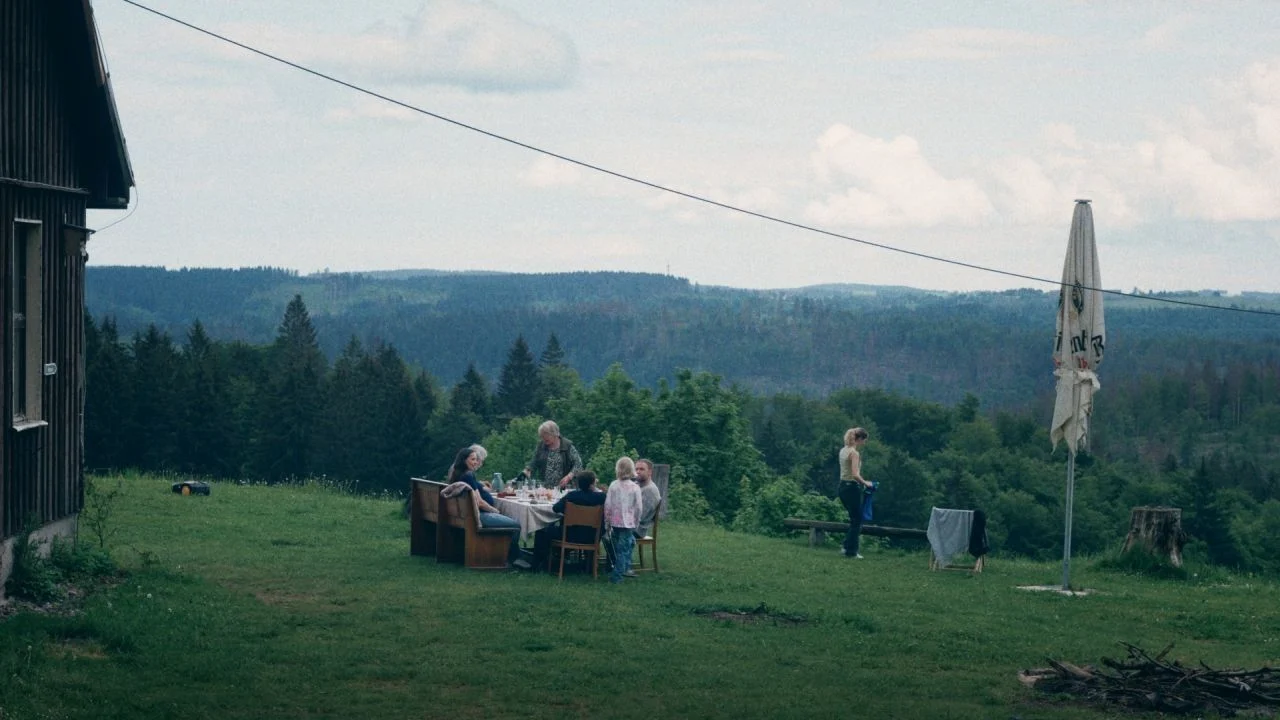
The whole family comes together at the grandparents' inn: because they want to? Or out of habit?
While her daughter leads the donors through the exhibition, she vehemently demands information from those responsible for the funding pots about how expensive it all was. But nobody knows for sure. She cannot understand why millions are being spent on turning her old workplace into a museum, while her pension and with it her current existence are on the verge of extinction. In any case, Kati describes her museum approach as “canon and counterpoint”: the aristocratic castle and the proletarian factory form a common narrative, which is also full of insoluble contradictions.
Just like a family in which the grandmother (out of necessity) accepts an AfD-like conference in her guesthouse, while the grandson (Florian Geißelmann) doesn't even stop his fundamental ethical debates when he is threatened with a beating in the inn; or in which the mother understands her daughter but has no understanding for her, while the father supports her in everything but does not understand her. The family, the East and everything else – with Eva Trobisch, all of this is so complex that its contradictions are sometimes difficult to bear. Luckily, it's served with a healthy dose of humor.
Conclusion: Like the casting show participant Lea in her self-description, even after watching the film it is not that easy to pinpoint exactly why it is something very special – but there are hardly two opinions about the fact that it is. In this elliptical, open style of storytelling, inspiration and frustration are certainly close together – but for us, Eva Trobisch clearly lands on the side of inspiration with her third feature film.
We saw “Something Very Special” at the Berlinale 2026, where the film celebrated its world premiere in the official competition.