
One of cinema’s greatest humanists is making a film about AI – can that work? Naturally! The masterpiece “AI – Artificial Intelligence” is proof. But will it work again? “Sheep In The Box” by multiple award-winning Japanese auteur Hirokazu Kore-eda (heartbreaking: “Nobody Knows”) has numerous parallels to the modern sci-fi classic by Steven Spielberg. Kore-eda in particular, who understands like no other how to develop enormous emotional power from small, casual moments, would have been expected to pull off a similar coup.
But his meandering sci-fi drama always lacks the necessary focus. Although Kore-eda introduces numerous interesting ideas, only a few of them say anything new. Nevertheless, his work, which is based on strong acting performances and great images, is sometimes fascinating. Especially in those moments in which the filmmaker completely abandons the narrative and simply lets us sleepwalk through a world in which artificial creatures dream of their own utopia.
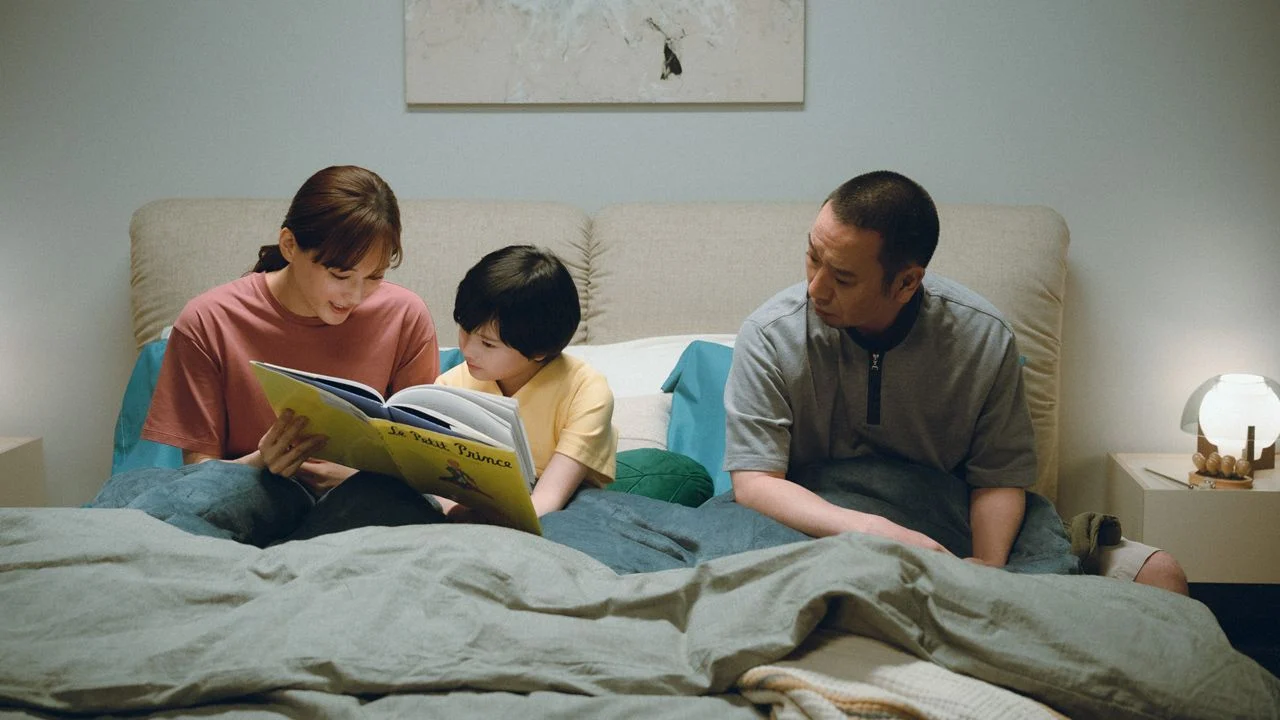
A married couple tries to replace their dead son with an android.
In the not-so-distant future: It’s been two years since architect Otone (Haruka Ayase) and her husband Kensuke (Daigo) lost their son. What exactly happened remains unclear. However, a train played a role and any personal guilt in the accident has not yet been dealt with. The intrusive advertising from the REbirth company hits a sore spot: Otone’s desire to purchase an android replacement for her dead child is growing. Kensuke is initially skeptical, but he ultimately agrees to the test phase offered by the company.
So a boy comes into the house who looks like her seven-year-old son Kakeru (Rimu Kuwaki) at the time of his death. There are a few restrictions, however: He is not allowed to go into the water or eat anything, and if he strays too far from his parents, a chip automatically switches him off. While Otone initially tries everything to treat the robot like her biological son, Kensuke remains at a distance. He compares the new “family member” to a Tamagotchi or a robot vacuum cleaner. But little by little the relationship between both “parents” and their “son” changes. However, little Kakeru also has new experiences…
More interested in people than in the future
With “Sheep In The Box,” Hirokazu Kore-eda takes us into a futuristic world that is hardly different from ours. After all, mail is now delivered exclusively by delivery drones and there are humanoid children’s robots that are becoming more and more widespread. Around 3,000 are already said to be in use in Japan. That this premise is introduced quickly and casually should come as no surprise. Because of course Kore-eda is less concerned with the technology than with the people. As in many of his earlier films, he addresses the question of what actually makes a family.
In “Shoplifters – Family Ties” this question was answered in a surprising and touching way. In “Sheep In The Box”, however, this aspect is the least exciting. Whether biological relationships are important is also discussed briefly using Otone’s sister (Nana Seino), who adopted one of her children – but then answered quite quickly. Even more interesting discussions, such as the question of whether love is tied to authenticity, tend to get lost.
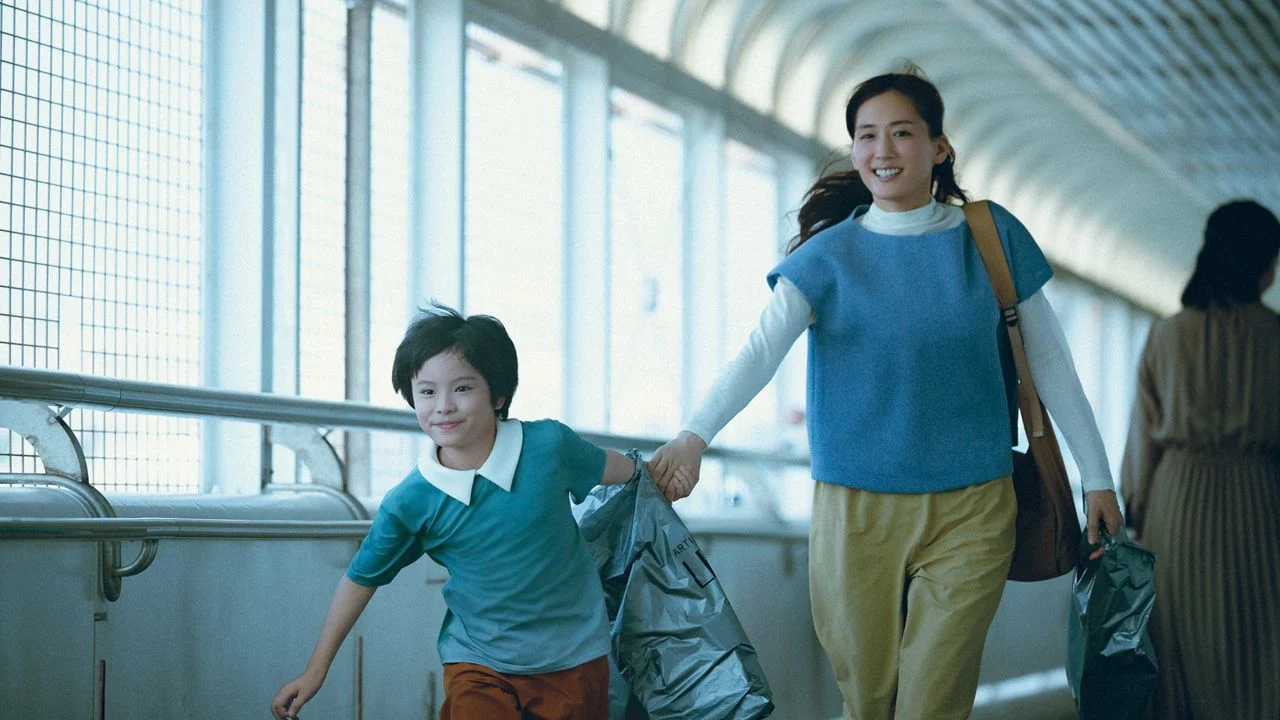
For Otone (Haruka Ayase), the joy of having a son again predominates.
Kore-eda doesn’t seem to be able to really decide what he’s getting at. The family’s process of dealing with grief is repeatedly pushed into the background because new ideas are introduced instead. At one point, “Sheep In The Box” even seems to be developing into a thriller: mysterious kidnappings can be heard again and again in the background. And when Kensuke believes that the robot may have stored memories of his deceased son, he wants to use this to find out whether the death was not a tragic accident but a crime.
The fact that “Sheep In The Box” is not boring is thanks, among other things, to the strong cast. Haruka Ayase (“Ichi – The Blind Swordswoman”) in particular carries many scenes with a quiet desperation that often says more than the dialogue. At the same time, after “Innocence”, “Like Father, Like Son” and so many other films, Kore-eda once again proves how exceptionally well he works with children. Debutant actor Rimu Kuwaki plays the artificial Kakeru with a fascinating mix of mechanical strangeness and childlike vulnerability. This results in a few touching moments, especially in the interaction with comedian Daigo.
And suddenly there is a dystopian fairy tale of the future
“Sheep In The Box” becomes really fascinating when a completely new storyline gradually emerges from the background. Kakeru soon meets other child androids who – often neglected by their owners – are planning to build their own lives and families. Even a few real children are part of this colorful group, which could come from a children’s fable like “Peter Pan”. This part in particular is one of the most successful and beautiful passages with some dreamlike, otherworldly images.
Even if these moments take the action away from the actual emotional core, thanks to the great music by Yuta Bandoh (“Kaiju No. 8”), scenes emerge that suggest a touching, melancholic fairy tale of the future. Maybe that would have even been a better story. Paradoxically, “Sheep In The Box” is often at its best when Kore-eda almost completely abandons the classic narrative and the camera simply shows a strange, different world. In moments like these, the sci-fi drama reminds us once again why Kore-eda is one of the most sensitive directors of our time, even if “Sheep In The Box” is not one of his strongest films.
Conclusion: “Sheep In The Box” doesn’t make much of its interesting idea, but great individual scenes, strong acting performances and some poetic images make the sci-fi drama at least worth seeing.
We saw “Sheep In The Box” at the 2026 Cannes Film Festival, where the film had its world premiere as part of the official competition.