
There is probably no other German director who is as consistently celebrated by hardcore cinephiles – including international ones – as Angela Schanelec (“Marseille”). With her previous two films, she was finally invited to the Berlinale competition, which was long overdue anyway – and won a Silver Bear there: first for Best Director (2019 for “I was at home, but …”), then for Best Screenplay (2023 for “Music”). But even this shower of awards will hardly bring her a larger audience; she remains simply “too” loyal to herself, and this should definitely be understood as praise at this point.
It's easy to label her films as “uninhibitedly cerebral”, but what really speaks from her strict images and her even stricter dialogues is an incredible precision. It is often about communication, or rather the failure of it. Even in “My Wife Is Crying,” people don’t understand each other – despite language that could hardly be “clearer.” The characters speak in a consistent tone, as if it were an exercise from a theater workshop – in highly concentrated sentences that seem as if the author had painstakingly brushed off every extra gram from them.
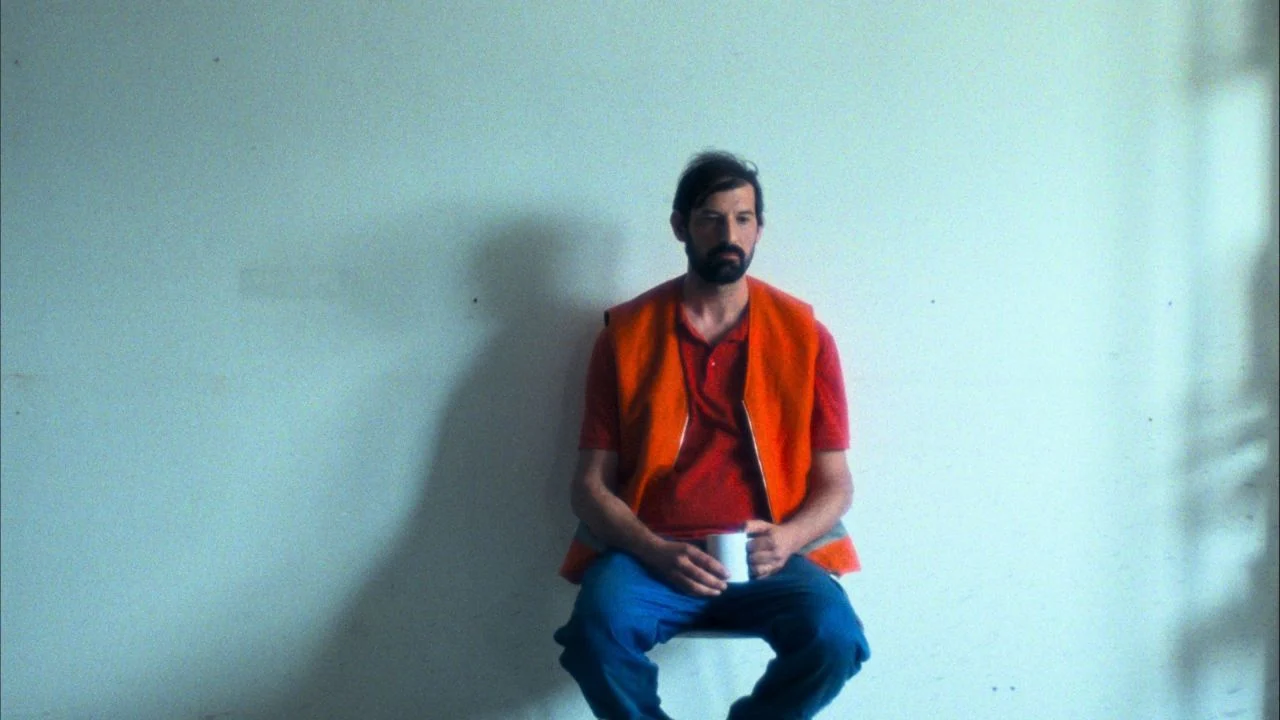
The camera lingers so long in the first shot that you're almost shocked when a second figure comes into the picture.
It starts straight away with one of those rigorously reduced, mostly static shots shot in a cramped 4:3 format for which Schanelec is famous (and probably infamous for some): a white wall, a folding chair, also white, in the middle, half a door on the left, half a shelf on the right, with a thermos bottle and a few cups on top. The crane driver Thomas (Vladimir Vulević) takes a seat – and although we hear the voices of two women offscreen, the camera stays on him until the first cut feels like a small sensation (not to mention the view out the window of the construction site that follows a few minutes later).
On the one hand, the conversation that develops seems completely random and everyday, but at the same time it doesn't seem at all like small talk, when worries are discussed in pointed, clearly constructed sentences in a way that one would certainly not expect in this openness, at least in construction. But even this almost philosophical clarity only seems to help to a limited extent in understanding. Apparently there was an incident involving a crane at the construction site, which we don't learn any details about until the end of the film. Instead, Thomas' wife Carla (Agathe Bonitzer) asks by phone to pick her up in front of the clinic.
What language is good for
Carla sits on a park bench crying, but only on the way home does she begin to explain what actually happened: She was driving on the highway with a young man from dance class who wanted to look at a house in the country. After the crash with a semi-trailer, he died instantly, while she was uninjured. Carla seems to be even more concerned with the conversation during the journey than the fatal accident – it was only then that she understood why we actually speak, what language is good for.
The audience, however, will never see this entertainment; it remains a mere utopia and therefore possibly exactly what Schanelec has been striving for in the 31 years since her feature film debut “The Happiness of My Sister”. Meanwhile, Thomas feels like his head is going to explode, so a woman who happens to be waiting for the bus nearby even (completely exaggerated) calls an ambulance.
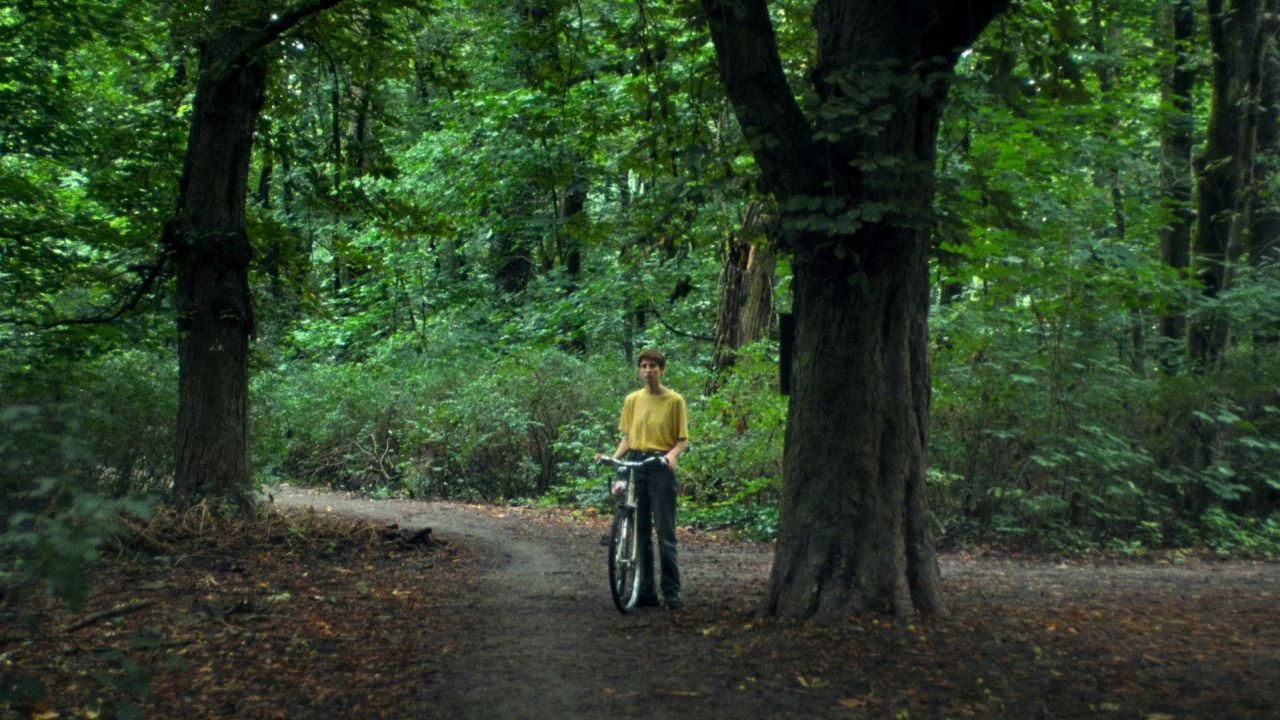
Carla (Agathe Bonitzer) feels completely lost after her car trip, which began in a utopian way and ended fatally.
In addition to all sorts of allusions to, among other things, our own previous films, for example at one point to the stony moss bed from “The Dreamlike Path”, there is once again a lot of humor despite all the academic rigor: from a “Where's Walter?” booklet lying around in the bookstore, which is certainly not a coincidence, to a brass band scared away by the rain, to the ironic fact that Carla, who works in kindergarten, tells of all people about her language enlightenment to a father who then turns out to be a poet Nobel Prize opportunities highlighted.
And there is dancing on the terrace, possibly as a final or at least cathartic capitulation to language – in one of the most beautiful dance scenes since Franz Rogowski went to the ceiling for Michael Haneke in “Happy End”…
Conclusion: A masterful, strictly minimalist, poetic and playful exploration of language and spaces in a decidedly academic way. As with all Schanelec films, many of them will bounce off the (supposedly) brittle surface (mercilessly).
We saw “My Wife Cries” at the Berlinale 2026, where the film celebrated its world premiere in the official competition.