
Mixing coming-of-age stories with horror motives is not new. By far the best known and most successful example is likely to be the “Twilight” series published between 2008 and 2012, in the first part of which “Twilight-bite to dawn” is all about 17-year-old Bella, who one day meets the enigmatic Edward, who turns out to be a vampire and becomes great love. Accordingly, with an eerily-romantic title such as “My last night with a vampiR “certain expectations, especially since French production also tells of a 17-year-old who meets a puzzling boy who also turns out to be a vampire.
But the German rental title and also the trailer, which promotes a much more dynamic film, are misleading. The original debut film by Romain de Saint-Blanquet, which is titled with “La Morsure” (in German “(in German:” The Biss “) and turns out to be an enigmatic gothic fairy tale with a coming to enjoyable slow-motion with coming-of-age motifs, which in extremely atmospheric pictures of female self-empowerment in told at a time of upheaval. In addition, the film scores with an outstanding actress, in the face of which the entire range of the associated, sometimes contradictory emotions is reflected.

Françoise (Léonie Dahhan-Lamort) persuades her best friend to flee boarding school and go to the mysterious party.
France, 1967: Student Françoise (Léonie Dahhan-Lamort) you will feel the full broad side of religious oppression in the boarding school. Prudery, strict rules and iron discipline are the order of the day. The young woman, on the other hand, rebel with a turn to the occult and develops an ever increasing desire for freedom. When she has a terrible dream one night, in which she is burned at a stake and the following day guys at the fence of the boarding school, she made an invitation to a costume festival, she decides to put her outbreak fantasies into practice.
Françoise skin with her best friend Delphine (Lilith Grasmug). On the way to the event, you will get to know a mysterious, opaque man (Fred Blin), who seems to be traumatized by the Algerian war and steals a car to drive the girls to the destination. However, this is not the only strange encounter: at the festival that takes place deep in a dilapidated villa in a fairytale forest, francoise meets the vampire Christoph (maxim carpent) …
The rebel and the vampire
Shortly after her dreamed flame death, Françoise says that she died “in a fire like Jeanne d`Arc”. The most beer compared to the freedom fighter initially looks very pathetic, but in the further course of the film it becomes clear that the pathos is not quite out of air. “My last night with a vampire” is not without reason in 1967, shortly before the climax of the sexual revolution. In Françoise, this spirit of optimism manifests itself – you thirst for self -determination, she wants to live according to her own rules, form its reality itself. The turn to vampire Christoph, like an outsider with anarchist features, makes sense. So he says: “I'm not normal”, whereupon the rebel replies: “It's a good thing!”
What do the other men in the villa have to offer? Nothing except chauvinism and – which is moored in Delphine's handsome, but comparatively stated swarm (Cyril Metzger) – the view of a fades: “I know that you will settle. Some things are inevitable.” The vampire promises much more excitement, a life away from the norm – just as the young revolutionary floated at that time.
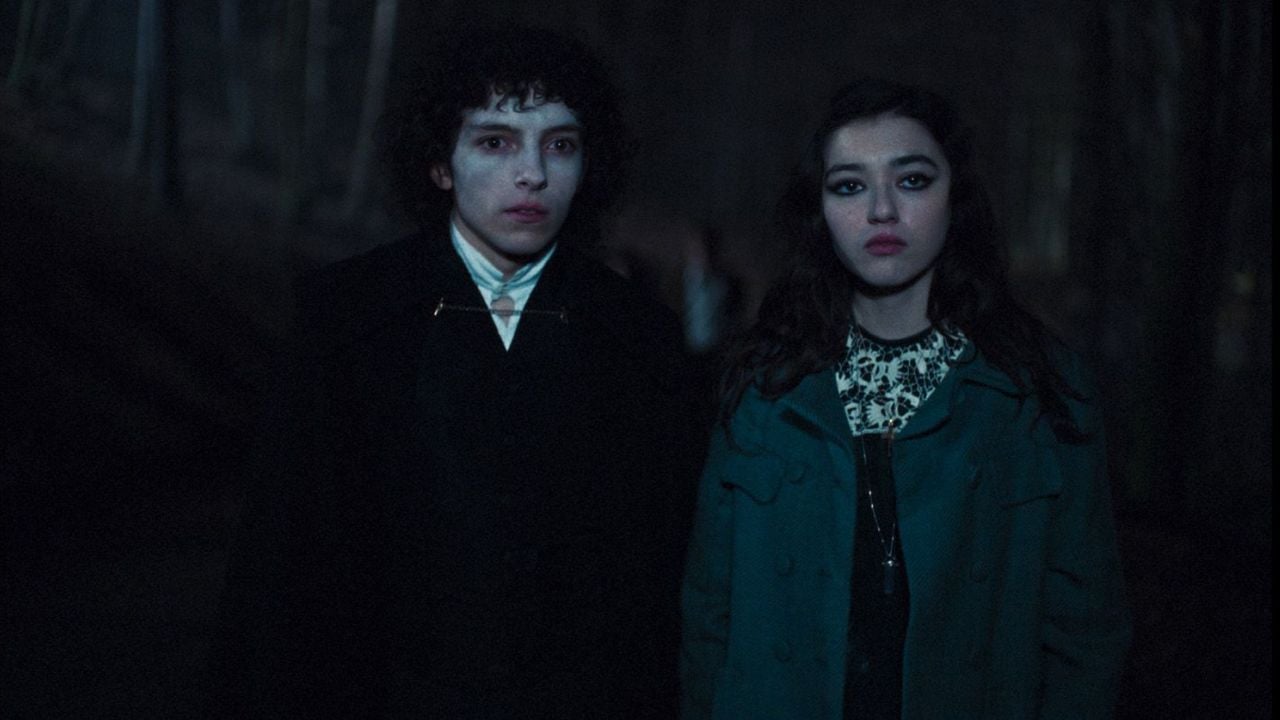
After the first types appear rather poor, Françoise turns to the vampire Christoph (Maxime Harmart).
De Saint-Blanquet tells the powerful, consistent story of a total liberation, which is strongest in Françoise's relationship with the supernatural: it is not surprised or even shocked that Christoph is a vampire. She can also impress zero from his sudden announcement during a conversation in a moonlight-flooded greenhouse that he could kill her, and also ensures surprisingly determined, violent way that he sucks her blood-because the vampire returns.
Conclusion: an excellently played, calm, lyrical, very subtle, almost hypnotic combination of coming-of-age drama and horror film motifs, framed in beautiful pictures that perfectly emulate the aesthetic of the fantastic film of the 1960s and early 1970 years without becoming a mere quoty. De Saint Blanquet's debut actually looks like a forgotten work from back then.