
Perhaps an artificial intelligence knows things about us that we don’t think about even when we’re feeling bad: for example, that a human feeling only lasts a few seconds unless it is fed and strengthened with a new stimulus or thought. At least that’s how the care robot Pawlovich (Josef Ellers) tries to calm Mrs. Winkler (Angela Winkler), who is in need of care, when she gets angry again. Ms. Winkler is clearly struggling with the fact that a machine should take care of her. The fact that the metal assistant is dressed in an old-fashioned, washed-out bathrobe and expresses human-like emotions with his facial display does not change this.
But perhaps a robot like this is much better suited to care tasks than a human who can reach limits, seem overwhelmed or moody? In any case, such a machine doesn’t get angry. In the world of Doris Dörrie’s tragicomedy “Mrs. Winkler Leaves the House”, electronic assistants like Pavlovich have long been commonplace and are far more sophisticated than today’s vacuum cleaner robots. In the restaurant, they block your access to alcohol if your health does not allow it – and at home they also go on alert if the household products in the fridge “dangerously” exceed their expiration date.
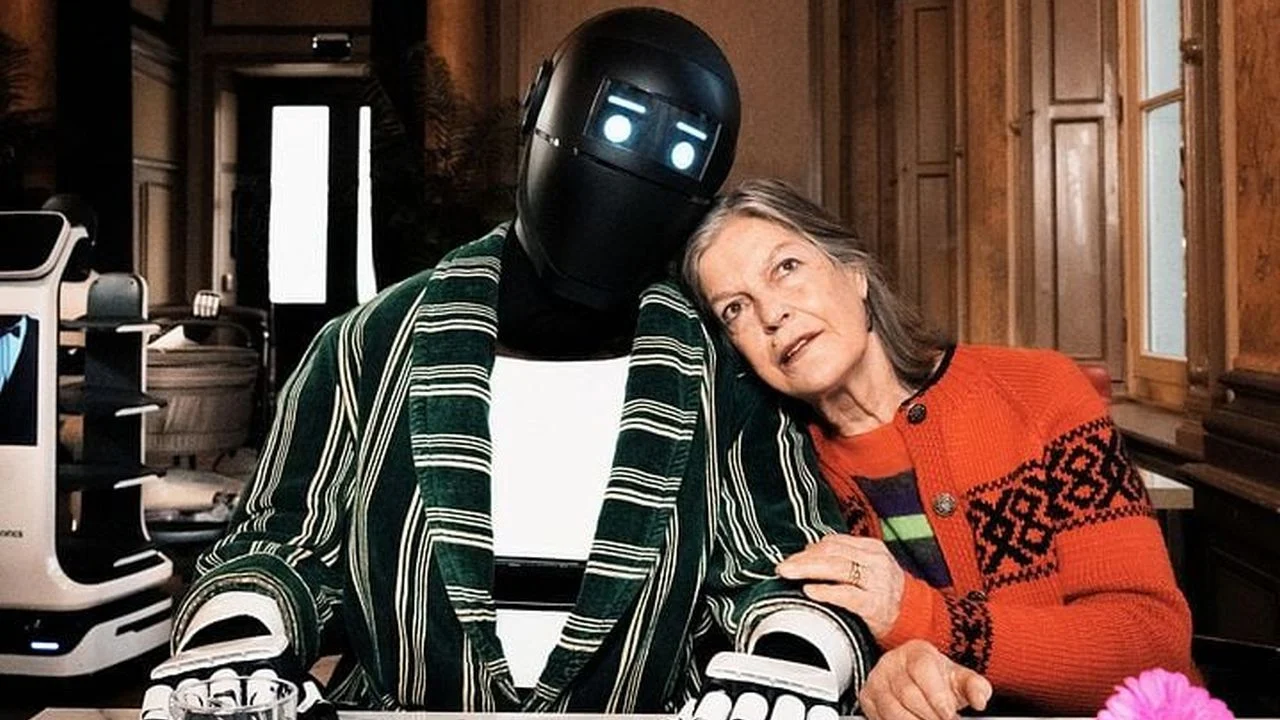
Ms. Winkler’s (Angela Winkler) initial skepticism towards her AI care robot Pavlovich (Josef Ellers) doesn’t last forever.
Such devices can quickly become a nuisance, even if they mean well for you. But someone else can’t take care of Ms. Winkler after she fell off a stool while straightening the curtains: In any case, her daughter Emi (Laura Tonke) is currently facing a major engagement at the Lübeck Theater. She is also tired of her mother’s overdramatic gestures (“Then finally be happy and leave me alone!”), who was once an aspiring actress herself when she was younger and has since moved her theatrical airs into her private life. A shared sadness has long hung over the women’s relationship: the early death of Ms. Winkler’s husband, which neither of them dealt with together.
Such a robot is “humane and economically sensible,” explains Selma (Via Jikeli) to the Winkler family about the advantages of Pavlovich, who is willing to learn. Dörrie uses a casting punchline to show how humans and machines can become closer: the musical actor Josef Ellers plays both the angularly moving robot and, in flashbacks and dreams, Ms. Winkler’s deceased husband Bruno. Laura Tonke also embodies not only Emi, but also a younger Ms. Winkler (who in turn retains Angela Winkler’s voice). The film draws a well-thought-out, enormously moving effect from such seemingly simple reflections: each character can recognize their longings and fallibilities in those of the others, without the script having to waste a lot of words (and certainly not in overly clear ones).
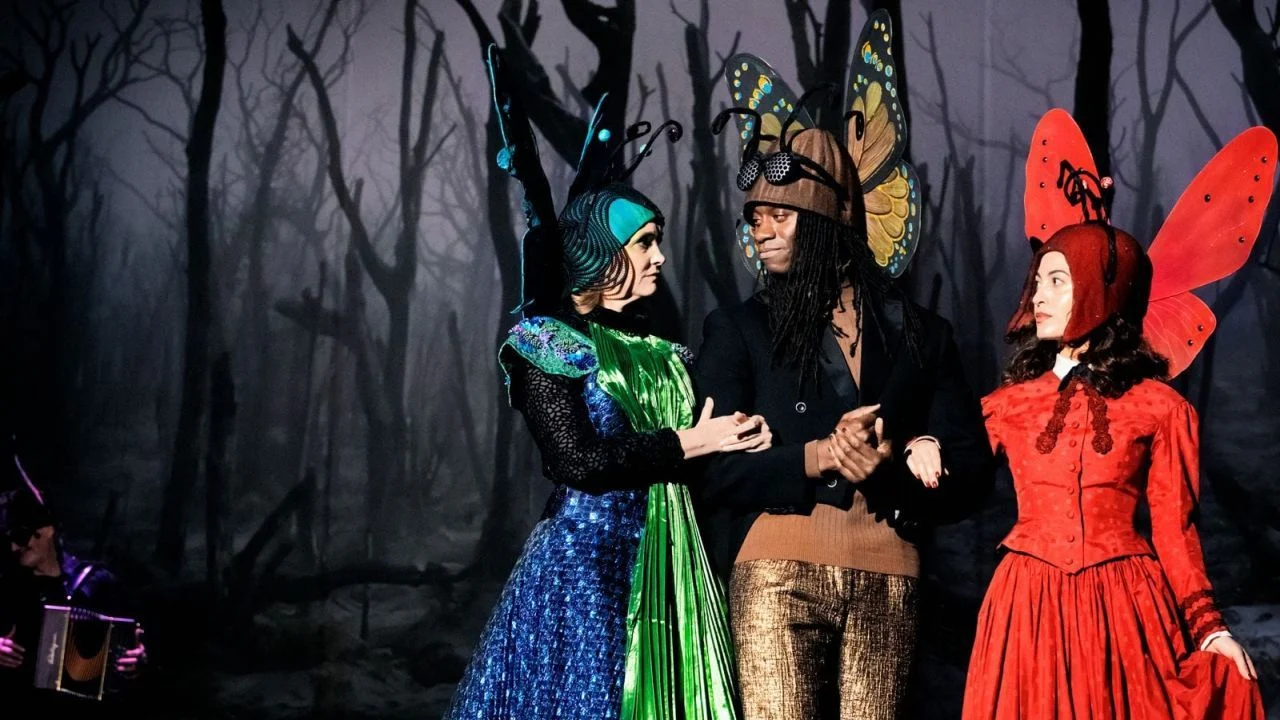
Daughter Emi (Laura Tonke) is preparing for a performance of Anton Chekhov’s “Three Sisters”.
Anton Chekhov’s play “Three Sisters”, which Emi practices as the story progresses, also plays a very important role in the film’s network of relationships. “Living and not knowing why the cranes fly” is one of the most quoted lines in the work, which Ms. Winkler refers to Pavlovich several times: Can a robot simply exist without having any idea why it exists? Doris Dörrie revolves around this question in an elegant and lively manner with open-ended curiosity. The film neither wants to restrict itself to an exclusively technology-critical perspective, as is currently the case in the fear-driven discourse about AI, nor does it see this as an irreversible solution.
Even though “Frau Winkler Leaves the House” is the first film by Dörrie that is not set in the present, but in a (not too far) distant future and even contains sci-fi elements, otherwise it is not that different from her previous work. For decades, the director’s films have revolved around existential themes in a decidedly cheerful way, be it in her early relationship comedy classic “Men” (1985) or in the later, much more experimental and explicitly philosophically tinged “Cherry Blossoms & Demons” (2019). Dealing with grief and loss also runs through these films like a thread that has been carefully woven over the years. “Frau Winkler Leaves the House” is a decidedly light addition to them, but also a masterfully confident and yet unobtrusive addition to its own resources, which, like all of her films, invites you to immerse yourself more in the filmography of this wonderful director.
Conclusion: With “Frau Winkler Leaves the House”, Doris Dörrie creates a clever and touching tragicomedy about grief, family alienation and the question of what actually makes us human. The vision of the future serves less as a dystopian warning than as a cheerful projection surface for very present conflicts.