
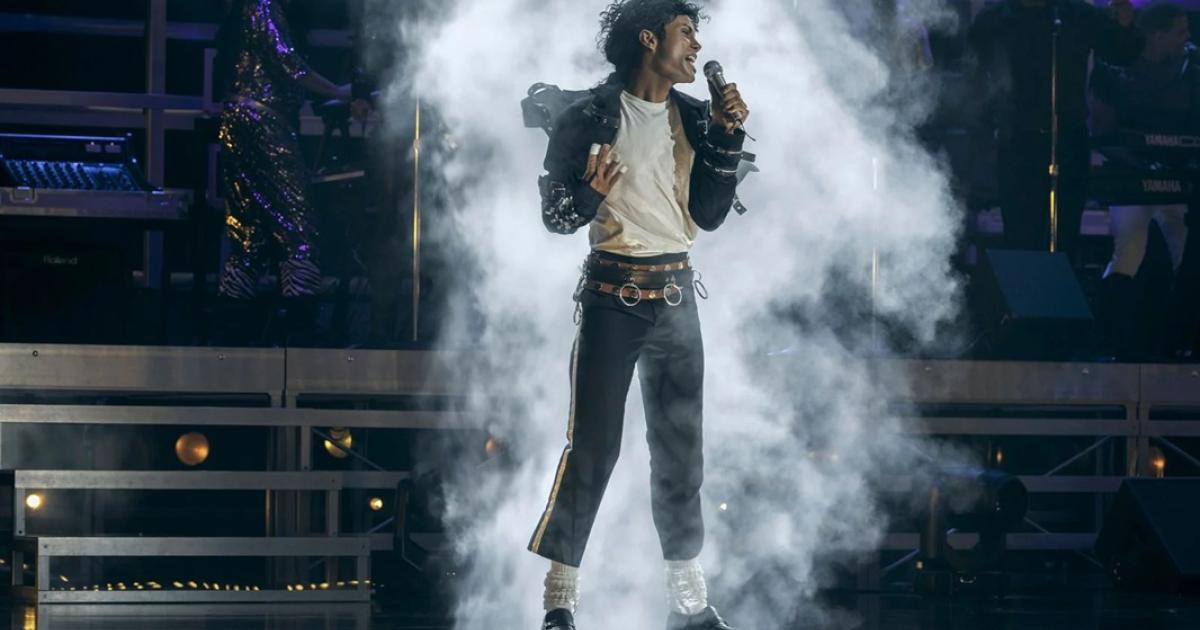
The film shows the megastar severely scarred by a deprived childhood and a terrible father.
It probably runs in the family – anyone named Jackson can sing. (Ok, that probably doesn’t apply to Percy Jackson, but that’s a fictional character.) In any case, Michael should be very proud of his nephew Jaafar, who, under the direction of action specialist Antoine Fuqua, is now transforming himself into the King of Pop as realistically as if he had invented the moonwalk himself and offers lots of groovy concert numbers in which he professionally contorts his body.
The ever-present father monster
The concept of this biopic is quickly explained: it tells the story of a child star who was not allowed to experience a childhood because he and his siblings were mercilessly drilled and threshed by their father until they only had music in their blood and made a career as the Jackson 5. This father monster, who always stands around at the back of the stage with a greedy expression on his face and dollar signs in his eyes, is given a menacing presence by Colman Domingo and it is depressing to see how even the over 20-year-old Michael is unable to assert himself against the all-powerful businessman. Only on the open stage during a final performance with his brothers will he finally find liberating words in front of a huge audience. The film is heading towards this climax of cutting off Joseph Jackson’s cord.
Artificial childhood and liberating tragedy
It becomes clear to what bizarre excesses the deprived childhood has led to in Jackson: he remains trapped in a kind of eternal boyishness, surrounds himself with toys, watches almost exclusively cartoons and classic slapstick films, reads children’s books (with Peter Pan being his absolute favorite hero and Neverland his dream destination), sets up a private zoo with exotic animals that are supposed to replace human friends, pays media-promoting visits to children’s hospitals – and In short, it always seems harmless, kind-hearted and helpful, but often also helpless itself. Stylized as a liberating tragedy Fuqua Then there was the serious stage accident in which Michael’s hair suddenly burst into flames and the singer suffered permanent injuries.
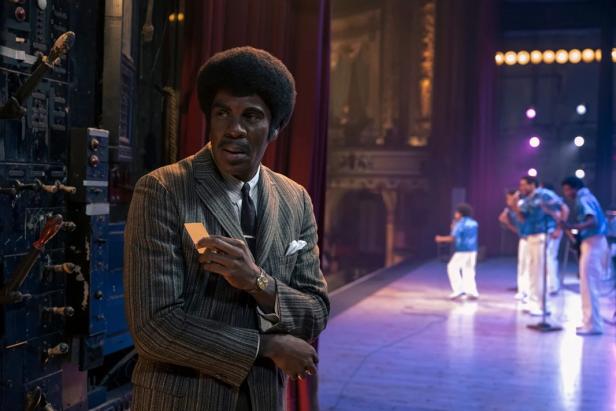
Scene from “Michael”
Accusations of abuse ignored or saved?
What would the life of a pop star be without scandals, crashes and controversies? Michael Jackson in particular offers enough opportunities to go into detail. But does Fuqua do that too? Unfortunately not. The film ends in 1988 during the “Bad” tourwhen Jackson reached the peak of his fame, with no discord. However, there is also a legal reason behind this, as originally this was definitely the case Allegations of abuse against Michael in the 90s should be addressed. The discovery of a clause in an old settlement with then plaintiff Jordan Chandler made it necessary to realign the content with extensive reshoots. A final insert at least announces that we can expect another part in which the sensitive topic can no longer be ignored.
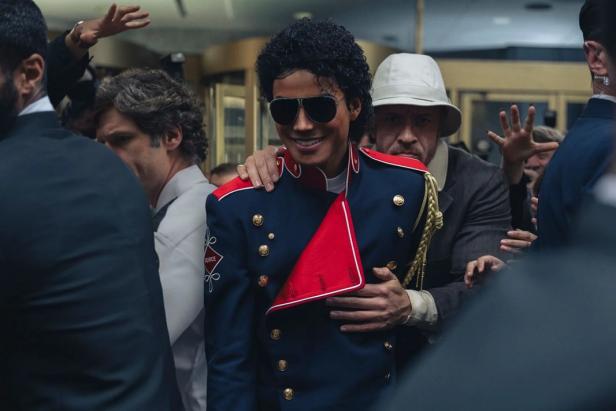
Scene from “Michael”
A stylish concert film
This scandal-free part focuses entirely on the music, which is really not a mistake in a Jackson biopic. Fuqua clearly benefits from having directed numerous music videos in addition to action films. The performances are gigantic in style and create a real concert atmosphere, which is also helped by extensive camera pans into the audience: Such images of moved fans singing along, crying, screaming, being carried away unconscious or struggling to defend themselves against security forces seem absolutely authentic and are reminiscent of a real concert film. Particular attention is also paid to creative processes and we experience, almost dance step by dance step, how the concept of the groundbreaking “Thriller” album comes into being. The motto for “Michael” could be: compositions instead of controversies. And if you still want to find something scandalous, you can be upset about how difficult it was to convince MTV to air the Black artist’s music videos.
4 out of 5 glitter gloves over children’s fingers