
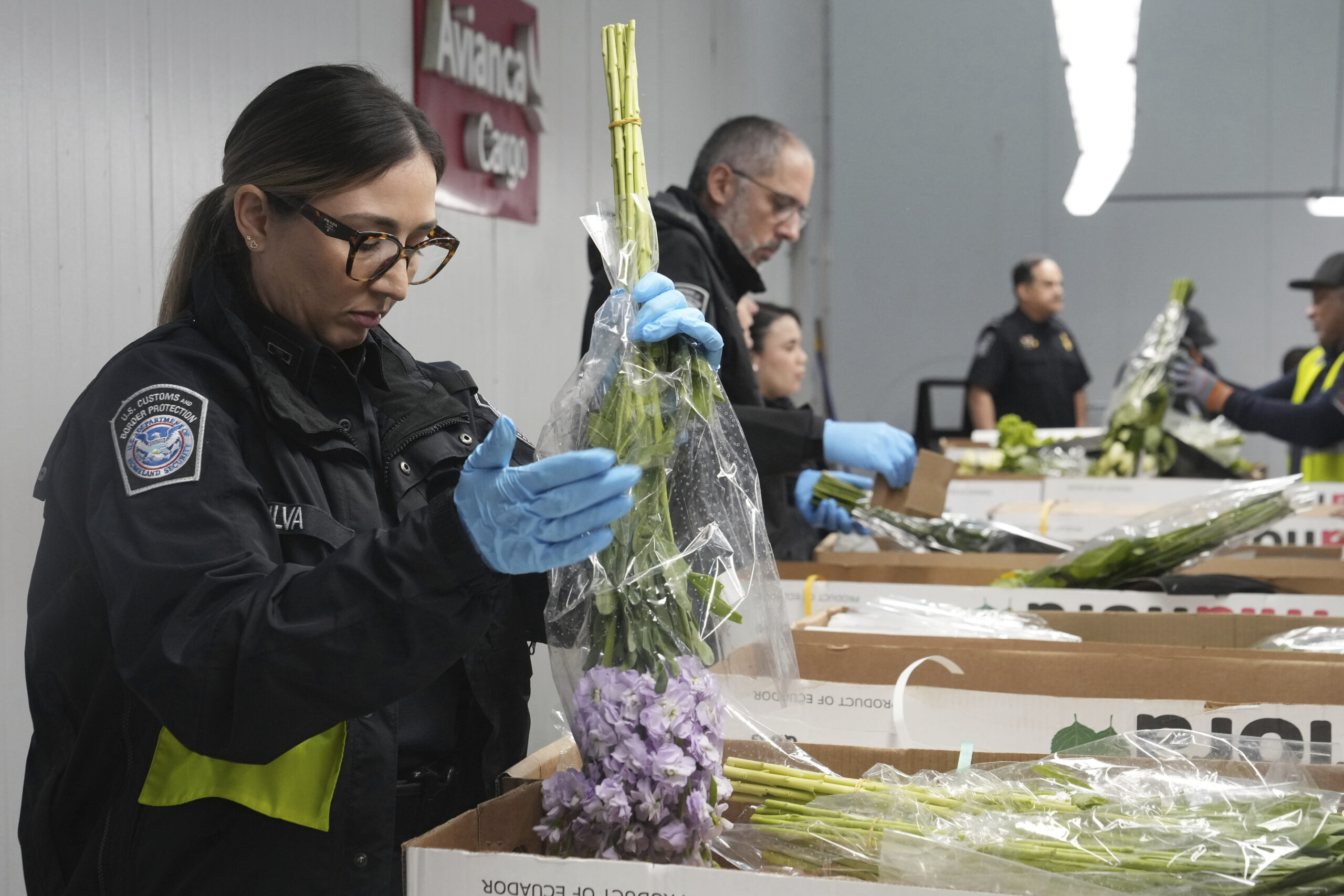
Last year, Miami airport received more than three million tons of goods, of which almost 400,000 tons were flowers, valued at more than 1.6 billion dollars.
If any couple spoils Valentine's Day this week, it will not be due to lack of flowers.
On the eve of February 14, agricultural specialists at the Miami International Airport have prosecuted around 940 million cut flowers, according to the United States Customs and Border Protection Office (CBP). Approximately 90 % of the fresh flowers that are sold for Valentine's Day in the United States pass through Miami, while the other 10 % arrives through Los Angeles.
Roses, carnations, hydrangeas, chrysanthemums and paniculata arrive in hundreds of flights, mainly from Colombia and Ecuador, Miami on their way to florists and supermarkets in the United States and Canada.
The biggest importer of Miami flowers is Avianca Position, based in Medellín, Colombia. In the last three weeks, the company has moved around 18,000 tons of flowers in 300 full load flights, said the firm's senior vice president, Diogo Elias, at a press conference last week in Miami.
“We transport flowers throughout the year, but specifically during the Valentine's season, we duplicate our capacity because demand is doubled,” said Elias.
The flowers continue to be one of the largest imports in the airport, explained the director of Operations of Miami-Dade, Jimmy Morales. Last year, the airfield received more than three million tons of goods, of which almost 400,000 tons were flowers, valued at more than 1.6 billion dollars.
“The 1,500 tons of flowers that arrive daily are equivalent to 90,000 tons of flowers of flowers worth 450 million dollars only in January and February,” Morales said.
This is a great job for CBP agriculture specialists, who review flower packages in search of potentially harmful plants, pests and exotic animal diseases that can enter the country, said the director of the port of Miami, Daniel Alonso .
“Invasive species have caused annual economic and environmental losses of 120,000 million dollars to the United States, including losses of performance and quality in the American agricultural industry,” he added.
The Colombian flower industry was recently threatened by a possible 25 %tariff, when Donald Trump faced the leaders of the South American country for the arrival of flights with deported immigrants. But the commercial dispute was paralyzed at the end of January when Bogotá allowed flights to land.
The president of Colombia, Gustavo Petro, had previously rejected two American military planes that carried migrants deported to the country. Petro accused Trump of not treating migrants with dignity during that process and threatened to retaliate against Washington, imposing a 25% increase in Colombian tariffs on their products.
At Friday's press conference, officials refused to answer any questions about policy or tariffs.