
“”Good thing wants to have a while“Is a common saying that should be made clear that some things need time and patience to be of correspondingly high quality. Even on some films, and especially with a view to the production period, this quote can be used wonderfully. Above all, the work on trick films often takes a lot of time. Weeks, after all, the film consists of almost 100,000 individually animated individual images.
Even much longer, namely over a decade, Christiane Cegavske needed for her stop-motion animated film “Blood Tea and Red String”. But even that is nothing compared to the Berlin puppeteer and animation artist Heinrich Sabl, who has been working on “Memory Hotel” since 1999. Now, after a quarter of a century of meticulous detailed work, the 64-year-old's debut film finds his way into cinemas who loses not only her memories, but also loses himself in the post-war turmoil.
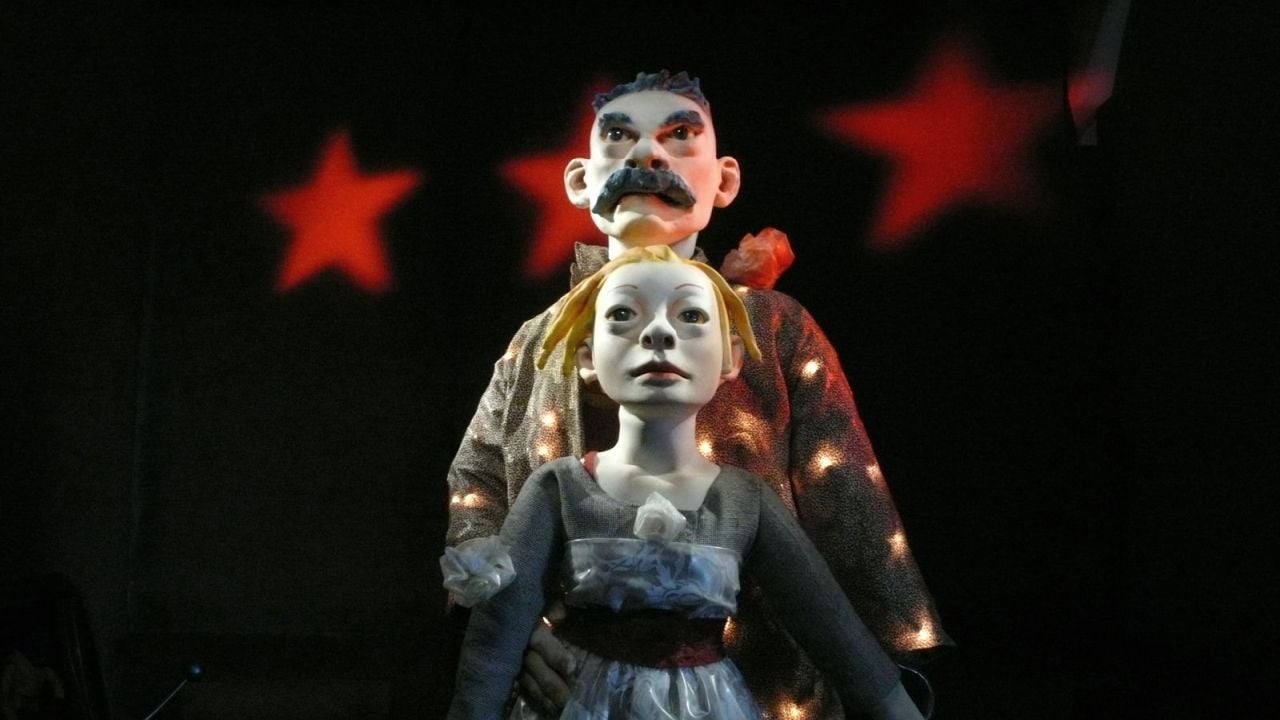
For 25 years, Heinrich Sabl led solely on the animations of his film.
In 1945 the Red Army penetrated deeper and deeper in the German area, the world fire lasting for almost six years is about to end. Many families hope to escape to America, but only a few make it. The five -year -old Sophie (voice: Svenja Liesau) also wants to take a restart in the distance with her parents (Florian Lukas and Steffi Kühnert). On your trip you will pass a hotel where you hit the Nazi unit sharp and the Hitler boy Beckmann (Milan Peschel).
There the events overturn and Sophie's parents overturn through sharp and the Soviet soldiers Wassili to death. Beckmann witnesses the murder. Sophie survives, but loses her memory. Then the Red Army moves in and occupies the hotel. The Russians degrade Sophie to the cook. Only decades later do the memories come back and an unexpected encounter in the elevator shaft leads back to Sophie's lost childhood …
Impressive stop-motion design
“Memory Hotel” is a real cinematic one-man show. Finally, SABL is responsible for direction, script, animation, cut and sound. Accordingly, there is a lot of dedication and love in this work, you can see “Memory Hotel” on a visual level every second. Sabl takes the audience on a metaphorical journey into the inner world of his characters and mixes history coping with the topics of loneliness, (identity) loss, trauma and friendship. A multi -layered and audiovisually beguiling film that calls on your own reflection and interpretation. Since the plot is only located in one place almost all the time (namely in the title-giving hotel), the film also exudes a chamber game-like aura.
The hotel designs Sabl as an architecturally impressive, multi -storey labyrinth, which exudes a strange and morbid mood. After all, it becomes a kind of prison for the four main characters over decades that binds the residents itself, and literally chains. Longness or even boredom do not occur when looking at the scenery and the place of action, on the contrary. You can't get enough of the sophisticated stop-motion set design, on the variety of equipment and all the design elements and details that the scene offers.
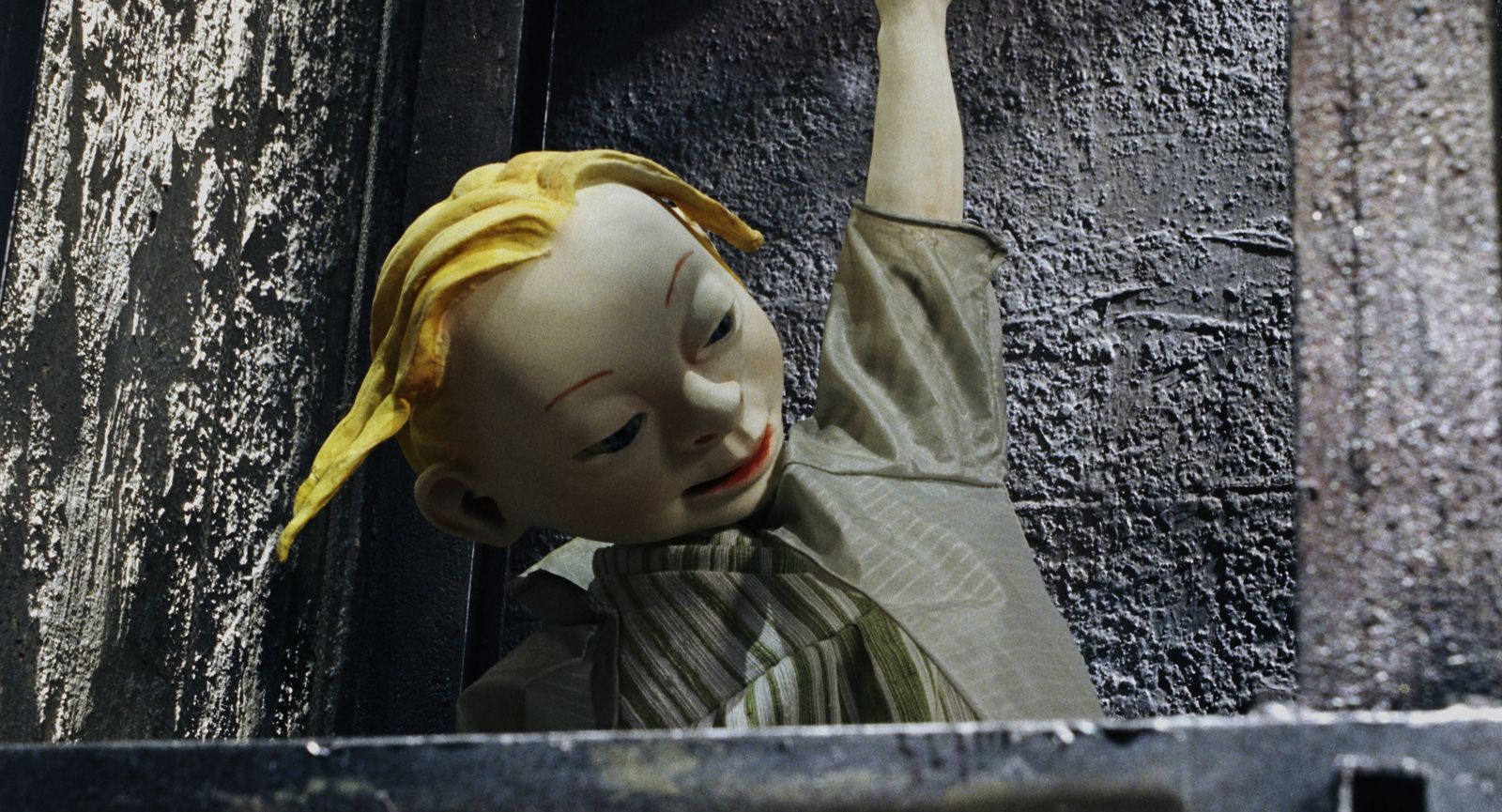
After the loss of her memories, Sophie is declared a cook.
Sometimes we are in the hotel lounge designed like a theater set. Later it goes into the dark and cramped cuisine, in which Sophie in the chord and machine-monotonous, rhythmically always the same hard work has to prepare the food for the Russian occupiers. We descend even deeper when the action focuses on Beckmann. It lives in the air -raid shelter between dirt and rats. Every now and then he climbs up the claustrophobic elevator shaft to “pick up” something from eating.
Visually, “Memory Hotel” finds a fine balance between reluctance and suggestivity. Every now and then Sabll builds surreal moments and alluding dream trips that tell of Sophie's desire for freedom and self -determination. The references to history are also great and apt, especially the German-German and German-Soviet history. Finally, SABL indicates that the plot includes at least a period of 40 or 50 years (the characters age noticeably in the course of the film), even if the year, other times or other industrial background information is missing.
Animated parabolas over Germany from '45 to '89
The hard work on the machine that has already been mentioned, which Sophie has to do daily on decades, indicates the high workload and monotonous, strenuous assembly line work, which was everyday for many people in the GDR. And while the “Russification” of Sophies as a fingering on the influence of the Soviet occupying powers in East Germany and East Berlin after 1945, sound in between and only slogging slogans, which have burned themselves into the collective memory: “We are the people!”
The director also refers to the peaceful revolution in the GDR 1989/90, which meant an end to the restrictions, oppression and dictatorial arbitrariness for people. It is not unlikely that some of these allusions are directly related to the biography and life story of Sablo, which was born in the year of the wall building. He grew up on an industrial area in East Germany – and the “industrial” runs through the entire film. Such a stop motion film, which is so deep in the GDR history, has probably never existed. And yet: with its intelligent, compassionate script, Sabl ensures that the political never overwhelms the personal. Because the fate of Sophies always remains the narrative center, around which everything turns.

Sometimes the stop-motion animations deliberately take on rather grotesque trains.
Every now and then “Memory Hotel” also loses itself in meaningless, cumbersome subplots and side lines. They are supplemented by partly abstruse, confusing impetus, which literally tear out the viewer from the film. In these moments that do not contribute to the actual story or dramaturgy, SLBL is bogged down – not least because he sometimes wants to spread up and do not end it. A prime example of this is a chaotic scene in which the focus is on eating and theft of the food produced by Sophie. This, hectic and exhausting, is approaching this much too long sequence, in which the characters acting literally play about the mind and dizzy. And the viewers with you.
This weakness is compensated for by the many humorous inserts, running gags around a particularly voracious rat as well as the weird story incidents. And here it can also get to business and brutally. The way in which Sophie's parents find death is quite violent and would have made up for this drastics and brutality in every splatter movie. Towards the end, Sabl, choreographed Russian-roulette scene with Sophie and one of the occupiers, is also able to pack up Robert de Niro and Christopher Walken in “who go through hell”!
Conclusion: Stop motion meets history lessons of a different kind: With affection and empathy for his characters, “Memory Hotel” tells a strong story about four people who have become prisoners of a place and the-German-Soviet-history. The complex architecture of the labyrinth -like and single scenery, which spread over many floors, impresses as well as the detailed trick -technical implementation in its entirety. Only in the middle section loses the film in its imaginative ideas and in the excessive visual wealth of ideas. Then the previously careful nuances of content slip through to him, the actual messages are briefly out of view.