
One could easily accuse debutant director Ronan Corrigan and his co-writer Hope Elliott Kemp of making the first few minutes of their hacking thriller “LifeHACK” almost one-on-one from well-known YouTube formats have taken over. In these, hackers pose as supposedly helpless senior citizens in order to be duped by online fraudsters, mostly based in India. But then the tables are quickly turned: During the scam attempt, those responsible for the video suddenly use the real name of their counterpart, whereupon, after an initial shock, sheer panic usually breaks out in the call center factories. And because the surveillance cameras were cracked in advance, the YouTube audience can watch live.
However, this similarity of the “LifeHACK” opening to video hits that have long since gone viral online is not at all wrong, because on the one hand, even in the fictional version it is a lot of fun when the scammers are scammed for a change. On the other hand, the introduction immediately establishes an authenticity, which is particularly important because “LifeHACK” falls into the genre of so-called screenlife films. In other words: The entire action takes place exclusively on computer and cell phone screens – although fiddling with well-known programs and apps invites recognition. After all, Zoom calls and chat programs look similar on your home desktop.
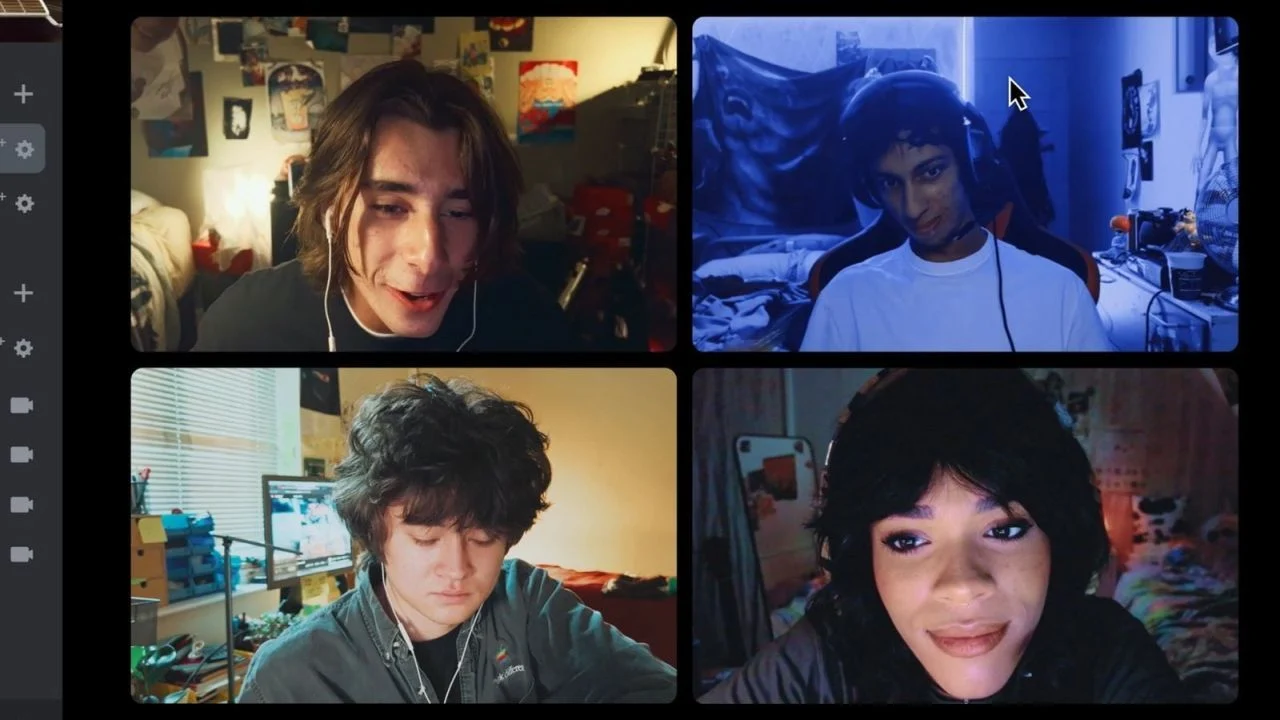
The entire plot of “LifeHACK” only takes place on screens – primarily in the Zoom calls of the central quartet of hackers.
The teenage friends Kyle (Georgie Farmer), Alex (Yasmin Finney), Sid (Roman Hayeck-Green) and Petey (James Scholz) met online while playing the survival shooter “Rust” or chatroulette. They are now inseparable, even if some of them have never met in person – simply because they cannot afford the flights. The quartet is also behind the scammer scam described above. In contrast to the real YouTube videos, in the film you can see exactly which programs the clique uses to find out revealing details about their distant counterpart in real time. They scare the fraudster more and more until he flees the call center in front of his astonished colleagues.
But such fun activities are no longer enough. Instead, super-rich tech millionaire Don Heard (Charlie Creed-Miles) is chosen as the next victim. A heist that has been concocted for weeks is intended to win $100,000 in crypto – and in fact, even that is just the beginning of a heist that will soon allow the teenagers to jet around the world in private jets. But apparently they didn’t cover their tracks nearly as well as they thought. Someone is blackmailing the quartet into one last big heist – and it can no longer just be pulled off from the teenager’s room at home…
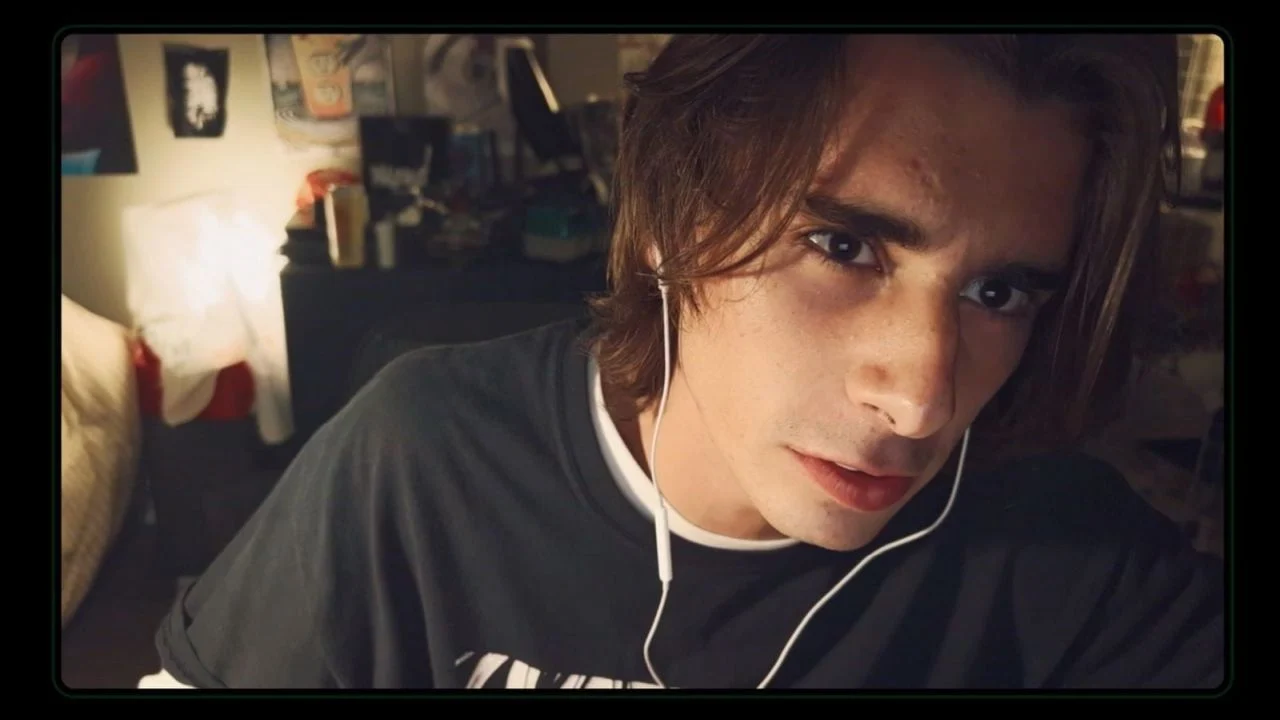
On paper, Kyle (Georgie Farmer) could easily have been one of the most annoying movie characters of the year – but then he’s a really likeable guy.
Four teenage hackers who eventually get so bored with their constant online hanging out that they start crypto heists instead – at first glance they sound like extremely annoying teenagers who you definitely don’t want to hang out with for 90 minutes, whether in real life or on a computer desktop. But it’s amazing: Ronan Corrigan actually manages the trick of introducing the troupe in such a way that you’ll be happy to keep your fingers crossed for them afterwards – and will absolutely be excited about the software-based heists. Only Kyle’s daddy problems, who desperately want to prove to his father, who has emigrated to Dubai, what he’s really capable of, seem too overblown. “LifeHACK” is certainly not so consistent in detail that you could simply imitate the crypto scams shown if you just take the film frame by frame as a template…
… but for anyone who spends a lot of time online without hacking themselves, there are enough authentic moments of recognition to consider it all credible enough (and of course that doesn’t apply to all Screenlife films). In Don Heard’s hacked emails there is even an invitation to the island from a certain Jeffrey – “LifeHACK” also has a nice evil sense of humor, especially with its numerous Easter eggs. Only as soon as the heists are at least partially expanded from the desktop into the physical world does the sometimes incredibly wooden spectacle become noticeable. And when secret mercenary groups finally appear, you no longer feel like you’re on the PC of a teenage group, but rather in a run-of-the-mill Hollywood thriller.
Conclusion: A likeable quartet that pulls off online heists like crazy – not only is it extremely intense, but it also finally consistently exploits the specific strengths of the screenlife genre. Unfortunately, it is only in the last 20 minutes that “LifeHACK” overdoes it, so that in the home straight not only the credibility but also the tension is lost to some extent. It wouldn’t have been necessary to really want to go one better at the end.