
Summer in Corsica: swimming in the sea, fishing together, sitting around the campfire and hunting wild boars! What sounds like a perfect vacation is a rare moment of the father for the protagonist from “Kingdom – the time that counts”, which is nevertheless overshadowed by constant fear of death. Because the father is the head of the local mafia, which he has in common with the father of the director Julien Colonna.
Loose autobiographically, Colonna tells of the strange experience of having a gangster sought by the police, alienating the reality in an interesting way: instead of a young man, he tells of a young girl, which is fundamentally changed and also opens up the opportunity to tell about an archaic, patriarchal culture in which blood revenge is just as important as Family gang.
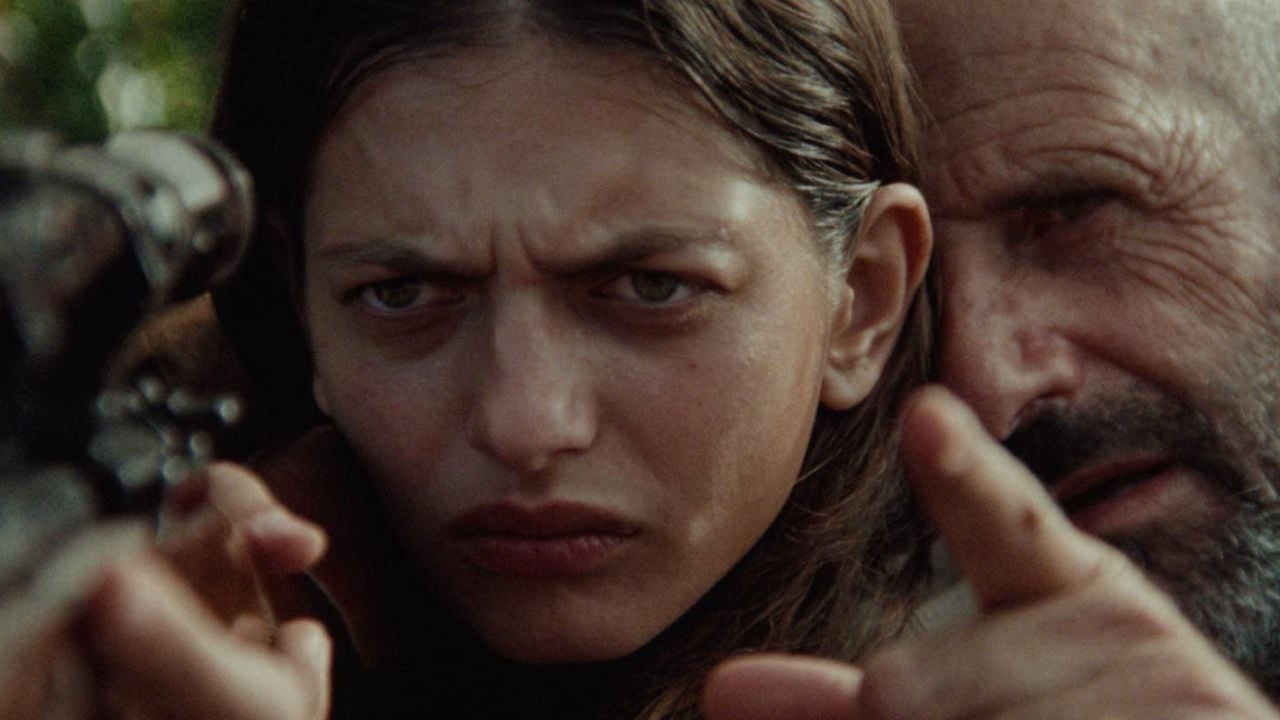
When Lesia (Ghjuvanna Benedetti) taught her father to shoot from her father on a summer vacation, it has nothing innocent in itself.
Corsica, in the mid -1990s. Lesia (Ghjuvanna Benedetti) is unsettled from her rhythm of life, but the 15-year-old already knows that. After all, her father is Pierre-Paul (Saveriu Santucci), one of the leading and feared heads of the Corsican mafia. He just survived an attack on his life and withdrew with his faithful to a villa. There he now also gets his daughter, who otherwise lives with the aunt, because the mother died years ago.
Pierre-Paul actually wants to keep his daughter away from his business, but in the course of the summer Lesia is getting more and more details. On the one hand, the band grows between father and daughter, but on the other hand there is also the awareness in Lesia that her father's life hangs on the silk thread – and everyone spent together could be the last …
Not a very harmless matter
In film universities, students are happy to advise to make films about what they know, i.e. to draw from their own experiences and experiences. The opposite could have been the case with 43-year-old Julien Colonna. Because as the son of the Corsican mafia sponsor Jean-Baptiste Jérôme Colonna, known as Jean-Jé, the director is likely to have had an insight into a world who certainly does not want to see her secrets spread out on the screen. Colonna did not stop this from making a film about his experiences – it may be one of the reasons why he alienates these experiences so much:
Not a young man, but a young woman is the main character, and the film also played in the 1990s, ten years before Colonna's father died in a car accident in 2006 (at least his death is officially referred to as an accident). In the nineties, bloody battles raged between several mafia families on the island in the Mediterranean, in which the local separatists, who have long fought for the independence of their homeland, also raged.
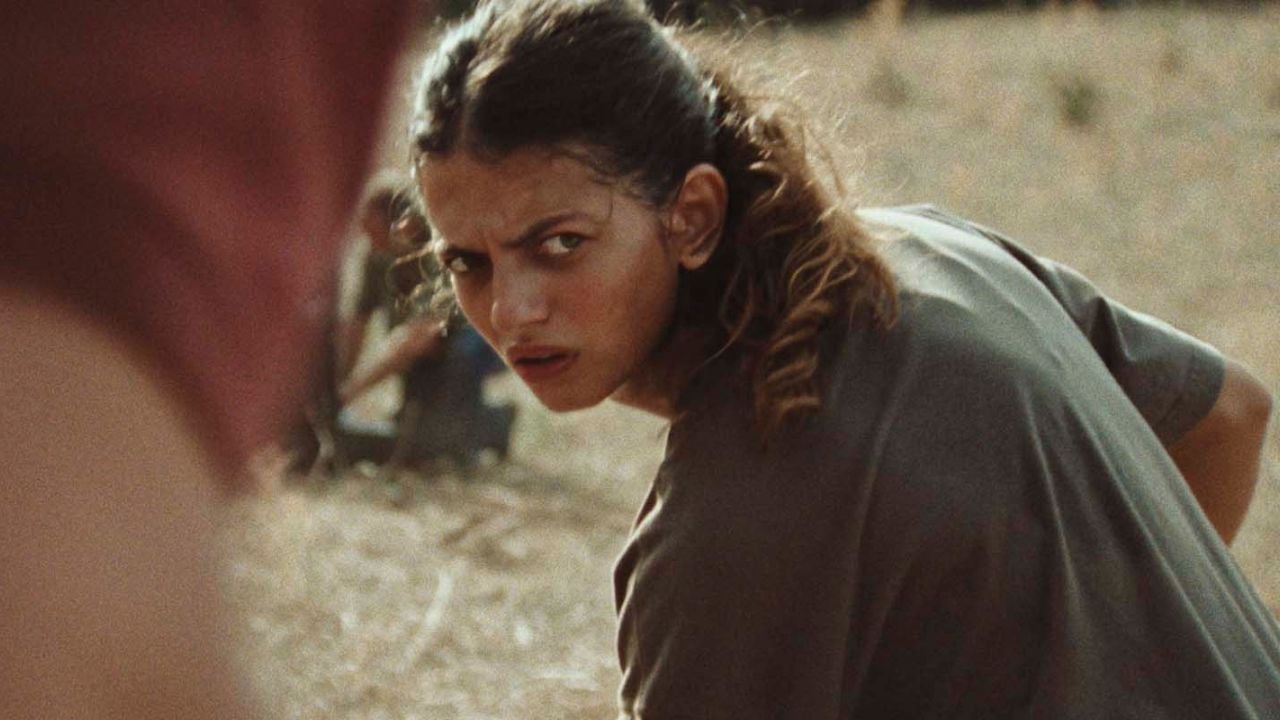
In the last third, Lesia is still forced to interfere in her father's often bloody business.
However, all of these real backgrounds mostly only vibrate in the background, alone from a few television messages can be guessed at, which puts the audience into a role similar to that of the protagonist. Especially at the beginning, Colonna consistently filmed from her perspective, always stays with the camera where Lesia is, no more shows when she sees her father's world and business. This is how an unusual father-daughter history arises-a coming-of-age film in which a young person has to learn to deal with normal teenagers and the very special “profession” of her father.
Colonna turned exclusively with laypersons. For months he searched for the right guys and faces in Corsica, who now give his film his remarkable authenticity. They are not cool gangsters, nobody runs around in casual suits and sunglasses. Instead, there are apparently normal types to be seen here, which pursue a completely abnormal activity. In the best moments, “Kingdom” has an ethnographic effect, so life in Corsica, as it has probably hardly changed for decades – shows from the language, which is characterized by Italian influences, to the archaic structures of the patriarchal gangster box.
Not consistently pulled through
Over long distances, “Kingdom” works as a gangster film with an unusual perspective, as a view from the outside, in which the strictly subjective perspective only slowly seeps in what is actually played here. In the last third, however, Colonna leaves a lesiah perspective for some scenes and instead stages some – admittedly very cool – scenes that are used to how they are used to from ordinary mafia.
In the end, he almost makes his main character into a Corsican Mary Sue. It's a shame that he did not believe the strength of the first two thirds of his film to the end, that the haunting father-daughter history may seem not enough for him. It is right now that makes “Kingdom” into such a special film over long distances.
Conclusion: With his debut film “Kingdom-The Time counts” Julien Colonna has made an unusual gangster film, which is essentially a drama about a very special father-daughter relationship. Inspired lots of his own experiences, the film made with amateur actors convinces for a long time with its special perspective, until he ends up with some typical gangster film patterns.