
For Quentin Tarantino, Kill Bill: Vol. 1 and Kill Bill: Vol. 2 were always a single film – the fourth in his famous plan to retire at the end of his career with exactly ten titles in his filmography. It always annoyed him that he had to split his revenge epic into two films due to studio pressure. Just a few weeks after the release of the second part, he presented a first version of “The Whole Bloody Affair” at the 2004 Cannes Film Festival. There was actually supposed to be a theatrical release back in 2005, but it was canceled just like some later announcements. From 2011 onwards, he only showed the version, which was expanded to include anime scenes made later, in his own cinema in Los Angeles. Instead, Tarantino decided to wait until he personally had full rights to his work again…
… and now the time has finally come: Tarantino is one of the few directors who have contractually guaranteed that the rights to his films will revert to him personally after a certain period of time. So now he can do whatever he wants – and he’s using this freedom to bring the project back into theaters with an epic running time of 4 hours, 35 minutes and 19 seconds. And the wait was worth it. Yes, the post-credits “Lost Chapter” created with the help of the video game Fortnite may be completely unnecessary, but the actual film is the perfect combination of the two contrasting yet equally outstanding halves into one all-encompassing masterpiece. It’s not so much the increased level of violence, but rather a cut that makes the great homage to Tarantino’s favorite genre even more captivating than it already was in two parts.
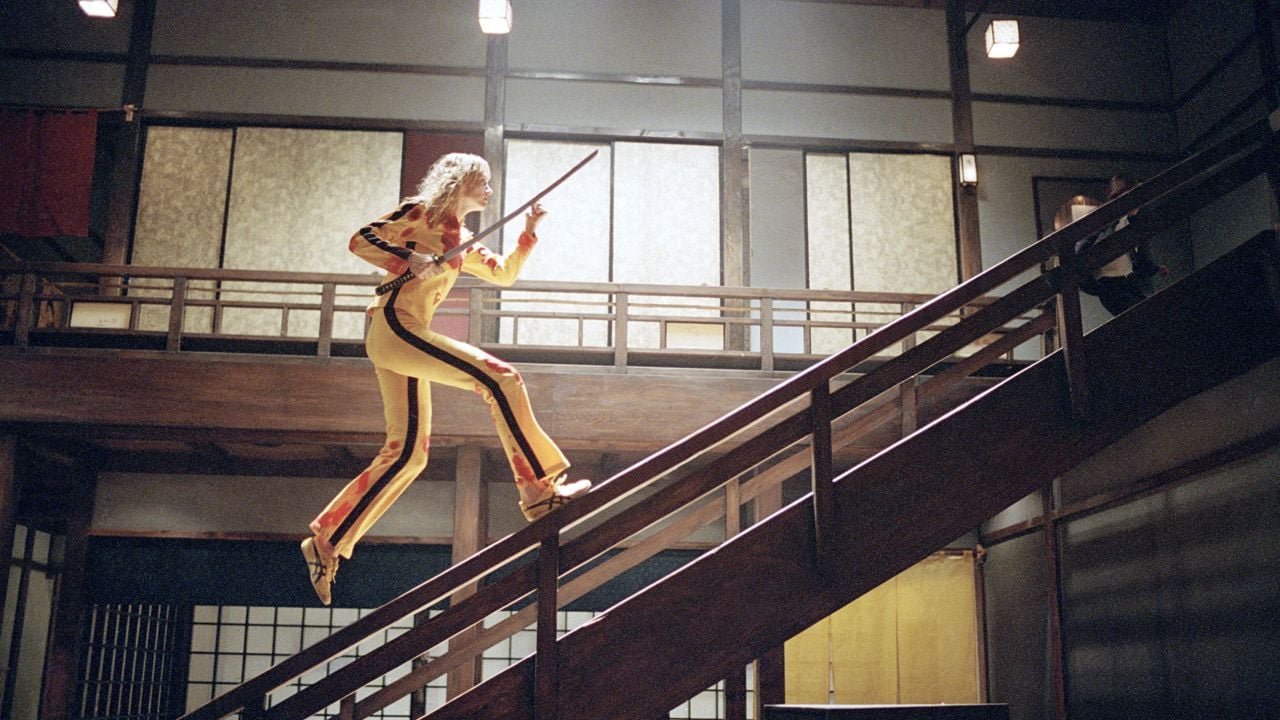
The legendary showdown at the House of Blue Leaves just got even more brutal!
The heavily pregnant bride (Uma Thurman) was left seemingly dead after a massacre in a church. As Black Mamba, she used to be one of the most dangerous contract killers and part of an elite killing squad. However, her former boss Bill (David Carradine) has not digested her departure to a new life. That’s why he raged in the house of worship together with O-Ren Ishi (Lucy Liu), Vernita Green (Vivica A. Fox), Budd (Michael Madsen) and Elle Driver (Daryl Hannah). The bride now only knows one goal: revenge! She wants to work through her list one by one and kill her tormentors, saving the confrontation with Bill for the end…
The crucial difference to the two-part version
“Kill Bill: The Whole Bloody Affair,” which is told not chronologically but in wildly jumping chapters, is exuberant quote cinema. Tarantino mixes his favorite genres – from Western to Eastern – and creates a completely original spectacle. The action dominates the first part. Extremely crazy limbs are chopped off and thrown through the air beyond the rules of gravity and logic. In the second half, the psychological tension and the character’s underpinnings come into focus. But what are we going to write about here? You probably all already know “Kill Bill: Vol. 1” and “Kill Bill: Vol. 2” anyway. And if not, we recommend that you read the two individual film reviews again as a supplement to this text:
- the FILMSTARTS review of “Kill Bill: Vol. 1”
- the FILMSTARTS review of “Kill Bill: Vol. 2”
The author of these lines can largely agree with the statements in these articles, which are more than 20 (!) years old – with one exception: he never found that the second part was too long. The first half may be the cooler, but the second still packs a bigger punch with its emotional underpinnings and constant tension. And that very strength is expanded even further in “The Whole Bloody Affair.” One of the changes in particular ensures that one of the few weaknesses of the individual films has been eliminated and the new version is definitely the ultimate one, which everyone who is dealing with “Kill Bill” for the first time should watch from now on.
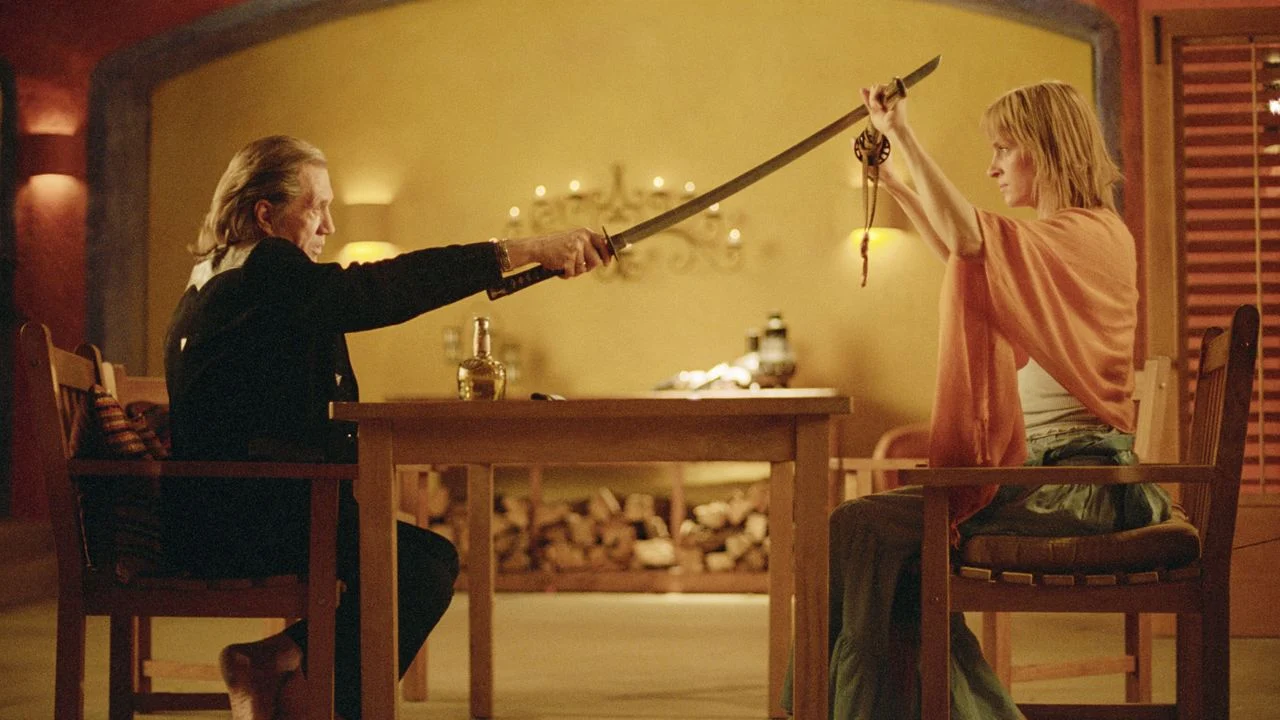
The final confrontation is now even more awesome in “The Whole Bloody Affair”!
Due to the dichotomy, Tarantino was forced to provide a short summary at the beginning of the second film, which is of course now unnecessary and has been removed. Above all, “Kill Bill: Vol. 1” had to end with a cliffhanger in order to hook us for the second part – and so there was suddenly a preview of a twist, the revelation of which only really works much better in the finale. This gave the audience an immense advantage in knowledge over the bride, which is not at all consistent with the fact that one would otherwise remain in her perspective.
Long stretches of “Kill Bill: Vol. 2” were dominated by the question of when the bride would find out this secret, which only unnecessarily distracted from the tension of her fight for survival. “The Whole Bloody Affair” is not only more coherent because the information only reaches us together with the bride. The twist, which has a massive emotional impact, is now also a real twist for a new audience because it was not prematurely revealed as a cliffhanger more than an hour ago.
Some other minor improvements
It is the best and most effective change to the individual films. In addition, the transition between the two halves of the film is now marked by a 15-minute intermission – as with “The Hateful Eight” – which is part of the running time and offers you a breather after almost an hour and 51 minutes of action inferno. The film is no longer preceded by a quote about revenge best served cold, but rather a dedication to the “master director” Kinji Fukasaku (“Battle Royale”), who died in 2003 and who had a strong influence on Tarantino.
What’s also particularly obvious is that the bride’s fight against the Yakuza bodyguard Crazy 88 is completely in color. Because the bloodshed is so brutal, Tarantino switched to black and white for “Kill Bill: Vol. 1” to avoid a harsher rating. Both versions have their advantages here. The cleverly placed black and white change was a nice homage, Tarantino’s preferred color version also makes the action a lot more intense thanks to some of the stronger and longer peaks of violence in “The Whole Bloody Affair”. There was also a new funny moment here.
New anime action that Tarantino always wanted to show
The expanded anime sequence is also an enrichment. As is well known, the bride tells in an animated flashback how O-Ren Ishii takes revenge for the murder of her parents. In “Kill Bill Vol. 1” you only see her killing the Yakuza boss responsible, although his right-hand man Pretty Riki was also involved in the murder and even personally slaughtered her father. As Tarantino revealed in interviews, the company Production IG, known for, among other things, “Ghost In The Shell,” was simply not able to animate the entire sequence that Tarantino had designed in the script in time. Only later did the company produce the rest on its own and without Tarantino’s knowledge – and made the material available to the “Jackie Brown” director for “The Whole Bloody Affair”.
He has seamlessly integrated around eight new minutes into the existing sequence and thus skillfully expands the backstory of the fearsome mafia godmother O-Ren Ishii: After taking anything but painless revenge on boss Matsumoto at the age of eleven, there is now a very wild, highly stylized action sequence in which she competes with Pretty Riki at the age of 13. In terms of staging, it is a highly exaggerated and deliberately excessive enrichment that also fits well into the topos of feminist revenge of “Kill Bill”.
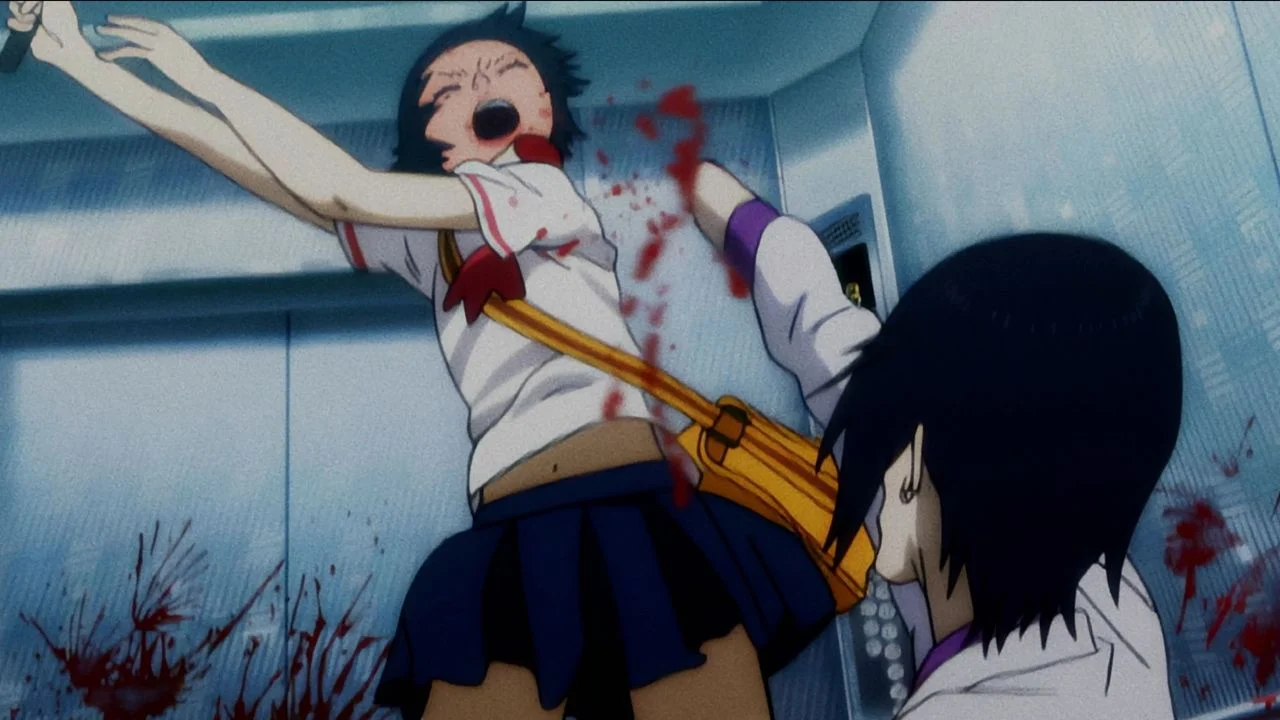
New anime action: O-Ren Ishii now fights not only against Matsumoto, but also against Pretty Riki!
Can the same be said about the “Fortnite” sequence at the end of the credits? Opinions differ on this: As already stated elsewhere, “Yuki’s revenge“ once again strong action in the style of “Kill Bill”. However, the video game look takes some getting used to. Tarantino himself also does a poor job as the new voice of Bill (original star David Carradine died in 2009).
If the filmmaker had cut the “lost chapter,” which is in the original script but was never shot back then, into the current “Fortnite” version right in the middle of “The Whole Bloody Affair,” it would definitely have been a disruptive factor. At the end of the credits, however, it works as a nice gimmick that purists can simply ignore by leaving the cinema early. Either way, “Kill Bill” is finally the epic masterpiece that Tarantino always imagined.
Conclusion: “Kill Bill: The Whole Bloody Affair” is much more than just a director’s cut. The additions are consistent, but it’s a reduction that makes the biggest difference. By removing the artificial cliffhanger and the new dramaturgical unity, Tarantino’s revenge epic noticeably gains in emotional power.