
Until a year ago, Osgood Perkins could be placed in the second tier of directors who work in the field of so-called elevated horror – a trend that has been setting the tone for around ten years, which tries to shed its genre-like nature through features such as a greatly slowed down, often non-committal wavering tempo, emphasized symbolism, formalistic rigor and the explicit making of psychological subtexts. But after rather strenuous stylistic exercises such as “Gretel & Hansel” (2020), Perkins gave his cinema its first contours with the serial killer thriller “Longlegs” (2024), which became a surprise success – before he drove himself out of every shred of residual pretension in the same year by interpreting the Stephen King short story “The Monkey” with macabre exuberance as a fun splatter.
“Keeper” is now more in line with his earlier works – and, at least at first glance, fits in a little too well with his current genre environment: On the one hand, the film deals with a topic that has been extremely popular in horror cinema in recent years – the often toxic dynamics in primarily heterosexual couple relationships, the inherent horror of which films like “Men”, “Companion” or “Together” have highlighted in very different ways. On the other hand, after the uninhibited “The Monkey”, Perkins returns to a decelerated, vibe-centered form of production. And yet, in his most recent directorial effort – his third in just a year and a half – the director proves to be one of the more opinionated voices in contemporary genre cinema. Also because he doesn't want to be limited to one and the same film.
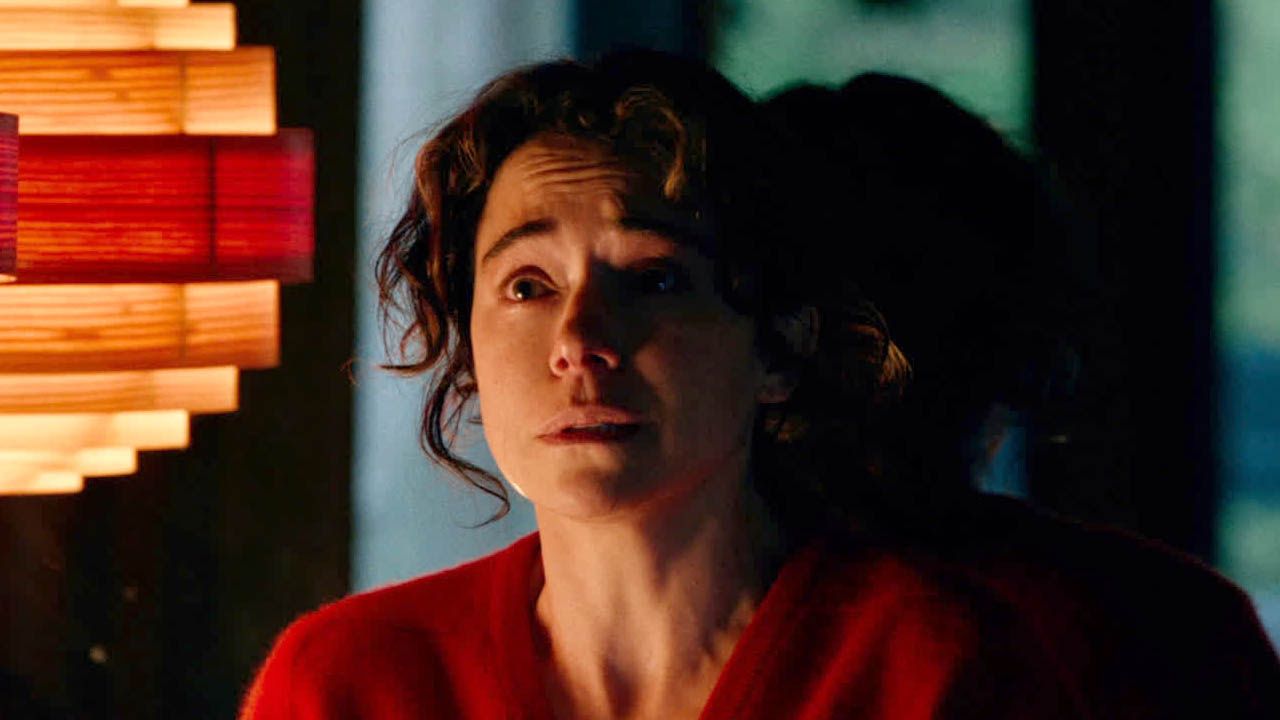
City dweller Liz (Tatiana Maslany) feels anything but comfortable in her boyfriend Malcolm's cabin in the woods – and she has good reasons for it.
“Keeper” opens with a number of different women from different eras who are aiming directly at the camera (and therefore at us), with their looks changing over the course of the montage from expectant to skeptical, and finally from happy to distorted with terror – until their faces, some of which are covered in blood, form a collective scream in the close-up. So it's about a collective, perhaps even universal experience. Afterwards we sit in the car with the artist Liz (Tatiana Maslany) and doctor Malcolm (Rossif Sutherland). The couple, somewhere in their 40s, have been together for just over a year – too short to become stuck in habits, but long enough to build a level of trust that can withstand a weekend trip together to Malcolm's remote forest cabin.
But as soon as they arrive in the unfamiliar surroundings, at least for the self-proclaimed city person Liz, insecurity and growing alienation take hold in their relationship – especially as one strangeness soon follows another. On the very first evening, Malcolm's greasy, jovial cousin Darren (Birkett Turton), who lives next door, stops by with his model girlfriend Minka (Eden Weiss) and promptly invites Malcolm to the door for a one-on-one conversation. Meanwhile, on the table there is a chocolate cake meticulously wrapped in wrapping paper – according to Malcolm, a gift from the caretaker – which the camera repeatedly points out conspiratorially and which, according to Minka, tastes “like shit”. Nevertheless, Liz, who says she doesn't like chocolate at all, soon finds herself inexplicably drawn to the pastry. She is also plagued by all sorts of visions – and then Malcolm leaves her alone in the hut because of an alleged medical emergency…
A hut to feel uncomfortable
The wooden house, which soon becomes the sole setting for “Keeper”, has little in common with the rocky rusticity of the hut in the horror classic “Dance of the Devils” – the minimalist-modern, Scandinavian-inspired architecture with open rooms and wide window fronts is probably intended to appear bright, open and inviting. But right from the start, Perkins wrests an unsettling, claustrophobic effect from the strikingly uncomfortable building through suggestive, disorienting camera angles.
The large amount of glass that provides a view of the forest seems less like a light-giving construction project that connects the rooms with the surrounding nature; rather, it reinforces the constant feeling of being at the mercy and of the impending loss of control. Noises creep through every crack, and the fact that there are hardly any doors and even fewer keys in the home bothers Liz for good reasons. “I am a prisoner,” she says once when she is left in the middle of the forest without a car and is talking on the phone to a friend from the big city – using the term “kept woman” in the English original ambiguously, which can also be translated as “mistress” or “endured woman”.
Ghost film, folk horror or something completely different?
Yes, “Keeper” – like many films of recent years with a similar theme – is also about controlling masculinity, patriarchal exploitation, and cross-generational devastation. There is also monstrous potential lurking in the question of whether you can ever fully know each other in a relationship – and what level of uncertainty you simply have to live with in a relationship. Although there is even a kind of resolution, Perkins – unlike, for example, the aforementioned “Men” – persistently refuses to condense his entire plot construct into a single metaphor. Instead, it leaves open for a long time, even an exceptionally long time, what kind of horror film we are actually in. He keeps laying out new leads, letting some of them go nowhere and piling up more puzzles than he can solve.
Are supernatural phenomena at play? Is it about a creaturely danger or inner madness? Is “Keeper” a folk horror film or does it even amount to a home invasion scenario? In between there are also David Lynch-like tilting images, just long enough to be permanently confusing. Perkins plays a clever game with situational archetypes, different genre modes and the associated expectations – and instead of ultimately pointing out the importance of his own ideas, he prefers to enjoy grotesque (and sometimes grotesquely cute) mask work, which sometimes even brings back memories of the Cenobites from “Hellraiser”.
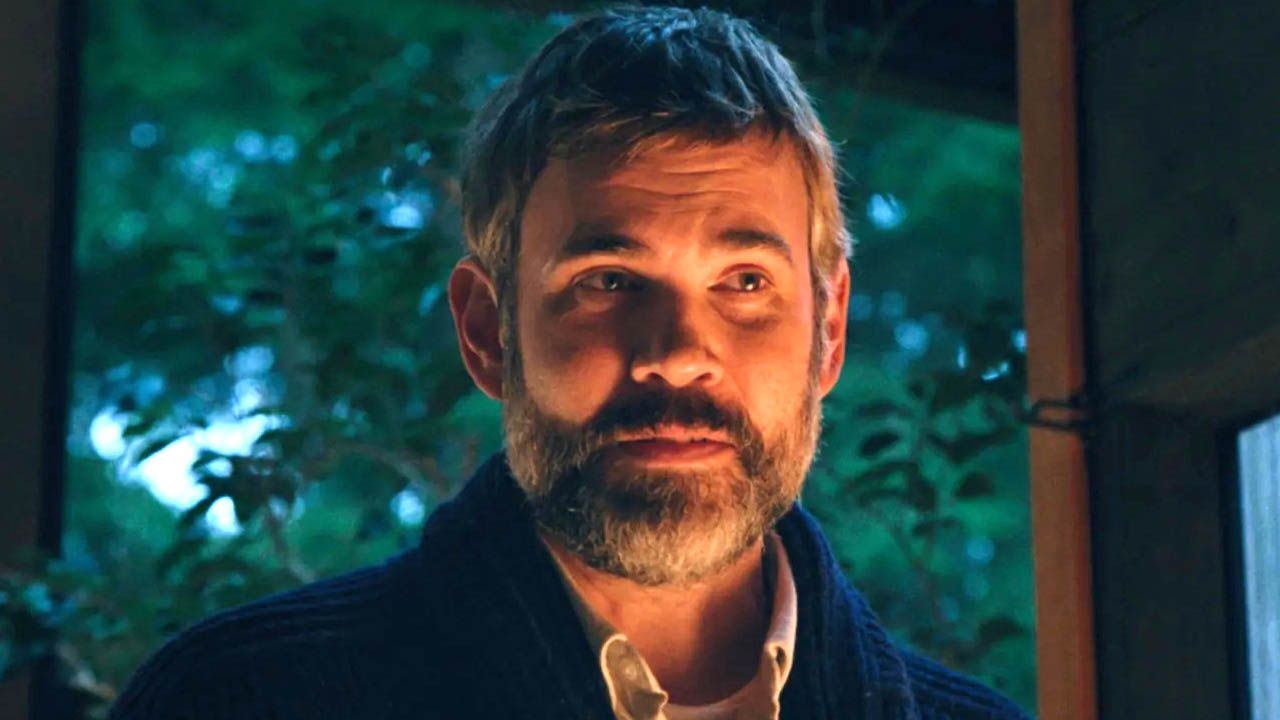
What does Malcolm (Rossif Sutherland) have to hide?
When Liz talks to Malcolm about her experiences in his absence and describes the “woman with a bag on her head” that appeared to her not as a hallucination, but asks with irritating matter-of-factness whether that might have been the caretaker, another difference between Perkins and many of his colleagues becomes apparent: a penchant for cranky humor, which he also shows in strangely awkward air kisses or a perfectly placed artistic pause before a “What the fuck?” finds. As diffuse as “Keeper” may sometimes be, looming, lurching and meandering, you can still have fun in this engagingly indecisive chamber play.
Conclusion: With his new film, “Longlegs” maker Osgood Perkins once again undermines the expectations he has built up himself. The fact that he leaves it unclear for a long time what “Keeper” is actually about could frustrate parts of the audience – but anyone who gets involved in the relationship horror chamber game mode, which points in many different directions, will be rewarded with one of the more idiosyncratic genre contributions of recent times.