
Gregg Araki is considered one of the pioneering voices of the New Queer Cinema the 1980s and 1990s. In his Teenage Apocalypse Trilogyconsisting of “Totally F***ed Up”, “The Doom Generation” and “Nowhere – A Journey on the Abyss”, he dealt with the apocalyptic mood of a youth under the sign of the AIDS crisis and social alienation. How far his influence extends to this day was recently shown by “Club Kid”, for which a veritable bidding war broke out between the studios at the Cannes Film Festival: screenwriter and director Jordan Firstman lets his fictional alter ego reflect on how much Araki’s “Mysterious Skin” influenced him as a teenager.
While he has only directed individual series episodes since 2014 – including for the Netflix hits “Monster: The Story of Jeffrey Dahmer” and “Dead Girls Don’t Lie” – his first feature film in twelve years now takes him back to his roots. While this may be a reason to celebrate for his fans, the reason for his big screen comeback is less happy. After all, just a few years ago one could have come to the conclusion that the sexual revolution had long since been completed and that the struggle for physical self-determination was a thing of the past. Instead, a generation that grew up with unprecedented freedom is now propagating a new debate about the limits of sexual openness. Araki has to do it again even at 66 years old!
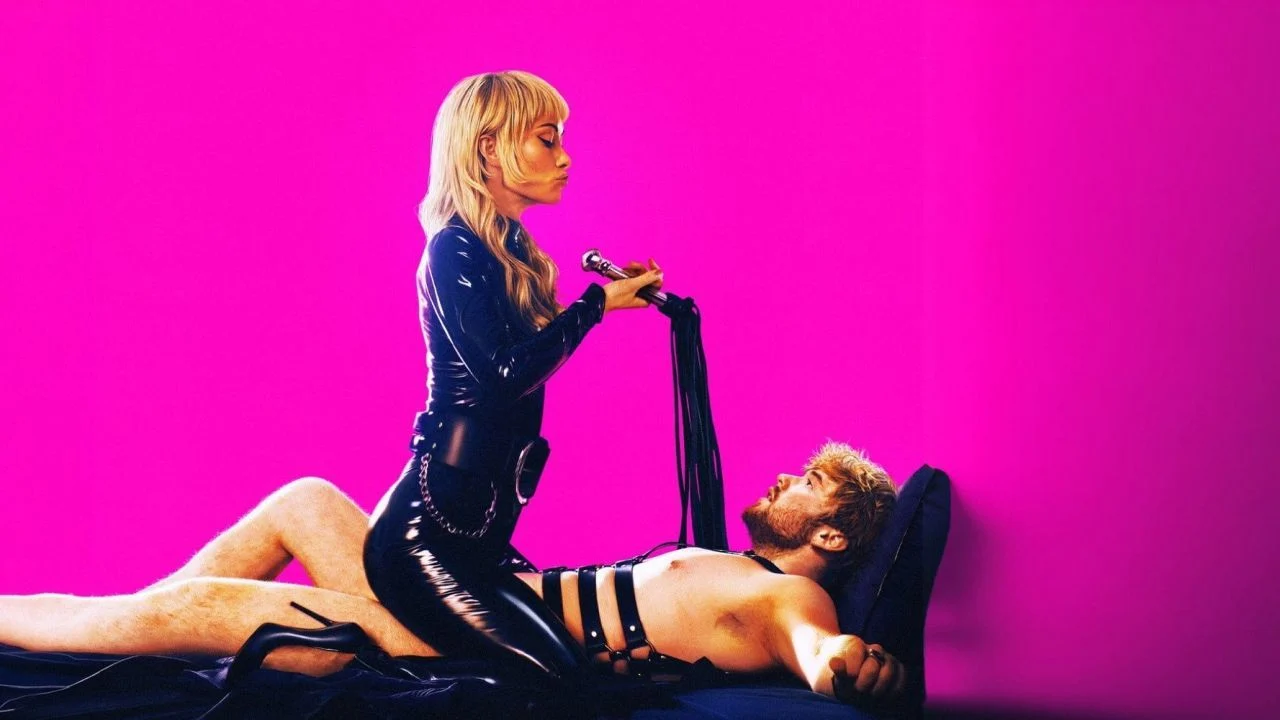
Gregg Araki takes no prisoners in his attack on the prudery of future generations!
“I Want Your Sex” is about the Gen-Z protagonist Elliot (Cooper Hoffman), who works as a meagerly paid assistant for the provocative artist Erika Tracey (Olivia Wilde). Because the emotional spectrum of his girlfriend Minerva (Charli xcx) ranges from mild disinterest to outright disgust, the young man is fired up when his superior suggests a sexual relationship. At this point, however, he has no idea that this relationship will entangle him in a bizarre criminal case…
Although the term “erotic thriller” is thrown around in the film’s advertising, Gregg Araki presents exactly the opposite of what one actually expects from the genre: instead of entangling the protagonist and with him the audience in a fatal web of desire in which lust becomes a snare, one is rather amused by Elliot’s naivety and clumsiness. The threat here lies less in sexuality itself than in the inability to correctly classify the physical act. The police investigation serves primarily as a narrative framework.
If holding hands bothers you
For the most part, “I Want Your Sex” works as a comedy – after all, pleasure is also the main focus for the characters. The inherent power imbalance becomes an erotic-creative playground on which the unequal couple can literally let off steam. At the same time, Araki makes fun of the art scene, which is constantly about pushing boundaries. Although he admits with some self-irony that things are hardly different with his own works. As the demanding title suggests, the film is directed against the self-imposed celibacy of Gen Z and mocks, for example, discussions surrounding a lack of consent when involuntarily observing people holding hands in public. (One wishes this were an exaggeration, but a quick scroll through TikTok proves me wrong.) There is no actual discourse, however, because although Elliot takes to the podcast microphone to vent his conflicted feelings, overall he has little in common with the conservative youth that Araki has chosen as a target.
Both the brightly colored aesthetics and the crazy, experimental and sometimes weird narrative style unmistakably bear the hallmarks of the director, who knows how to make the chaos of self-discovery tangible like no other. Interrogation scenes repeatedly break through the colorful liveliness of the rest of the film with their dark and comparatively sober production. In front of the detectives played by Margaret Cho and Johnny Knoxville, Elliot has to constantly justify not only his actions, but also the consensual nature of the affair and thus his desire. The fact that the institutional and moral evaluation of intimate experiences is wrapped in a fascist-seeming palette of gray and brown tones speaks for itself.
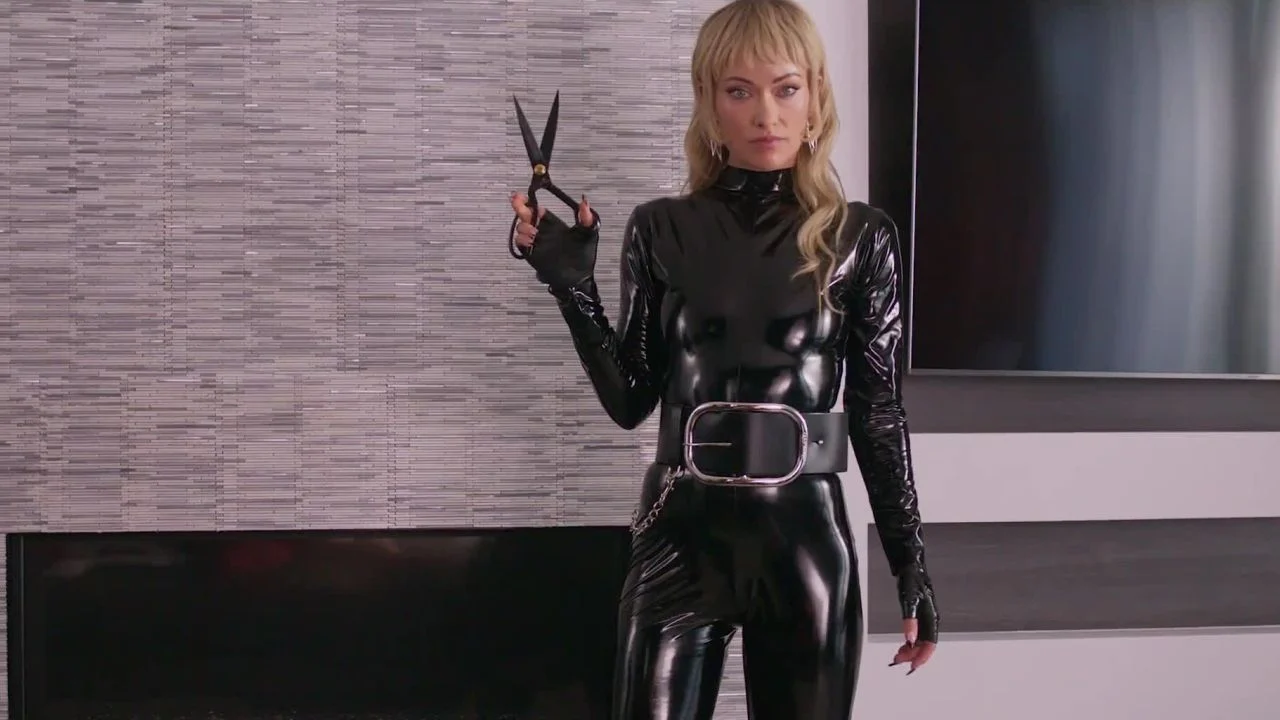
The artist Erika Tracey (Olivia Wilde) is not particularly up for flower sex.
The foundation of the film is its passionate cast. Not least because of her media image (after the Harry Styles affair and Jason Sudeikis divorce), Olivia Wilde (“Don’t Worry Darling”) proves to be the perfect fit for the irrepressible character of Erika Tracey. On the one hand, the function of her role corresponds quite classically to that of one Femme fataleAraki’s style, on the other hand, requires a certain amount of self-irony in addition to seductive confidence. Cooper Hoffman, who most recently shone in Stephen King’s dystopian “Death March,” counters with honest curiosity and a noticeable willingness to surrender himself to both the character and the film in all its facets. Since Araki has repeatedly wove pop culture references into his cinema in the past, the presence of pop icon Charli xcx (“The Moment”) makes sense at least on an abstract level, but her presence cannot necessarily be justified in terms of acting.
All in all, “I Want Your Sex” seems far less radical than Araki’s early work. The frank preparation is also easily accessible to a broad audience, so the mainstream will not be offended too much here. After all, practices like pegging are unlikely to shock anyone in the long term in 2026 – especially since Olivia Wilde also used this exact term in her own latest directorial work, “The Invite”. Only those who want to take specific offense will be offended by the person depicted.
Conclusion: “I Want Your Sex” is a colorful thought experiment that plays with a wink at the question of the worst that can happen if you give in to your desire. Despite his protagonist’s ordeal, Gregg Araki comes to the conclusion that physical love is worth every risk – and is certainly not in line with Gen-Z TikTok.