
Four years after their first film together, “Grand Jeté,” which was about an incestuous relationship, screenwriter Anna Melikova and director Isabelle Stever have teamed up again. In “I Rarely Wake Up Dreaming,” the two filmmakers tell a story about identity and responsibility against the backdrop of the Russian war of aggression against Ukraine. The focus is on a young queer couple whose future together is suddenly called into question by the invasion.
It’s not just about the question of whether to leave your own country or stay, but also about how gender identity and social expectations come into conflict under the conditions of war. “I Rarely Wake Up Dreaming” combines the specific story of a couple with observations about a society that has to adapt to the conditions of war. But while the impressions of everyday life in the Ukrainian war are moving, the actual relationship story is not always convincing.

Olha (Tania Myronyshena) and Oleh (Markus Bright) love each other – but the war puts their future together to a tough test.
Olha (Tania Myronyshena) and Oleh (Markus Bright) have only recently been married and are planning to flee to Germany together after the Russian attack on Ukraine. Before they leave, they visit Olha’s family, who, with the exception of her sister, do not know that Oleh is a trans man. The couple hopes that this very circumstance could make it possible for them to leave the country together. But at the border, Oleh is viewed as a man liable for military service because of his male gender and is brusquely rejected with the request to report to the front as a soldier. Should Oleh now have it certified that she is a woman so that she can leave the country with Olha? Or should he go to war for Ukraine, as not only the border officials but also Olha’s parents expect of him?
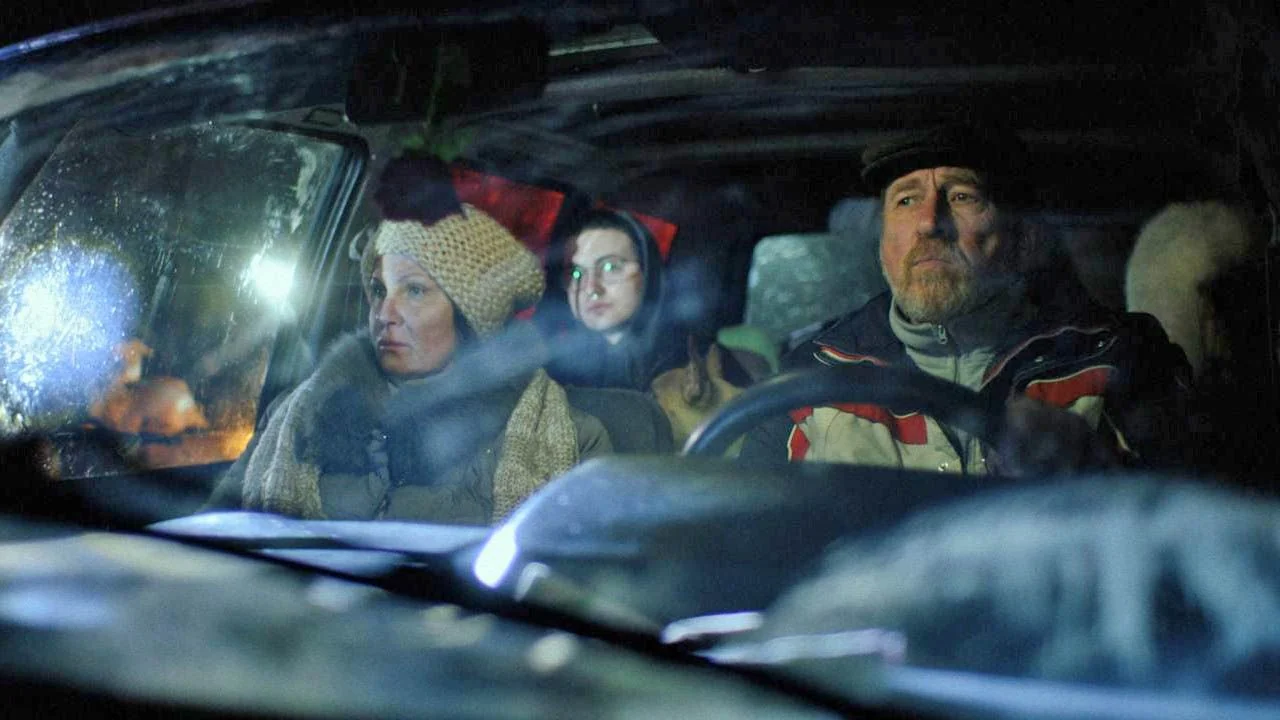
Olha’s family also expects Oleh to do his duty and go to war for Ukraine.
While there is a larger LGBTQ+ community in Kyiv and sexual and gender minorities are more accepted, at least in parts of the capital, Ukrainian society outside of the metropolises is more conservative in many places. In the war situation, which remains present in the film primarily through television images, social media posts and patriotic advertising, the traditional role models are reinforced. Women are expected to give birth to as many children as possible, while men are expected to defend their country at the front.
In one of the first scenes, the audience observes a heated argument between Olha and Oleh. We follow their argument through a window, in which Olha makes it clear that she definitely does not want her husband to volunteer for military service. At the same time, she makes it clear that she originally did not want a heterosexual relationship. The action then jumps back in time and shows the couple in familiar moments. The camera moves very close to the two of them and makes their physical and emotional closeness noticeable. In an intimate scene, the gaze initially remains focused on the end of the bed, while a loving conversation between the two leads to a physical approach.
Voyeuristic closeness meets emotional distance
What is striking is how clearly the camera focuses on Oleh’s physical changes shortly afterwards. Again and again she lingers on his hairy back, his legs or the beginning of his beard. This almost voyeuristic observation underlines the importance of Oleh’s gender identity, but also seems somewhat intrusive due to the repeated emphasis on his body – especially since the film remains at a distance from the other characters. Like the two protagonists at the beginning, they are observed through windows or open doors and therefore appear more separated from Olha and Oleh.
The fact that life should go on despite the constant threat can be seen in small everyday situations. Olha gets her nails painted in a nail salon and thanks the owner for keeping her business open. For her, this is a conscious decision: she doesn’t want to be intimidated by the Russian attacks and wants to continue her everyday life as best as possible.
War penetrates every area of life
At the same time, the film shows how, as the war continues and new news about Russian atrocities grows, hardened patriotism and hatred of the enemy grow. When Olha’s mother remarks after a television report that not all Russians are monsters, her daughter firmly reprimands her. The repeated social media posts also illustrate this development. Finally, a friend of Olha’s clearly calls on all remaining Russian contacts to unfollow her. She no longer wants Russians in her digital environment. It is precisely in such moments that the film succeeds in making the changes within a society visible without having to show the war itself.
As interesting as these observations are, the relationship between Olha and Oleh fails to captivate us in the long term. Despite the great physical closeness that Stever repeatedly creates and the committed performances of the two amateur actors, there is rarely a real emotional connection to the characters. The fact that Olha apparently has difficulties with her now heterosexual relationship with Oleh becomes clear in the initial argument, which is initially shown from a distance and is repeated again later in the film from a closer perspective. But apart from this scene, the problem between the two is not discussed further. The relationship story, which is based on real experiences from screenwriter Anna Melikova’s circle of friends, sometimes seems like a deliberately constructed scenario in order to juxtapose the war with an additional identity conflict.
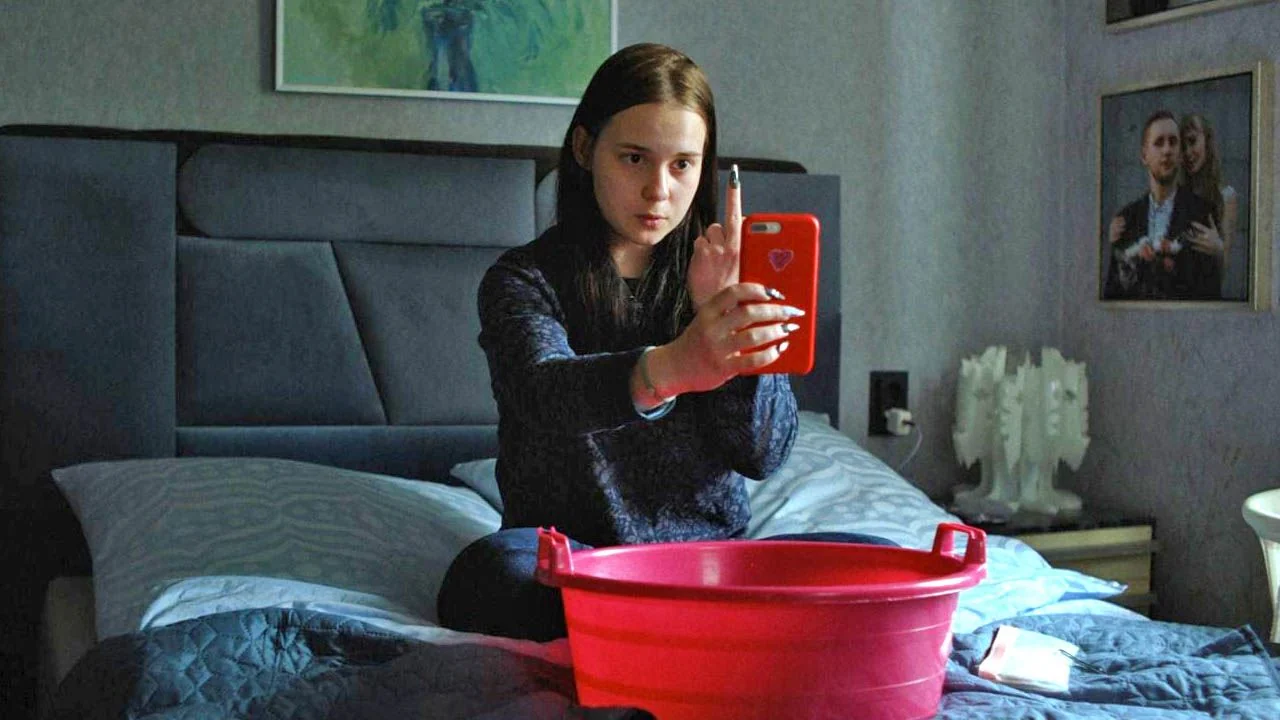
Director Isabelle Stever shows, not least through social media, how the war changes everyday life and the attitudes of the Ukrainian population.
The poetry of the film title is at least partially reflected in the carefully framed images. A scene towards the end is particularly impressive, in which Olha can be seen through several doors in a row and looks back at Oleh, bathed in an unusual light, before the situation between the two changes again in a surprising way. Here Stever tells something about the distance and simultaneous attraction between two people through her image design alone.
Conclusion: With “I Rarely Wake Up Dreaming,” Anna Melikova and Isabelle Stever present a drama that looks at the everyday life of the Ukrainian civilian population during the Russian war of aggression from an unusual perspective. The casual observations about trying to continue a normal life and the increasing radicalization of social attitudes particularly leave an impression. The actual relationship story between Olha and Oleh, on the other hand, remains emotionally distant despite its interesting starting point. “I rarely wake up dreaming” is particularly interesting as a social snapshot.
We saw “I Rarely Wake Up Dreaming” at the Festival de Sevilla, where it was screened in the European Film Academy section.