
The best moments in “Hola Frida!” by André Kadi and Karine Vézine are those in which the young Frida Kahlo lives in the afterlife La Catrina hits. In doing so, she is spared time and time again by the female embodiment of death that is popular in Mexican culture. These surreal scenes are surprisingly serious and dark for a film primarily designed for children and stand in stark contrast to the otherwise brightly colored, gently floating events. But they also make the tragedy and incredible resilience of the Mexican artist of the century more tangible than a live-action biopic like “Frida” (2002).
The family film reaches an emotional height that leaves even adults breathless. “Hola Frida!” tells the story. only a small part of their brave life. The animated film not only evades the often boring riffing on life stages that are depicted as accurately as possible, which is typical of biopics, by repeatedly switching to other levels of reality such as the afterlife, it also ends before the painter's actual career begins. The person Frida Kahlo is the focus – and he grows on you in the 75 densely told minutes of net running time.
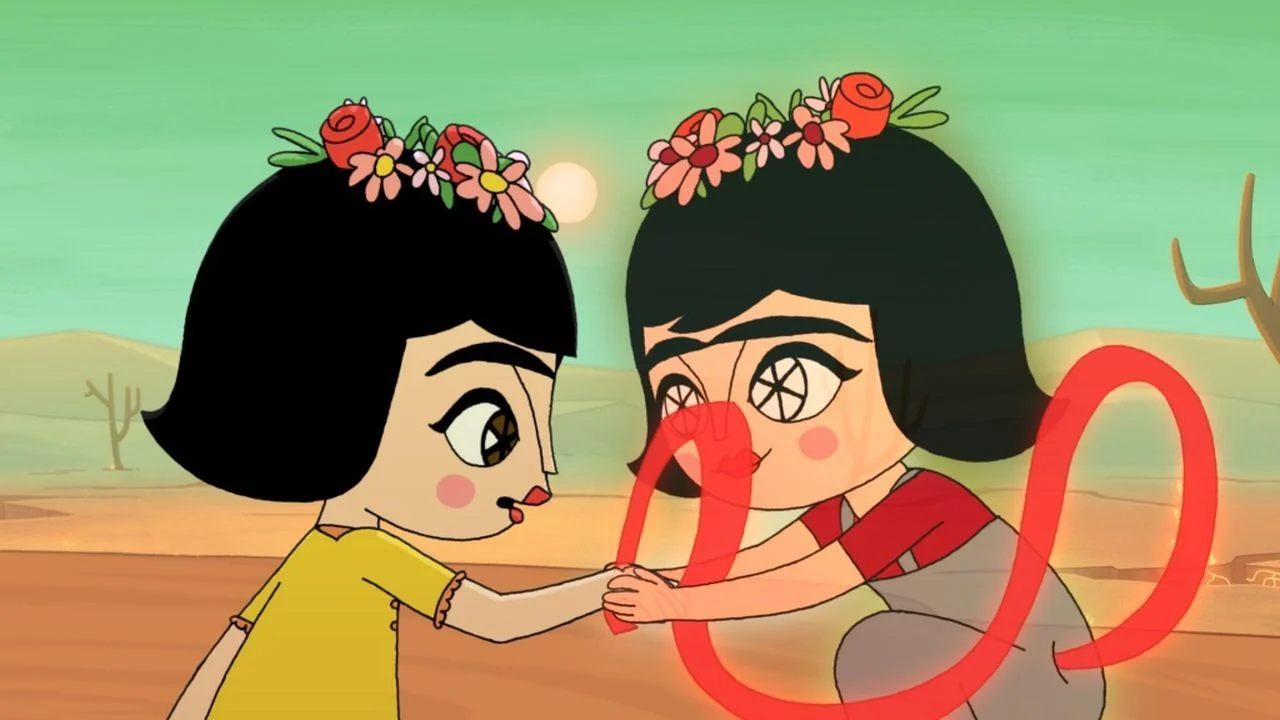
“Hola Frida!” impresses with a simple but also beautiful animation style.
Frida grew up in Mexico City with her little sister Cristina, the daughter of a progressive father and a much more conservative, but still loving, mother. Even as a child, she pursued enormous ambitions: she wanted to become a doctor! In Mexico before the great revolution, this seemed like a utopian plan, because the old-fashioned structures did not allow women to have jobs of this kind. Accordingly, only father Guillermo takes their dreams seriously. But then everything turns out completely differently anyway:
While playing with the family dog or climbing trees, Frida suddenly experiences strange pain in her leg. As these become more and more severe, she becomes bedridden, a stressful time for a girl with a strong need for movement and freedom. Guillermo is a photographer and brings his daughter into contact with art during this difficult phase. While coloring her father's pictures, Frida develops a fascination for painting. Life doesn't get any easier back at school. The students tease her about her bad leg, but Frida doesn't let herself be talked down to and goes on her way undeterred…
Human, not myth
By telling about people and not myths, scenes are possible that would otherwise probably not have made it into a biopic of a female painter. You experience young Frida in her everyday life, which may seem banal at first, but is nevertheless enriched with a lot of childlike imagination: playing with her sister or shopping at the market, a girl like many others, although certainly a bit more spirited. A child who is gradually getting worse and is already confronted with the fragility of life at such a young age.
For a long time, art doesn't play a role – it's about Frida, about the quickly emerging juxtaposition of joy and suffering, of life and death, which will be a constant in her life from now on. But also a stroke of fate from which Frida draws strength and an insatiable urge for life and for her own, free existence. Later key points of Kahlo's biography such as her open bisexuality are – as expected – not an issue here.
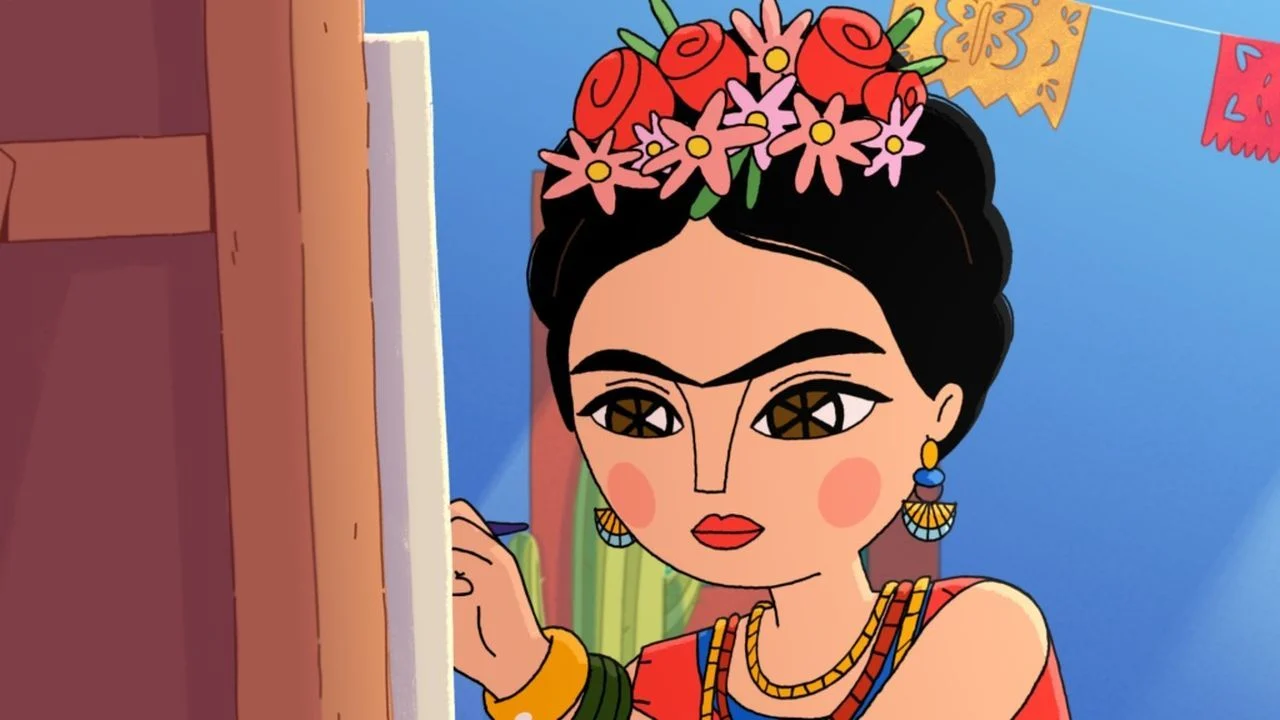
The artist Frida Kahlo is already present in the childlike figure, but initially only plays a minor role in the film.
But small scenes like the one in which she asks why girls can't actually wear pants when they're much more practical and comfortable than skirts give you the idea that you're dealing with a personality who won't care much about conventions later in life. The rest doesn't necessarily have to be told anymore. The great story is supported by a simply beautiful visual implementation with rich, bright colors, effectively stylized backgrounds and striking, extremely expressive faces that are somewhat reminiscent of manga characters.
Conclusion: A stirring animated film about the childhood years of the Mexican artist of the century Frida Kahlo, which cleverly combines a child's perception of life with existential themes and makes the person behind the myth incredibly tangible in just 75 minutes.