
With “Heidi” the author Johanna Spyri (1827-1901) created one of the most popular children's book figures of all time 145 years ago. The orphan girl from the Graubündner Alps is still one of the world's best known Swiss women. The total circulation of the two “Heidi” books is now more than 50 million copies-and then there is the Japanese anime TV series, which is long since an absolute cult. Of course, the fabric has also been implemented umpteen times as a film. Heidi last appeared in the cinema in 2015-in a real film with Bruno as Heidi's grandpa Alm-Höhi.
In the same year, an animated series produced for television was created. If you like, you can also be moved quite real into the world of Johanna Spyris young heroine: when visiting the Heididorf in the Swiss Maienfeld. The new canvas version “Heidi – the legend of the lynx“Would be a good preparation for this. In addition to beautiful pictures, the animated film also offers an exciting story that cannot be found in Spyri's novels, but still remains true to the spirit of the originals.

There is no lynx in the original novels – but the newcomer is so damn sweet!
Heidi has summer vacation and is looking forward to visiting her friend Clara, who goes on vacation with her father on the Baltic Sea. Clara has already sent the train tickets by post. But when Heidi, together with her boyfriend Peter, discovered an injured lynx cub who went into a trap, she puts her Baltic Sea trip on hold. After all, the little one that she calls Peps has to be maintained. When Heidi's grandfather Alm-Höhi discovered the furry guy, he insists to bring it back to his family after recovery. At the same time, Heidi's healed mountains are threatened by a capitalist believing progress:
The cunning businessman Schnaittinger (voice: Max Giermann) wants to build a sawmill in Dörfli and promises the village population the blue from the sky. Even the church tower destroyed by a fire, he wants to have it rebuilt. Almost all of them willingly give their consent to the project. Only Alm-Höhi refuses to sign. He refers to the forest destruction that the operation of a sawmill would result. When Schnaittinger accidentally discovered the little lynx in the house of Alm-Höhi, he puts a mood against the grumpy old in town. Because the village population sees a threat to their livestock farming in the wild animals
Nature conservation without (too) raised index finger
Screenwriter Rob Sprackling has cleverly housed current topics in the story. The thing with the lynxes is strongly reminiscent of the recessed wolf problem in this country, which constantly leads to conflicts between nature conservation and livestock farming. In the case of the lynx, however, it is also pointed out that it is only looking for their prey near human dwellings because their actual habitat is increasingly destroyed. This means that the film indicates another problem without being too instructive: the exploitation of nature operated out of profit greed regardless of losses.
“Heidi – The Legend of Lynx” also has a lot to offer apart from such considerations: many characters known from Spyris also appear in the film. The story is also closely told in the characters. The title heroine in the center has lost none of her identification potential since her literary birth in 1880. On the one hand, eight -year -old Heidi embodies childlike innocence, on the other hand, she is such a brave as clever and empathic girl who cannot be intimidated by the film weight.
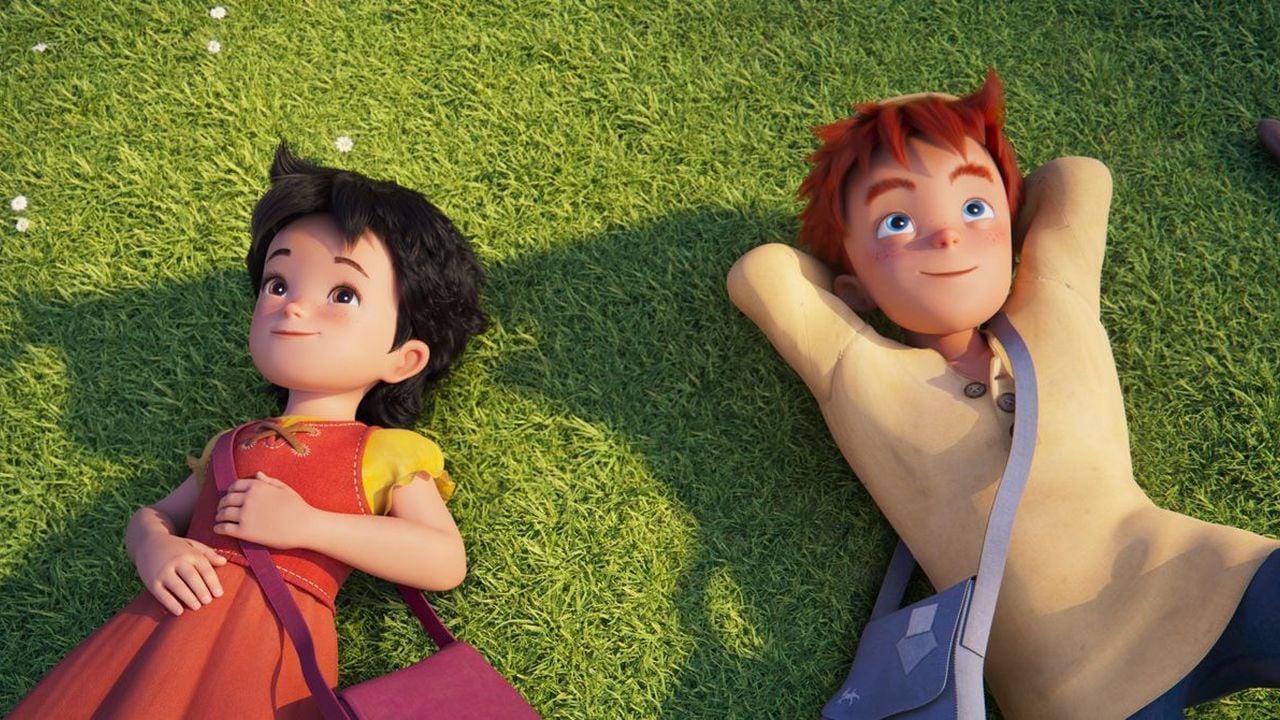
Heidi is still full of contagious energy 145 years after her creation.
Her grandfather, who may be a bit grumpy, is also well hit, but as a time -honored senior, does not simply let himself be ripped off and still exudes a lot of energy. He also needs it in the last film district in the tension. Humor is also not neglected. Peters pimples like to give the break clown-and Alm-Höi's cozy Bernhardiner Joseph also has his moments.
On top of that, the animation work-a German-Spanish-Belgian co-production-is pretty to look at. Director Tobias Schwarz will certainly benefit his many years of professional experience. Among other things, he worked as an animator at 20th Century Fox and Disney, for example on “Anastasia” (1997) and “Tarzan II” (2005). Under his direction, the landscape sets and mountain panoramas created on the computer are absolutely suitable for cinema. In addition, German synchronization can be heard. It is of a quality that makes the figures look really alive.
Conclusion: There is a great probability that the newly animated Heidi will captivate her audience: with impressive pictures, lovingly elaborated characters and a story particularly gripping towards the end. In addition, the film sensitizes the growth of the cinema relatively unobtrusively to nature conservation issues.