
Sometimes films cast such a shadow that it's difficult not to go to the cinema with certain expectations. In the case of “Hamnet,” after its world premiere at the Toronto Film Festival, we read again and again about a heartbreaking finale that developed such emotional power that even the most hardened critics had to cry uncontrollably. Before going to the cinema, you almost inevitably ask yourself whether this scene (just like the film) lives up to what the Internet promises.
Two hours later, however, you have to say: absolutely! Based on the historically confirmed death of William Shakespeare's son, Marvel director and double Oscar winner Chloé Zhao tells a fictional story – based on the 2020 novel “Judith and Hamnet” * by Maggie O'Farrell: Most of the time meandering and impressionistic about the hard life in the late 16th century, “Hamnet” finally leads to a spectacular, cathartic sequence that at the same time suggests which There can be strength in art.
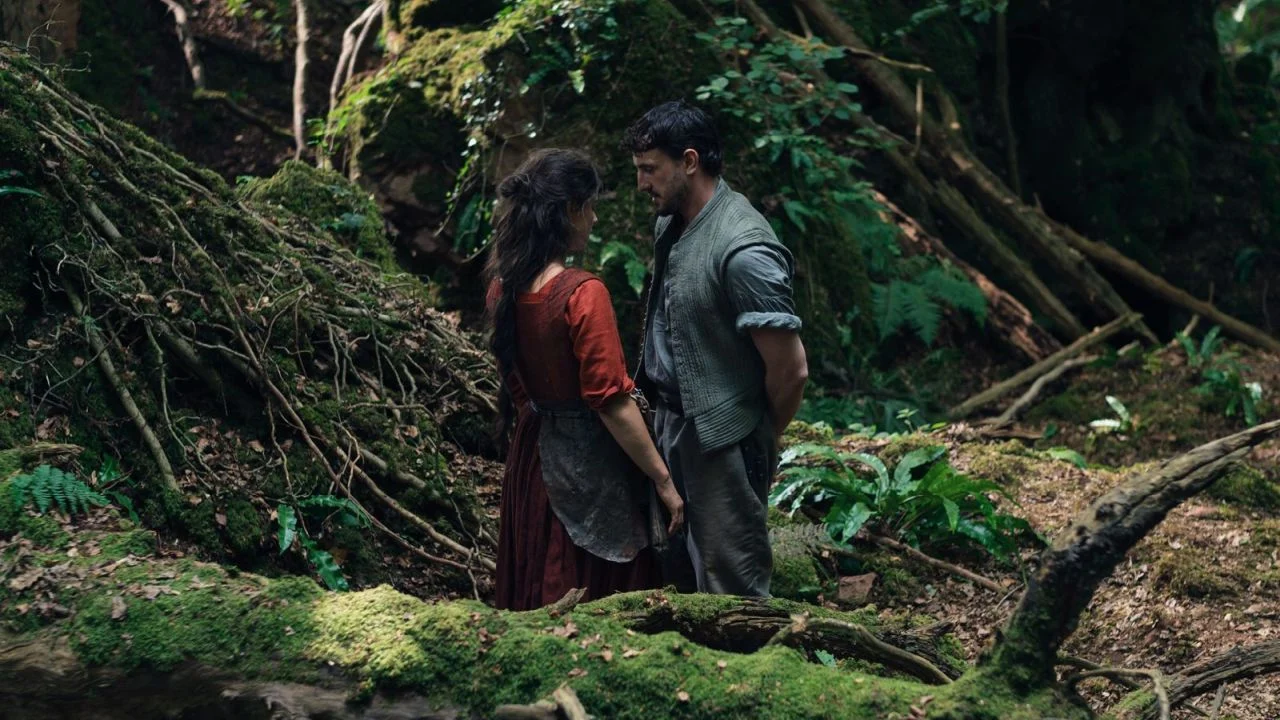
For the outsiders Agnes (Jessie Buckley) and Will (Paul Mescal) it is love at first sight.
Sleeping in the shade of a gnarled tree is Agnes (Jessie Buckley), who feels more connected to nature than to the human world. In Stratford-upon-Avon, about 160 kilometers northwest of London, she is considered a bad match and some even consider her a witch. So it's no wonder that even in her mid-20s, she is still not married. But for a man, that's exactly what makes her interesting. Will (Paul Mescal) is the son of the local glove maker who works as a Latin teacher for Agnes' siblings in order to pay off his father's debts.
Will will later become world famous under the name William Shakespeare. But first the couple gets married. First the daughter Susanna (Bodhi Rae Breathnach) is born, a little later the twins Judith (Olivia Lynes) and Hamnet (Jacobi Jupe) are born. Happiness seems complete, but Will strives for more. He moves to London alone, writes plays, earns a lot of money and spends less and less time with his family – until the plague claims terrible victims in their home too…
From Hamnet to Hamlet
The novel – like the film now – begins with the prefaced explanation that the names Hamnet and Hamlet were used interchangeably in late 16th century England, so they were practically identical. Based on this idea and the fact that surprisingly little is known about the life of William Shakespeare, Maggie O'Farrell created a speculative fiction, which she then congenially processed into a screenplay together with Chloé Zhao. It's hard to imagine a director better suited to this material. After all, Zhao is famous – with the exception of her unsuccessful Marvel excursion with “Eternals” – for her naturalistic and impressionistically filmed dramas such as “The Rider” or her Oscar winner “Nomadland”, in which moods and nuances are always in the foreground instead of a tight narration.
In “Hamnet,” Zhao has now chosen a dramaturgical form that shouldn’t actually work, but leads to a heartbreaking finale that has already become famous and is undoubtedly the reason why “Hamnet” has been awarded the audience award at so many festivals. Because while the plot in the novel jumps back and forth between different time levels, Zhao tells the story of getting to know each other, the birth of the children, the growing apart, and the death of Hamnet in a straightforward manner and without any particular emotional highlights. All of this is the preparatory work for a final liberation that means the ultimate catharsis for everyone involved – not just the audience, but also the dead Hamnet.
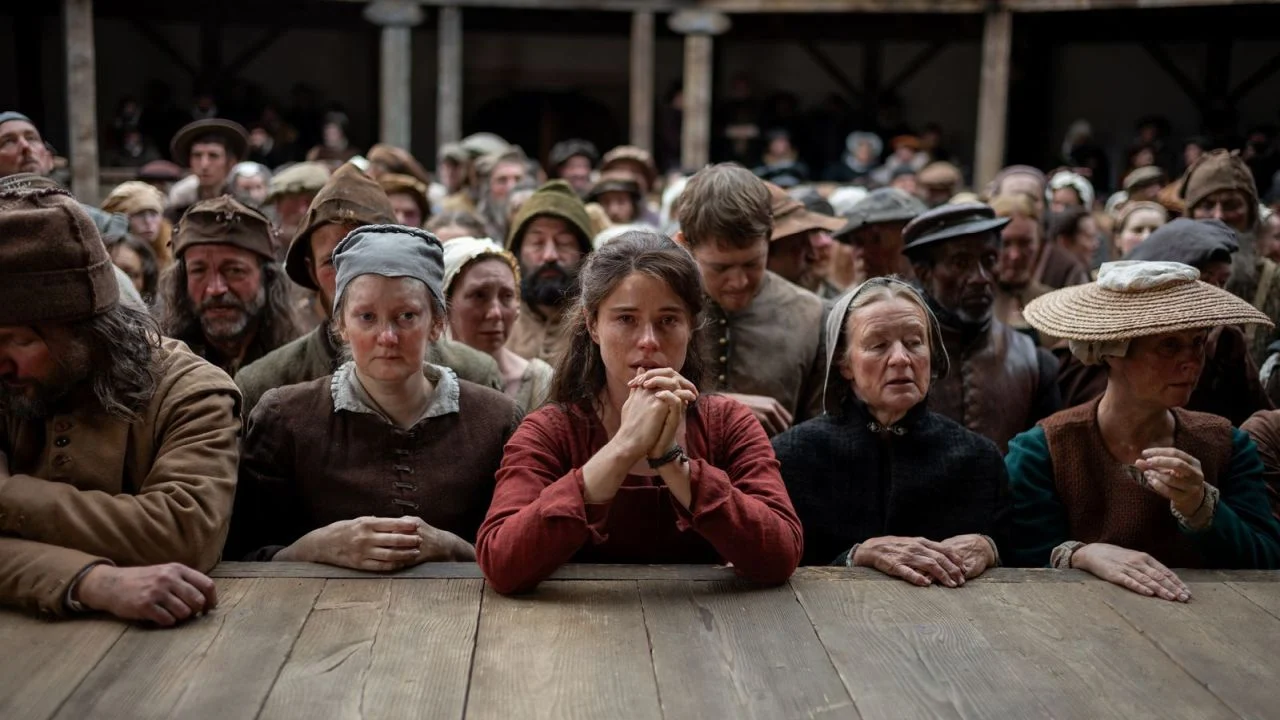
The finale of “Hamnet” will undoubtedly go down in film history – and will certainly give Jessie Buckley her first Oscar.
Anyone who says “Spoilers!” calls, be reassured: On the one hand, the trailer already reveals all of this – and on the other hand, the preceding reference to the names Hamnet/Hamlet already anticipates what the essence of the following film will be: Shakespeare dealt with his grief over the death of his son by writing his best-known play to date. It is doubtful whether that was actually the case, after all, we know next to nothing about Shakespeare: there are no surviving manuscripts, no letters, and even the exact dates of the premieres of his plays are not known (which is why there have long been countless insurance theories surrounding his “true” identity, which Roland Emmerich, for example, took up in “Anonymous”).
But that doesn't matter, after all, it is precisely this ignorance that opens up the possibility of playing with the gaps in Shakespeare's biography (as “Shakespeare In Love” did in a comparably original way 27 years ago). “Hamnet” imagines a story that is about the healing power of art. Marriage, birth and death are told in an almost casual and naturalistic manner, while everything in “Hamnet” moves towards the final scene: Then Agnes goes to London for the first time in her life, to the somewhat disreputable capital where her husband spends a large part of his life. She wants to find out why he wrote a play with her dead son's name and how he dared to use it as material for his work.
The origin story of a millennium work
In the famous Globe Theater, in the crowd of spectators, she follows the first scenes. She recognizes Will in the ghost and the similarities between Hamnet and Hamlet, is first outraged and then increasingly moved, just as the audience will almost inevitably feel. How Zhao stages these moments, how Jessie Buckley and Paul Mescal play them, without words, just with looks, is hard to describe. It helps, of course, that Max Richter's “On The Nature Of Daylight” can be heard on the soundtrack, a short piece carried by singing violins, which has had its unfailing effect again and again from “Shutter Island” to “Arrival” to “Call Me By Your Name” (if you don't have the melody in your head straight away, you can just take a moment on YouTube listen).
In these final moments, Zhao succeeds in showing how the couple's sadness dissolves into happiness in an amazing way. At least you can begin to understand the power that lies in a great work of art like “Hamlet” and how art in general can change life and, in this particular case, help to overcome even the sadness that surrounds it.
Conclusion: In “Hamnet” Chloé Zhao celebrates dealing with grief of a different and incredibly powerful kind. Loosely based on true events in the life of William Shakespeare, the material takes many artistic liberties to tell the story of life in the late 16th century. At the same time, he reveals what cathartic power can be found in a great work of art.