
In his first career as a film journalist, Joko Anwar impressed director Nia Dinata so much that after an interview she asked him to co-write her next project. With the first kiss between two men in an Indonesian film, the comedy “Arisan!” Cinema history in 2004 – and became a huge hit. His debut as a director followed in 2005 with the romantic comedy “Joni's Promise” – and immediately the next sensational box office hit. It was already clear back then that his true passion was hard genre films. After all, he brought one of his childhood heroes out of obscurity in the form of martial arts star Barry Prima. He then switched to the neo-thriller genre with “Dead Time: Kala” – and thus celebrated his international breakthrough.
Anwar is now best known for horror that is as effective as it is profound – most recently in his Netflix series “Joko Anwar's Nightmares And Daydreams”, even if the big screen remains his top priority: his films are reliably commercial mega-hits in his homeland – and at the same time impress at festivals around the world. Anwar masters the balancing act between commerce and art by combining spooky ghost stories with grim social commentary. In “Ghost In The Cell” he also combines genre cinema with a clear political stance. So you can just have a lot of fun with the splatter comedy. Or perceive it as a – this time decidedly unsubtle – indictment of a corrupt system.
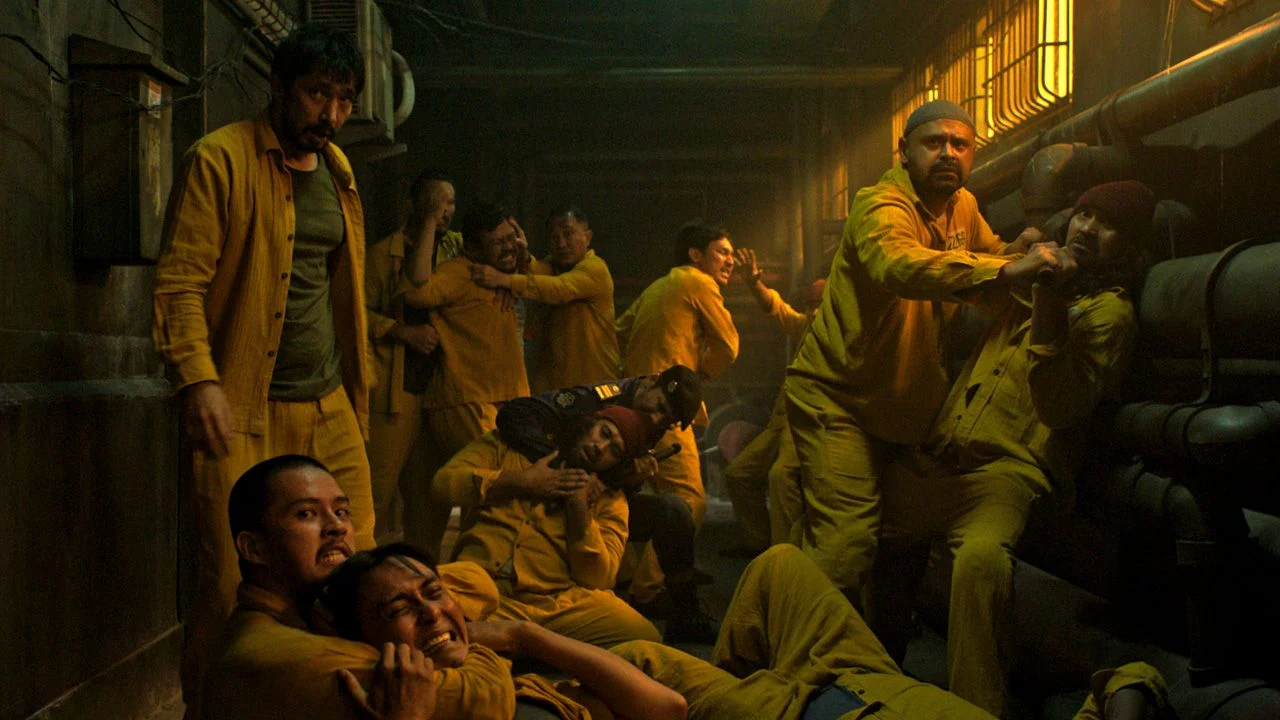
Pause briefly during the wild brawl to ask yourself the question: Should we now dance or pray to have a chance of survival?
The Labuan Angsana maximum security prison is already one of the worst places in the world. It's not just rival gangs and corrupt and sadistic guards who make every day of imprisonment a tough fight for survival. But in Block C, the inmates have a completely different problem: Since the shy journalist Dimas (Endy Arfian) was imprisoned, a brutal series of murders has broken out in the prison. Apparently it has something to do with the fact that more and more prisoners are not only brutally dismembered, but also then laid out as bizarre, bloody art installations.
It gradually dawns on the level-headed Anggoro (Abimana Aryasatya) and the thug Bimo (Morgan Oey) that they are dealing with a supernatural threat. The vengeful spirit's next victim always seems to be the person who is the angriest and most violent at the time. But how the hell is it possible to not develop a “red aura” in such a brutal environment?
Bloody chaos in prison
Anyone who has known Joko Anwar primarily for his atmospherically dense slow-burn horror films such as his biggest hit “Satan's Slaves” will be surprised by “Ghost In The Cell”. Although the film begins as usual with the only sequence that takes place outside the prison walls, it quickly takes on a different tone afterwards. As in his strong, racism-accusing Amazon action film “The Siege At Thorn High”, Anwar gradually allows the chaos to escalate completely in an enclosed place.
“Ghost In The Cell” isn’t subtle about it. It's a loud, violent film. The creeping horror quickly gives way to a mixture of prison film, splatter horror, action cinema and bitter satire. It's not just the corpses left behind as bloody, grotesque art installations that are big exclamation points. The characters here have long since become so resigned to social injustices that they address them openly, but have little desire to change. You’re just “not in Norway,” is the always shrugging comment when it comes up about what’s going wrong.
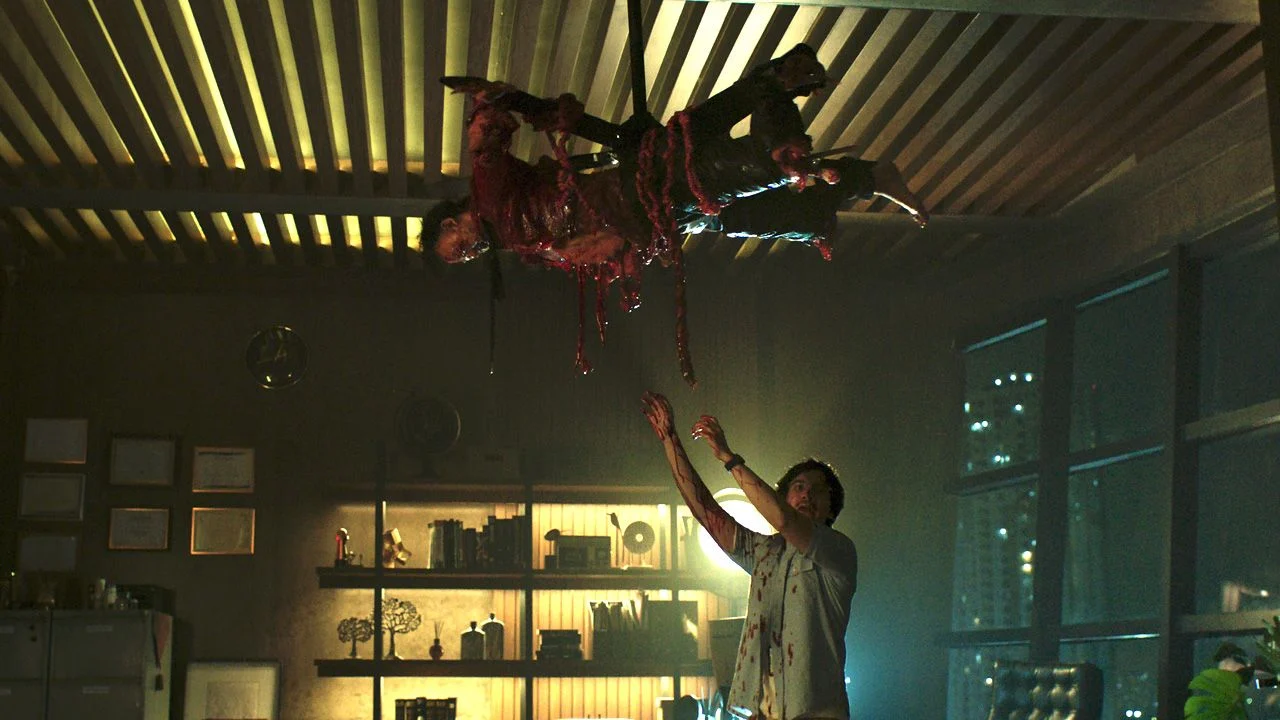
The ghost leaves the corpses brutally mauled, but not without a certain artistic quality.
Despite his ringing accusations of corruption, Anwar gradually throws any seriousness overboard as the film progresses. Especially in the second half, an increasingly absurd comedy dominates. In order to purify their own aura in the face of the ghostly threat, the opponents suddenly start dancing or praying during a fight. It's better to take one more hit – after all, that's still better than becoming the next victim of the spirit.
Anwar's greatest mastery is that these comic intrusions never defuse the intensity of the action or horror. The liberating laughter only gives you a brief relief before the next consistently staged escalation hits the bull's eye again. When the spirit comes into action, Anwar proves that he knows how to create discomfort with his sound design like few others. Meanwhile, the bloody splatter scenes offer creative kills and are enjoyed with relish as macabre death sequences.
Escalation with small blemishes
Not every tonal shift is perfect and there are too many characters to do everyone equal justice. That's about as far as it goes Morgan Oeywhich last appeared in “The Siege At Thorn High“, which still thrilled with its action presence and character acting at the same time, was a marginal figure for too long. An important twist about mafia henchman Bimo also comes a little too much out of the blue. But because Anwar goes all out so consistently, “Ghost In The Cell” is ultimately another extraordinary film from the Indonesian genre specialist, the likes of which even horror fans have never seen before.
Conclusion: With “Ghost In The Cell” Joko Anwar delivers a wild, bloody and always absurdly funny splatter horror in which he once again combines genre cinema with social criticism.
We saw “Ghost In The Cell” at the Berlinale 2026, where it celebrated its world premiere in the Forum section.