
The low blow is waiting in the elevator. “You have to go to the second floor,” the gatekeeper at the Munich station told her. Shortly before, her Austrian husband Philip (Laurence Rupp) was taken in for questioning by the criminal police. But now it suddenly says “child pornography/youth pornography” next to the floor button. The world is collapsing for French pianist Lucy (Léa Seydoux). She first goes to see her mother (Catherine Deneuve) with her nine-year-old son Johnny (Malo Blanchet). And then the doubts begin: Isn’t it all just a misunderstanding? Would her true love even be capable of something like that? And if so, what kind of videos did he watch? Did he possibly do something to Johnny too?
The Austrian director Marie Kreutzer (“What has ruined us so much”) allows for ambivalences that are difficult for the audience to bear given the subject matter. But that’s exactly what it’s all about. The film’s title refers to his online pseudonym, but other than that, Gentle Monster has little interest in Philip – not even in condemning him. Instead, it’s all about Lucy’s perspective. It’s understandable that she initially clings to her previous life, even if some of the audience will certainly agree with her mother: “You have to go vomit – and then never say his name again.”
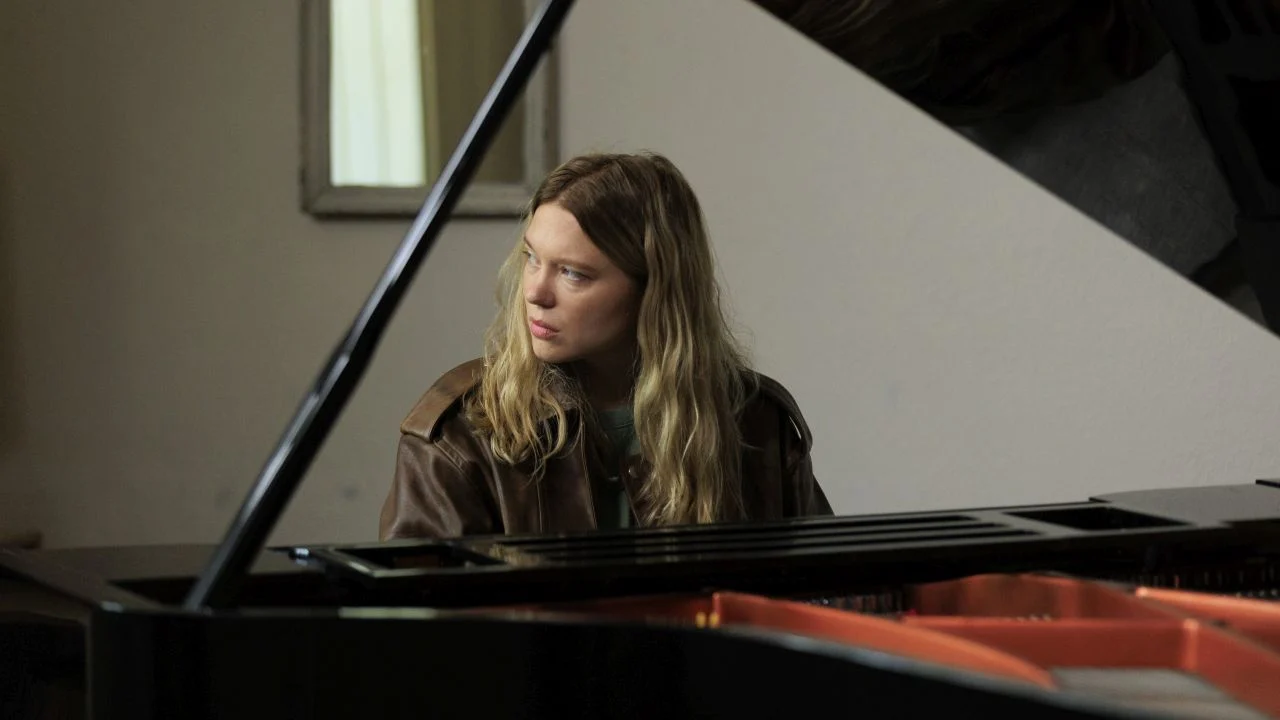
An absolute masterpiece: Léa Seydoux was brought into play for a possible Oscar nomination immediately after the world premiere in Cannes.
But that is easier said than done, as Kreutzer knows from his own experience. Finally, she also tended to believe the lead actor in her previous film “Corsage” when he denied the allegations that were surging in the media. In the end, Florian Teichtmeister pleaded guilty to possessing more than 76,000 files containing child and youth pornography. And for Lucy, the situation is of course even more dire: Not only is it about her closest person, she also has no one else with whom she could talk about it. Her information is still far too vague to draw any final conclusions – and she doesn’t want to prejudge Philip among friends or family. This leaves the investigating detective Elsa (Jella Haase) as the only contact person. But she doesn’t actually see it as her job to “take care of women’s problems.”
So everything remains in limbo because the evaluation of the confiscated hard drives can take months. Active abuse takes priority. And the excuses sound so tempting: “I was just researching a TV documentary.” In her film “The Ground Beneath Your Feet,” Kreutzer told the story of a management consultant on the verge of a nervous breakdown – and additionally charged the psychological drama with elements of the paranoia thriller genre. A quality that she now also shows off in “Gentle Monster”. The film is incredibly tightly told and achieves a completely different intensity. The magnificent tour-de-force performance by Léa Seydoux (“Dune: Part 2”) comes even further.
The non-feelings of pop stars
“Gentle Monster” initially takes a noticeable amount of time to show the names of those involved and then at some point the title. During this time we see everyday life in the new house in the country that the family has just moved into after Philip’s burnout. The first thing you notice is the confusion of languages: between German, Austrian, English and French, there are often several changes within individual sentences – you may never have experienced the dialogue in such an authentic way in a multilingual household. And then music is added as another language: although Lucy is a trained classical pianist like her mother, she is now primarily famous for deconstructing iconic pop songs with several instruments on stage. When a journalist asked why she only chose songs by male artists, she had a clear answer: “Men often can’t talk about their feelings – that’s why I ask them about them in this way.”
The fact that the film begins with a dissection of the song “Would I Lie To You” by Charles & Eddie may seem overly obvious in this context. But it works extremely well as an initial foreshadowing of the central theme. The story of the inspector, which is told in parallel, is somewhat different: While she is trying to prevent sexual assaults at work, she is confronted at home with a demented asshole father (Sylvester Groth) who constantly insults and gropes his Eastern European carer. But instead of protecting the nurse, Elsa offers her more money to continue enduring the attacks. An admittedly provocative reflection, but one that dilutes rather than enriches the questions surrounding Lucy. But you still don’t want to miss this part, just because Jella Haase (“Chantal in Fairytale Land”) is so great as a female detective who listens to gangster rap.
Conclusion: Hard to endure, but worth it.
We saw “Gentle Monster” at the 2026 Cannes Film Festival, where the film had its world premiere as part of the official competition.