
Even today and in Europe, equality is far from being completed everywhere. But until the 20th century, the ruling order for women, such as in Switzerland, was catastrophic and, you have to name it so clearly, inhumane. Correspondence, exploitation and existence in the shadow of the man shaped how to deal with women across all layers in the Confederation. The public of that time placed clear demands on women and determined what to do and leave. Girl education in the monasteries and work lessons at schools prepared them for their socially assigned roles. The Swiss woman as a dutiful, hearing mother, housewife and wife. Or, if sterile, condemned to work on the field or on the assembly line.
From today's perspective, this time gives more to the deepest Middle Ages. From the middle of the 19th century there were the first women's clubs, but only a sensational process in 1904 really fueled the women's rights debate. The drama “Friedas Fall” based on Michèle Minelli's novel “The Lost” is about this historical trial, which strongly shaped the criminal law system in Switzerland. The focus is on the moving history of Frieda Keller, who killed her five -year -old child in a remote forest. Director and screenwriter Maria Brendle succeeds in a sensitive and stirring staged person and time portrait, which benefits from his outstanding cast.

In prison, Frieda Keller (Julia Buchmann) always has to endure inhumane treatments.
In 1904 the body of a small child was found in the forest near St. Gallen – it is Ernstli, the son of Frieda Keller (Julia Buchmann). The 25-year-old seamstress even admits the murder, although her motifs stay in the dark. A political and moral struggle soon burns, which heats the minds of the place and makes headlines throughout Eastern Switzerland. On the one hand, the prosecutor Walter Gmür (Stefan Merki) wants to set an example to Frieda. On the other hand, Frieda's defender Arnold Janggen (Maximilian Simonischek), who works for the accused and also the social aspects for which GMür shows no interest. The process is putting the oppression of women into public interest …
The “dominance of the man”
Was Frieda an ice -cold murderer or victim of the misogyny case law at the time? Or even both? In her first feature film, Brendle explains the complex question of perpetrators and victims in a system created and dominated by men. The disregard for women's rights and unequal treatment is already evident in short look, derogatory comments or banal everyday situations. “Frieda's case” makes it clear very early on that the patriarchy and the “dominance of the man” are unshakable part of the value and belief system for many. And this is not only reflected in thinking, but also reveals itself in the statements and behaviors of people.
This is how Frieda sees violence and inhumane treatment in prison. But people have already made their judgment (“Wolf in sheep's clothing”, “Child killer from the Hagenbuchwald”). The background of the crime? Frieda's biography and how it came to pregnancy? Few interests it. In the course of the film, it turns out that dramatic events led to Friedas despair. Arnold Janggens meticulous research gradually promote them. In carefully interspersed, short flashbacks we also get an insight into life before Frieda's arrest. She is an empathetic, sensitive young woman who was victims of the system.
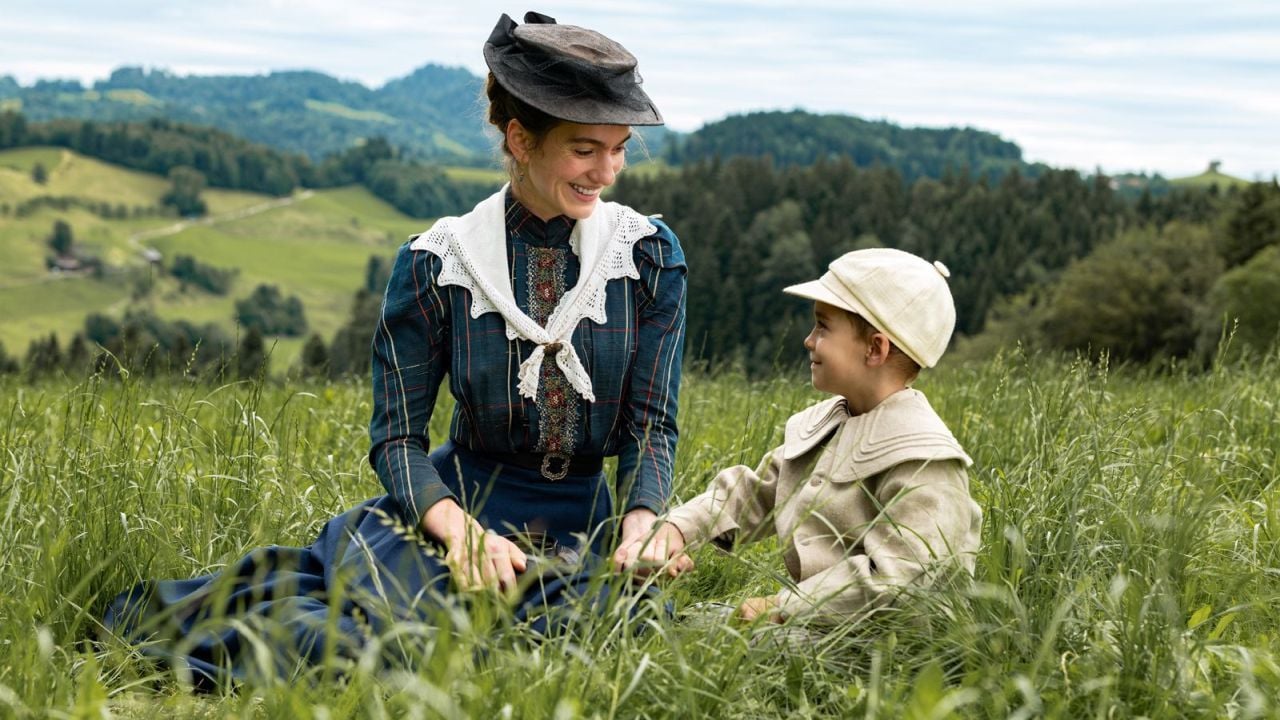
In the reinsals, we learn that in the life of the Frieda Keller there was not always darkness.
Julia Buchmann shines as a traumatized and closed, but still strong, brave Frida Keller. In their sensitive performance, an emotional depth and vulnerability is reflected that shalles for a long time. She makes the pain of her figure noticeable for the audience. The other actors also confidently fill out their roles in this film, which is equipped with authentic, historical -conscious scenes.
Max Simonischek, son of “Toni Erdmann” main actor Peter Simonischek, convinces as an upright man of the law, who is nevertheless not free of resentment and pejorative tendencies (women towards). His counterpart Stefan Merki is great as a prosecutor who persistently adheres to traditions and believes in traditional legislation. He does not even consider mitigating circumstances for Frieda, who could have a positive effect on the judgment. Gmür is an opportunist who is targeting his own advantages and has a firm view of the career climb.
A pioneering process
Nevertheless, Brendle also gives him character developments. In the end, he keeps a moving, flaming appeal in which he literally began to fight Frieda to fight her life and to raise her voice. It is one of the most sustainable, most surprising moments in the film that nourishes belief in the good in people. This careful approach to the ambiguous motifs as well as ambivalent behavioral and perspectives of the people acting is one of the great strengths of “Friedas Fall”.
Gesine Janggen, the defender's wife, is also an impressive person. Like the public prosecutor's wife Erna Gmür, she is suitable as a central figure of identification. Both women fight for Friedas rights. But finally it is mainly Gesine who questions the patriarchal system and makes the injustices visible as well as the widespread double morality that extends to society. In the end, the negotiation and Friedas suffered torments were by no means in vain: the entire case had a lasting impact on Swiss criminal law. He sparked the discussion about the abolition of the death penalty and ensured that mental illnesses and extraordinary circumstances were given more consideration in future judgments.
Conclusion: “Friedas Fall” describes the real events about the court hearing of the child murderer Frieda Keller, who shook Eastern Switzerland at the beginning of the 20th century. This tragic and complex history questions the position of women around the turn of the century and how to deal with law and justice. The controlled, strongly played mix of historical film, corporate portrait and court drama impresses with the undilated authenticity of his figures and an unobtrusive but intentionally staging.