
From the Stephen King adaptation “The Condemned,” which still tops the IMDb list of the best films of all time, to the early Netflix hit “Orange Is The New Black”: Prison, no matter how unedifying it is, has proven itself as a setting in various films and series. Finally, in the context of deprivation of liberty in an archaic, violent environment, important topics can be discussed particularly forcefully, including systemic injustice, guilt, atonement and hope.
The plot drivers of such stories usually revolve around the “outside”, i.e. the inmates’ dream of regaining their freedom – either through early release or through a meticulously planned escape. In her first English-language drama, Swiss “Heroine” director Petra Volpe takes up this hope for life after prison, but at the same time she focuses on another reality that is rarely discussed in films: dealing with illness, old age and death behind bars. “Frank & Louis” unfolds enormous emotional power precisely through its reserved and careful narrative style.
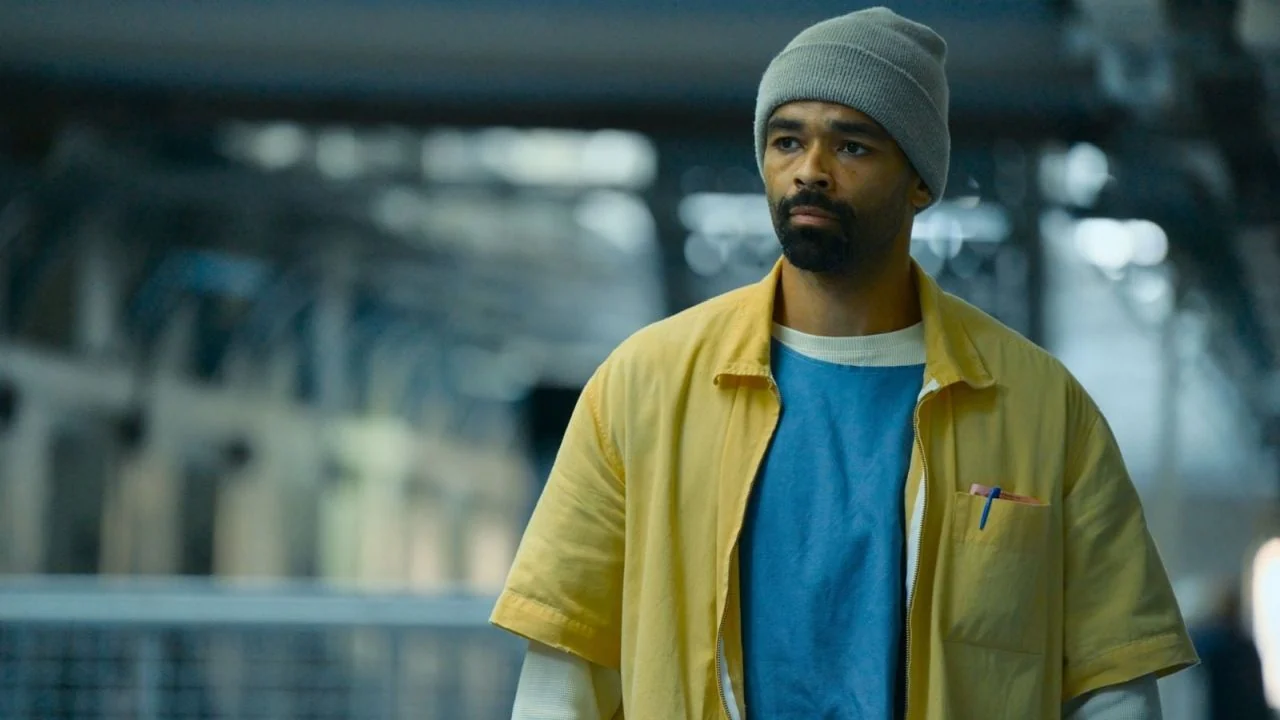
There is more to Frank Baker (Kingsley Ben-Adir) than the model prisoner who meticulously cleans and furnishes each new cell.
Right at the beginning, “Frank & Louis” focuses on the prisoner Frank Baker (Kingsley Ben-Adir), whose situation is explained in a few precise shots: After he has been transferred to another prison, he carefully scrubs all the surfaces and the floor of his new solitary cell before putting away his manageable belongings. Gentle spherical sounds accompany these scenes, which show Frank as a man familiar with prison routines. He has already served 17 years of his life sentence and now has a fairly realistic chance of being released early. Therefore, in order to further improve his chances of parole, he agrees to the suggestion of prison psychologist Dr. Watts (Indira Varma) agrees to participate in the prison’s nursing program.
Selected inmates take on the care of older inmates in prison who suffer from dementia and Alzheimer’s. In fact, such programs exist in some American prisons, which are already struggling with underfunding and an increasing aging population. For their film, Petra Volpe and her co-author Esther Bernstorff researched the “Gold Coats” care program at a men’s prison in San Luis Obispo, California, spoke to the participants and incorporated their findings into the script and character design. The protagonists of “Frank & Louis” turn out to be correspondingly complex as the story progresses. Frank, who is already planning his life in freedom, sees the nursing job as a means to an end – and is initially at a loss when, of all people, he is assigned Louis Nelson (Rob Morgan) as a patient.
Complexity instead of kitsch
Louis, who is in his late fifties, once set the tone among the inmates and used violence to gain respect; now he suffers from early onset dementia due to his Alzheimer’s disease. Louis is suspicious and dismissive of Frank from the start and seems to intentionally make it difficult for him to fulfill his tasks. Frank doesn’t want to put up with that. With this starting point, you can already guess what “Frank & Louis” could lead to: a gradual, heartwarming rapprochement between the dissimilar men until the melodramatically staged triumph of good.
But the film runs counter to such simple narrative patterns by looking at its characters with an empathetic but realistic eye and revealing their complexity. “Frank & Louis,” with the delicately simmering acting of “Bob Marley: One Love” star Kingsley Ben-Adir, penetrates Frank’s façade of a stoic model inmate, scene after scene. Behind this he hides a long overdue, honest confrontation with his crime, as shown in an unforgettable confrontation at his parole hearing.
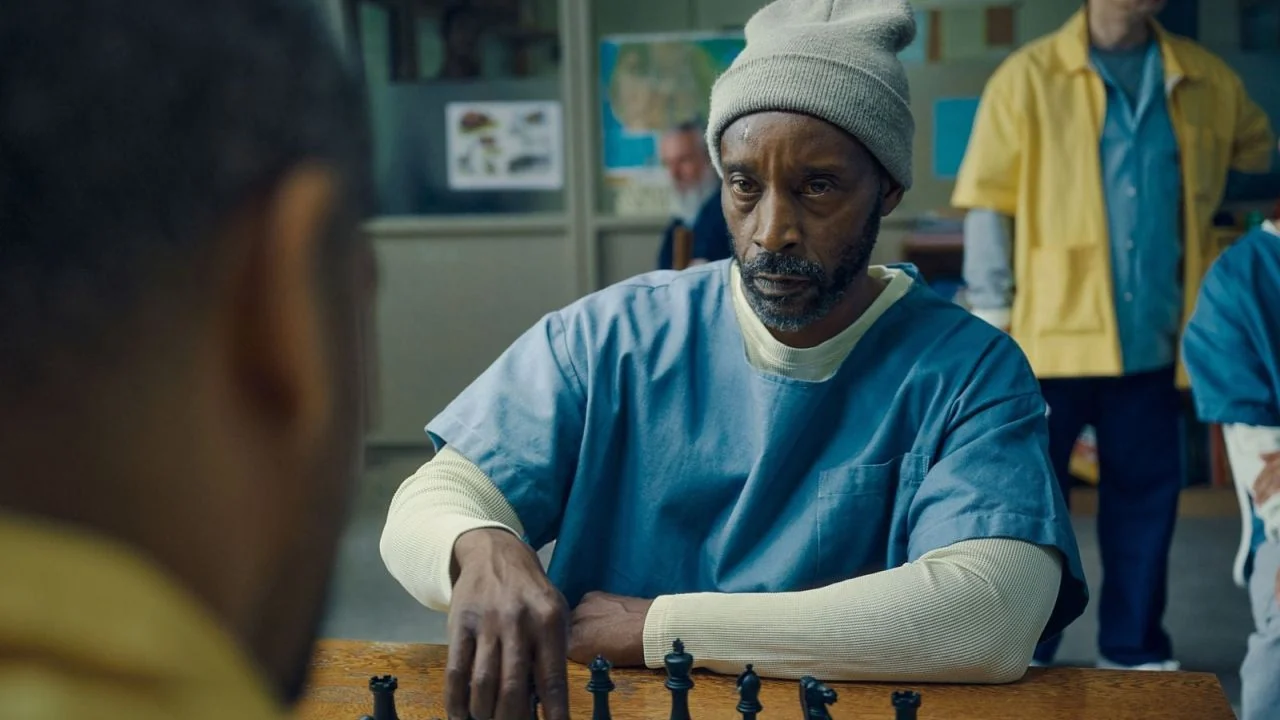
Fortunately, “Frank & Louis” is not one of those simple kitsch films where even Alzheimer’s can be cured with a little love and care.
At the same time, this story carefully approaches the unpredictable Louis and puts together a fragmented picture of a contradictory and vulnerable personality from his increasing regression and increasingly rare moments of light. In its unforeseeable course, “Frank & Louis” develops into an intense reflection on guilt, remorse and despair behind bars. At the end there is an emotional symbiosis between the two men that seems both unexpected and natural. Because care, as “Frank & Louis” ultimately shows, works in both directions. This drama, which is well worth seeing, describes in a tender and very close way how she reveals the humanity of the inmates and promotes painful insights.
Conclusion: With great caution and a realistic but empathetic view, “Frank & Louis” explores the possibility of care and humanity in a prison. By foregoing any melodramatics and expected narrative patterns, Petra Volpe’s first film after her exceptional international success “Heroine” is a touching examination of life and death in prison.