
For a long time it was said disrespectfully that animated films are children’s stuff. That has now changed, but fundamental differences can still be identified, especially between American and Asian animated films: While adults (with adult problems) often play leading roles in Japanese anime, animated films from Hollywood are still primarily aimed at children and families.
Januel Mercado and Joel Crawford are now trying to strike a surprising balance between these two animation worlds in the new film from the “Shrek” studio DreamWorks. On the one hand, “Forgotten Island” is a quintessentially American product, but at the same time it seems to be clearly influenced by an anime sensibility. The result surprises with often excessive animations that tell a very contemporary story about the value of friendship. There are even some brutally scary scenes that could possibly overstimulate the souls of children without anime experience.
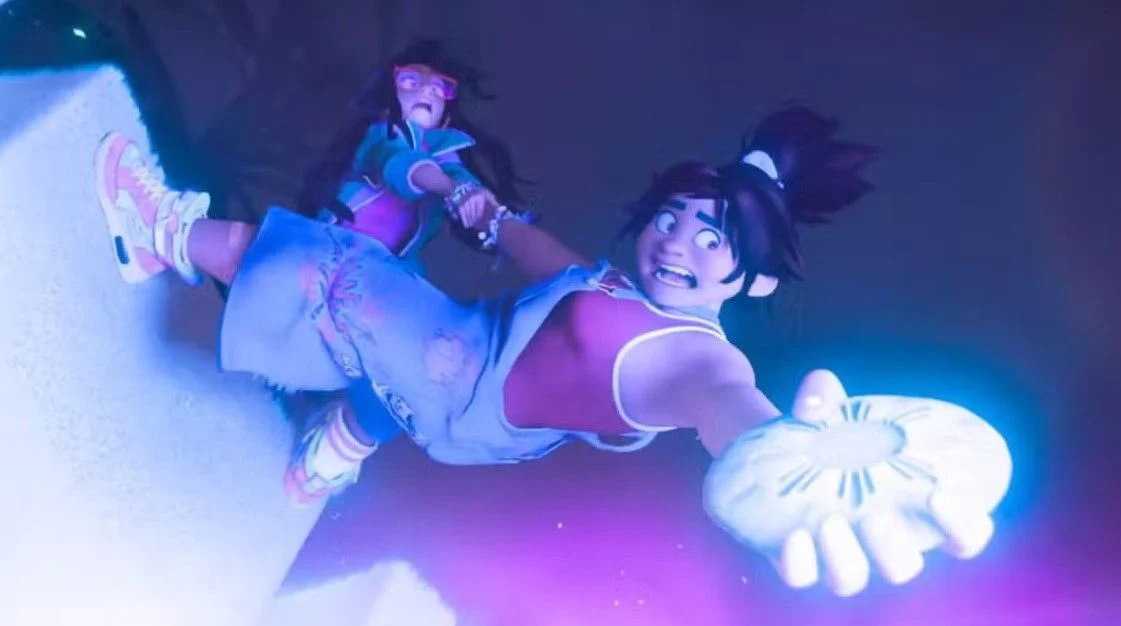
The best friends Jo and Raissa have to survive all sorts of adventures in order to somehow find their way back to their own world.
The outsiders Jo (original voice: HER) and Raissa (Liza Soberano) grow up as BFFs (“Best Friends for All Time”) on a Philippine island. Over the years, their connection becomes increasingly deeper – symbolized by the friendship bracelets on which more and more shared memories dangle. But then their bond is put to the test when Raissa is supposed to move to America to study. However, on their last evening together on the beach, they find a key that opens a portal to the mystical island of Nakali – and thus to a world that Jo’s aunt had told them about again and again.
The friends take the plunge – and wake up twelve hours later on Nakali with no memory. The wolf Raww promises to help them find the magic key that would make it possible to return to the real world, because Raissa absolutely has to reach her flight there in time. At the same time, they also have to defend themselves against the Manananggal – a dark, vampire-like mythical creature from the Filipino myth world (which sometimes uses its long tongue to extract fetuses from the bodies of sleeping women, but this part is left out of “Forgotten Island” to the happiness of the parents sitting in the cinema with their children) …
Influences in all colors and shapes
This time it’s the Philippines whose culture and myths serve as inspiration for an exuberant animated spectacle from Hollywood. From Colombia (“Encanto”) to Mexico (“Coco”) and Hawaii (“Moana”) to Italy (“Luca”) and Scotland (“Merida”): In recent years, the American film studios Pixar, Disney and DreamWorks have repeatedly made use of cultures whose traditions primarily served as a colorful background against which simple, universal stories were told. It’s the same here, even if a montage sequence that underlines the deep friendship is suddenly musically fueled with the eighties super hit “Never Tear Us Apart” by INXS.
As unoriginal as the plot of “Forgotten Island” is, the visual design is equally ambitious: mostly modern and colorful computer images dominate, which always achieve an astonishing three-dimensionality, even without 3D glasses. In the many flashbacks, this depth effect is replaced by decidedly two-dimensional animations, which, with their almost craggy nature, seem like childish colored pencil drawings, but at the same time are reminiscent of Japanese manga and anime in their dynamics.
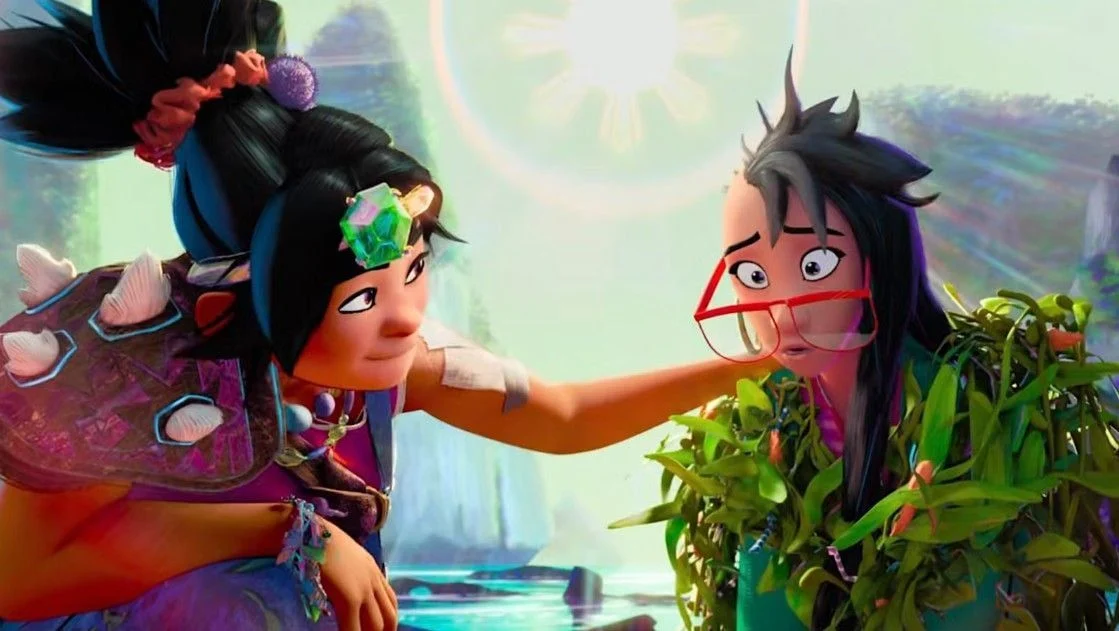
Not just because their bracelets are full of shared memories: Jo and Raissa really feel their deep connection!
Small portraits of the characters pop up again and again, as if you were in a computer game, while the apparent final boss Manananggal leads the mostly candy-colored world of “Forgotten Island” into dark spheres. The images appear dark and threatening, especially since this bizarre figure can split at the torso and only the insect-like legs stalk over the rocks. Even if the film is rated for ages 6 and up, parents with small children should think carefully about whether this is really the right thing for them.
Memory loss without alcohol
In any case, the story is aimed at slightly older viewers. So there is no skimping on visual pop culture quotes. A particularly nice allusion to the first Indiana Jones film “Raiders of the Lost Ark” is particularly nice. In addition, the narrative structure is surprisingly reminiscent of the “Hangover” films: What really happened in the first twelve hours on the mystical island? Jo and Raissa can’t remember anything about it, only a few Polaroids suggest spectacular adventures.
Like Ed Helms as Stu in the successful brutal comedy trilogy, the friends also got a tattoo while intoxicated that suggests something bad – especially since a giant baby will soon be joining them. “Forgotten Island” stretches in all directions, uses all kinds of animation styles visually and also prefers to tell more rather than less in terms of content. Sometimes it’s actually too much and the narrative frays. But given the sheer density of ideas and gags, this excess also ensures that it never gets boring.
Conclusion: “Hangover” meets Jules Verne – with an animation style that colorfully mixes up plenty of Western and Eastern influences. “Forgotten Island” is a pretty crazy mix in which not everything comes together 100%, but which is damn well entertaining with its message of friendship and an unconditional willingness to experiment.