
The Universal logo already indicates what is about to come: the lettering does not appear classically subtle in front of the stylized globe, but rather brightly lit and set with glittering diamonds. Bling bling After all, it's not for nothing that the trademark of the films by Baz Luhrmann, who became famous with “Romeo + Juliet” and “Moulin Rouge” and ultimately found in Elvis Presley the ultimate projection figure for his fascination with surface charms, pathos and camp: four years ago, his elaborate biopic “Elvis” finally made Austin Butler a star!
From the research material collected for his feature film, Luhrmann has now created a concert film, “EPiC: Elvis Presley in Concert,” which is less like a documentary than a hagiography. You shouldn't expect nuances or even criticism of the King in these 90 minutes. But why should you: If you want to experience Elvis' dark side, you might be better off watching Sofia Coppola's “Priscilla” instead. “EPiC,” on the other hand, is all about the legend, the star, the performer, the irresistible charmer, to whom Luhrmann pays homage in spectacular images and rich sound.
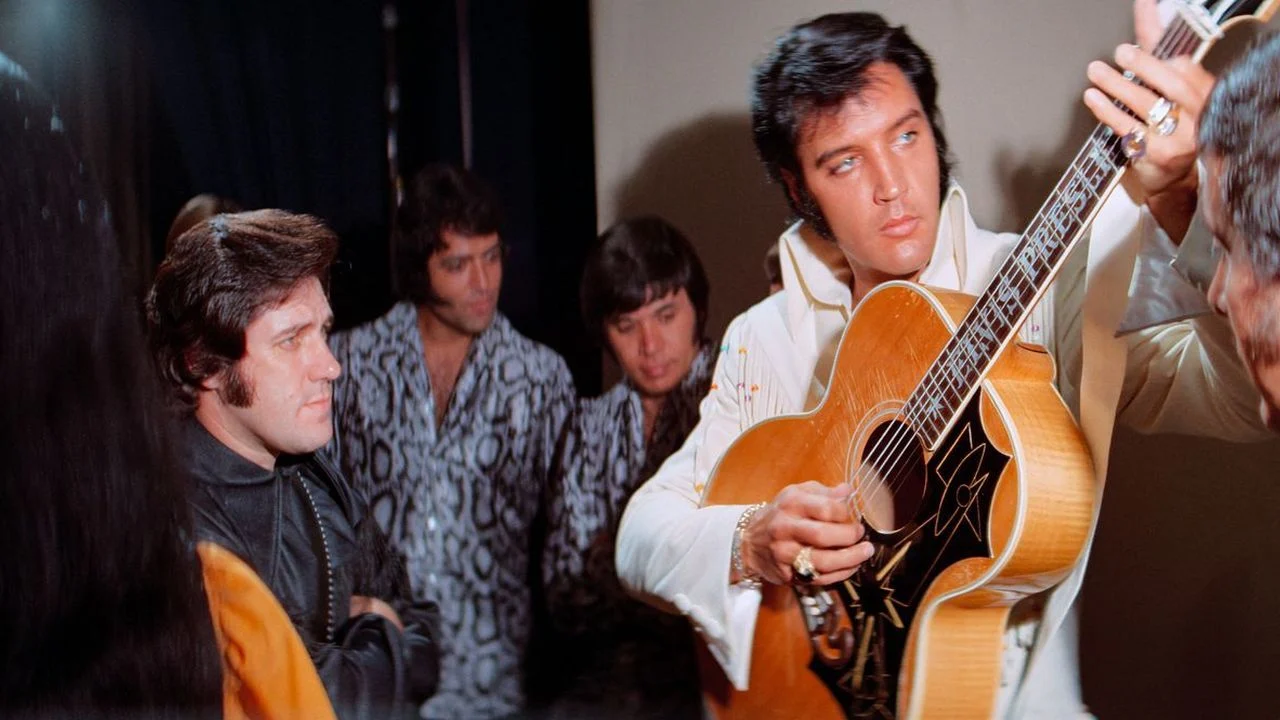
Even his own band is mesmerized by Elvis.
Elvis Presley is world-famous primarily as a singer, but he was particularly successful as a film star in the 1960s. After his military service, which he completed in Germany between 1958 and 1960, he made an incredible 27 films in the next decade! Naturally, there was hardly any time for a live performance. In order to be able to be on stage again, Elvis took up an engagement in the newly inaugurated theater in 1969 International Hotel in Las Vegas – and caused a sensation: five days a week he played two sold-out shows per evening, in front of celebrities like Sammy Davis Jr. and Cary Grant – and in front of an audience that wanted to feel the aura of the superstar for a short time.
Recordings of these shows and their preparation that were long thought to be lost now form the backbone of “EPiC”, although Luhrmann surprisingly holds back on stylistic extravagances in his first documentary and instead leaves the stage entirely to his star. In the first few minutes, the Elvis biography is ticked off, but at an incredible pace. It's no surprise that the color-crazy Luhrmann doesn't develop the greatest enthusiasm for black-and-white TV footage from dreary Germany, in which Elvis stands a little sad and lost in an oversized parka next to a tank.
Las Vegas > Hollywood
In the Hollywood era, everything is much brighter, but also more uniform – whether you're a doctor, a racing driver or a cowboy, somehow all Elvis films are more or less the same. So “EPiC” quickly resonates with the Elvis who comes closest to Luhrmann’s creative preferences: the Las Vegas Elvis! The concerts that Elvis gave in the player city are legendary, perfectly choreographed performances that still seemed spontaneous.
That wasn't a coincidence either, because Elvis knew about the special connection he could form with his audience, but which had to be created anew every evening. “Play every song as if it were the first time,” Elvis tells his band. The numbers shouldn't sound routine, they shouldn't sound off the shelf, even though he probably played hits like “In The Ghetto”, “Love Me” or “Suspicious Minds” thousands of times over the years.
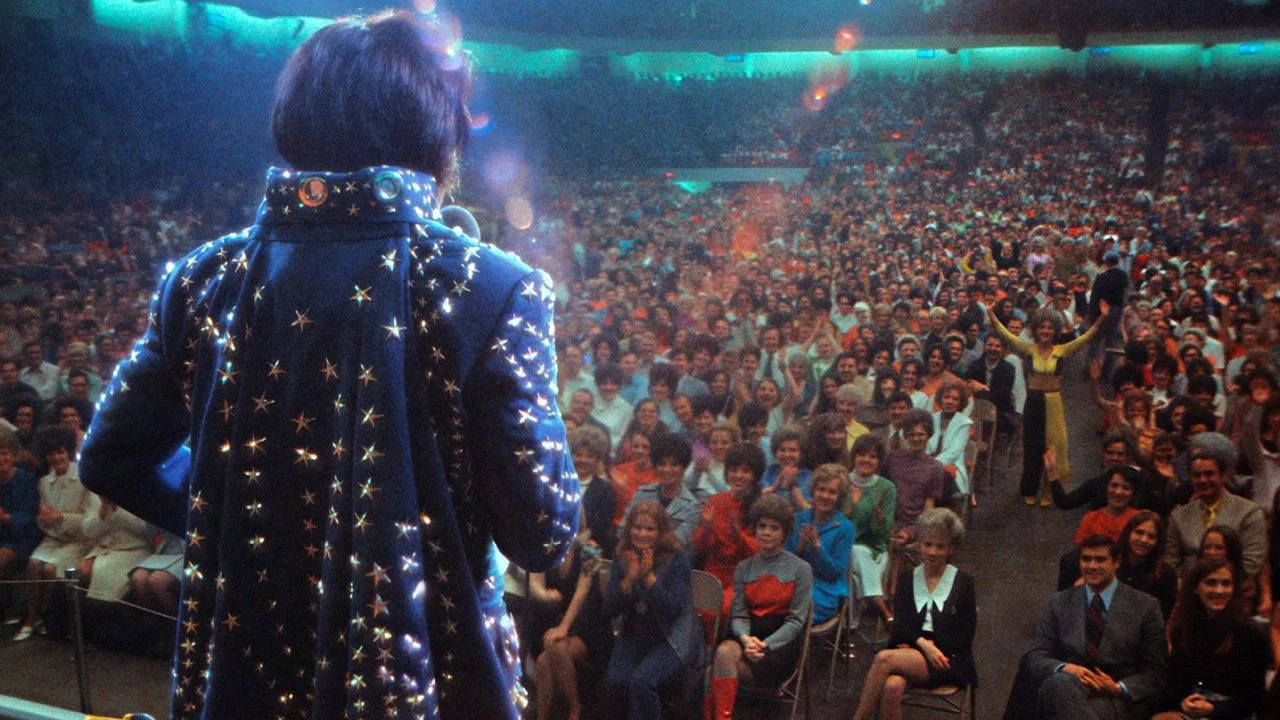
The connection Elvis had with his audience was something very special every night!
But the ecstatic enthusiasm can not only be seen on the faces of the audience, the musicians and background singers also seem as if they could hardly believe that they were standing on the same stage with this person. The concerts often seem like a church service – with Elvis as a preacher who plays with his audience. Even small gestures cause enormous ecstasy when Elvis walks between pathos and silliness, sometimes missing a note and thus appearing human for a moment.
No wonder Elvis was as inspired by gospel as he was by the blues, even if the God-fearing singing and hypersexualized performances are in (supposed) contradiction. Baz Luhrmann's “EPiC: Elvis Presley in Concert” is certainly not suitable for solving such mysteries in Elvis' character. But here you get closer to one of the greatest performers of the 20th century than ever before.
Conclusion: Baz Luhrmann obviously can't let go of Elvis Presley. Four years after his brilliant biopic “Elvis”, he is now dedicating a hagiographic documentary film to the legendary singer, which, although it adds nothing new to the Elvis myth, thanks to spectacularly restored archive material and impressive sound, makes Elvis seem more alive than he has since his death.