In the HD age there is probably no greater provocation in the cinema than the blurring. After all, one classic after the other for cinema reversions or home cinema publications is currently filtered to death, so that no gran film grain can no longer be discovered in the pictures that now appear as smoothly as they were in reality. The Georgian filmmaker Alexandre Koberidze keeps going in the opposite direction in his several hours of films. These come so pixelated and blurred, as the cheapest smartphone camera would no longer dare today. It is therefore no longer to explain their blurring with an economy of the cheap means of production. The blurry of the world in which Koberidze takes us has system.
The third long film by the director, who studied at DFFB in Berlin, begins with a disappearance. No, actually he begins with a symphony: Koberidze's pictures of monuments, footballs and street cats composes to the cheerful-faded film music of his brother Giorgi. In general, “Dry Leaf” is a film, the pictures of which are repeatedly taken over by the animals – from horses, donkeys, cows, dogs and cats that run over walls in the sun and scurry through all passages. Perhaps this world actually belongs to the animals, and we can just watch them every now and then how they make their very own thing, largely unmoved from our presence.
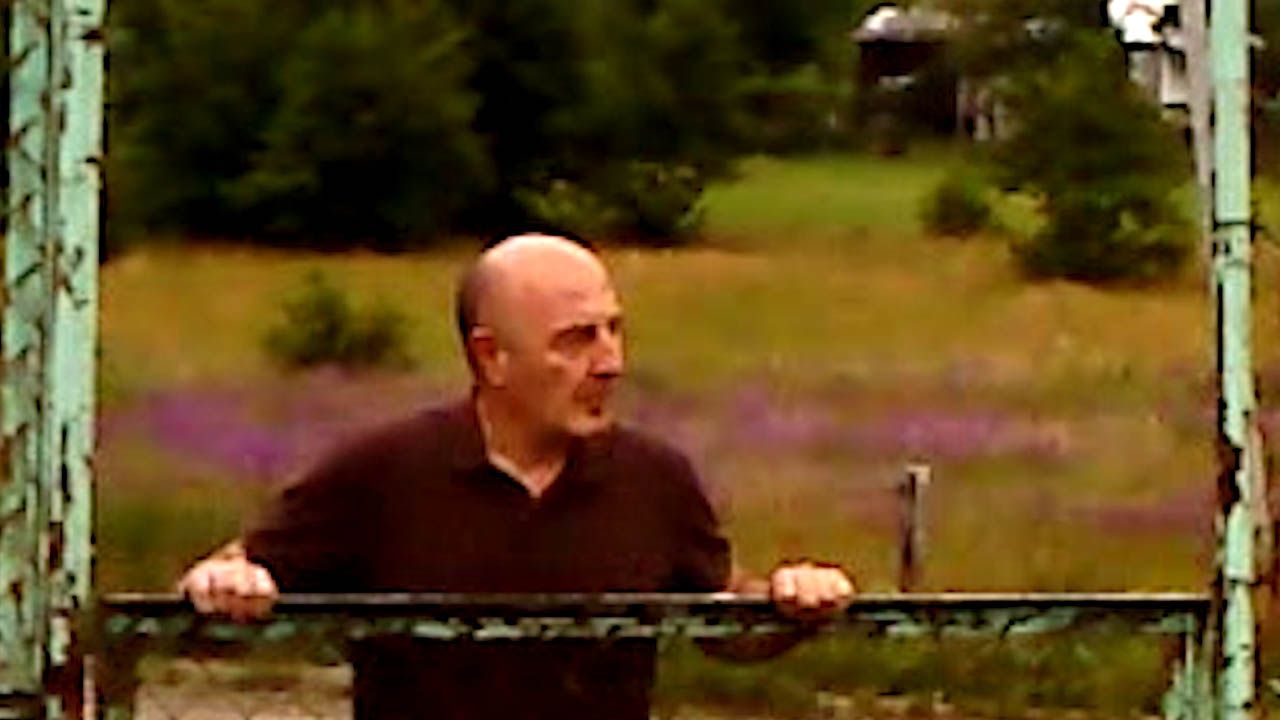
Irakli (David Koberidze) desperately searches for his missing daughter in rural Georgia – he is accompanied by invisible!
Our companion through this world is Irakli (David Koberidze, the father's father) who is looking for his disappeared daughter Lisa. This means that this Lisa has just not disappeared without a trace – she left a farewell letter. In addition, she is already 28 years old and of legal age, which is why the police are not responsible for this case. The irritated parents cannot recognize a reason for Lisa's farewell, and so Irakli decides to search for himself – at all the stations where he does not wrongly suspect Lisa, who works as a photographer. She is supposed to photograph soccer fields in remote Georgian villages for a large photo project. Iracli's path leads over winding mountain roads, a little similar maybe those who know from the anatol and Cappadocian cinema episans of the Turkish master director Nuri Bilge Ceylan (“on dry grass”) – whereby they were much sharper there.
“Dry Leaf” is a road movie and a natural film. At the same time, he ties in with the playful magical realism that Koberidze particularly in his second film “What do we see when we look at the sky?” Excessively celebrated. Where there were two lovers who were not allowed to see themselves again because they woke up as others in the morning after their first meeting, the inspection in “Dry Leaf” is deceptive. Because the world through which we travel with Iracli is populated by invisible, and even his travel companion Levani belongs to them. We hear these invisible loud and clearly and experience Iracli in interaction with them, but they remain hidden from our eyes – not in off, beyond the kadrage of the film pictures, but simply not there. Present and absent at the same time.
Everything, just not a digestible festival cinema mainstream
Now such tricks in the cinema can go terribly on the mind, and there is an entire subcategory of the international festival mainstream that celebrates a very converted magical realism to the most annoying. Fortunately, Alexandre Koberidze has decided to radicalize his cinema in the opposite direction without completely avoiding the use of these fantastic stylistic devices.
At first glance, “Dry Leaf” is a much more bulky film than the playful predecessor – he doesn't need much more common thread than Iracli's journey, and tell much more than the country and the meadows, the leaves, the wind, the rain and the animals either. This will probably also appear to be a fan of Koberidze's earlier work on karg – if you succeed in getting involved in the minimalist pull of “Dry Leaf”, it can not only be considered the most consistent film in the still young work of the director, but also for your most beautiful.
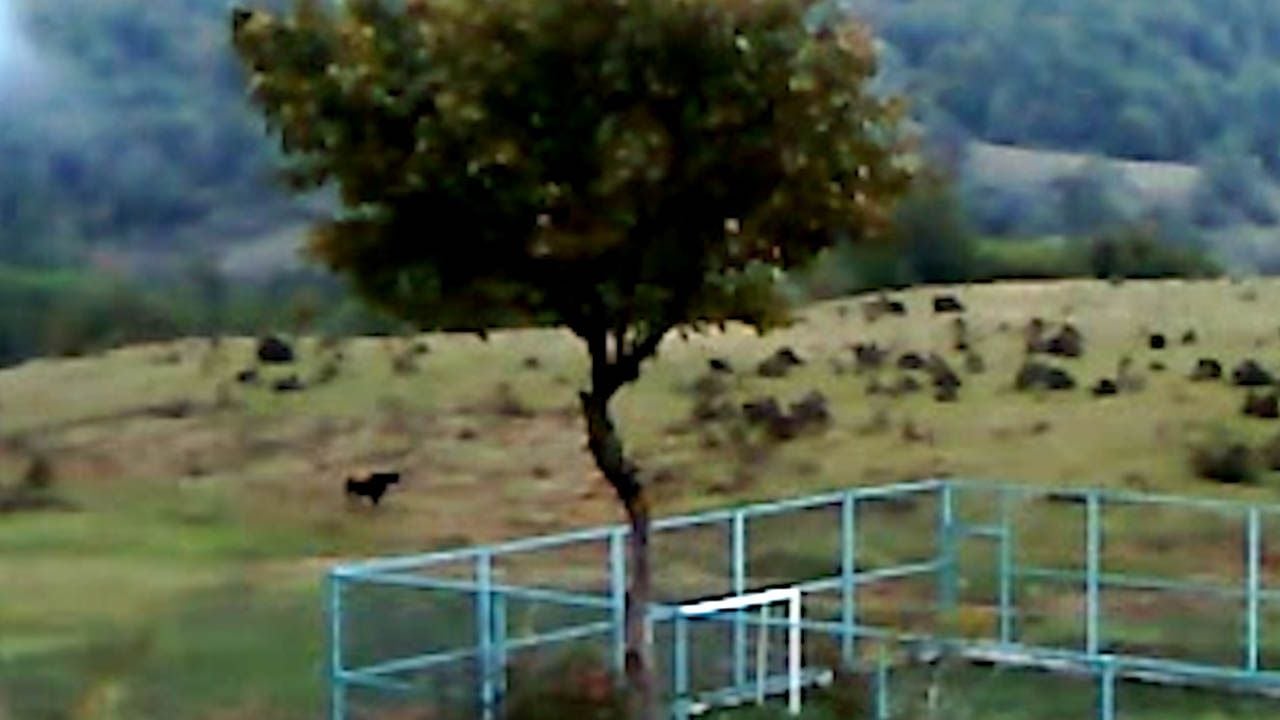
The extreme blurring is an integral part of the visual and narrative principle in “Dry Leaf”.
There is a zoom in it that leads deep into the dissolution of the perceptible world from the impressionist blur – and this zoom can be perceived as much more than a mere form. The great Hungarian director Béla Tárr finally belongs to Koberidzes, and in a way he has put his very personal version of his last film “The Turin Horse” with “Dry Leaf”. However, the playful apocalypse, the extinguishing and nothing, the playful humanist, contrasts a good hand, a return, a return, a reunification. Nothing and nobody is lost as long as there are still streets.
Conclusion: The third great cinema film by the Georgian director Alexandre Koberidzes deliberately decides against an approximation to the magical realism of the international festival cinema and for a broken, bulky, but also more personal approach. On the surface, “Dry Leaf” may seem a barren – but if you succeed in getting involved in your very own minimalist rhythm of this enchanting road trip through the Georgian villages, it may be the most beautiful, but absolutely his most radical film.