
A pink sheep that not only immediately catches the eye among all its white counterparts, but also stands as a symbol of youthful optimism and a certain rebellious playfulness: You could hardly have found a more appropriate motif for the poster of “DJ Ahmet”. The 15-year-old title character grows up in a conservative, rural area of North Macedonia, whose unshakable enthusiasm for music defies even the adverse circumstances.
Director Georgi M. Unkovski puts a fundamentally likeable protagonist at the center of his film debut, which is filled with lightness and humor, but does not ignore the harsh reality of life. With youthful impartiality, the film, which won the audience award at the Sundance Festival, tells a universal coming-of-age story in which the entire village is accidentally filled with the Windows startup sound via the minaret microphone.
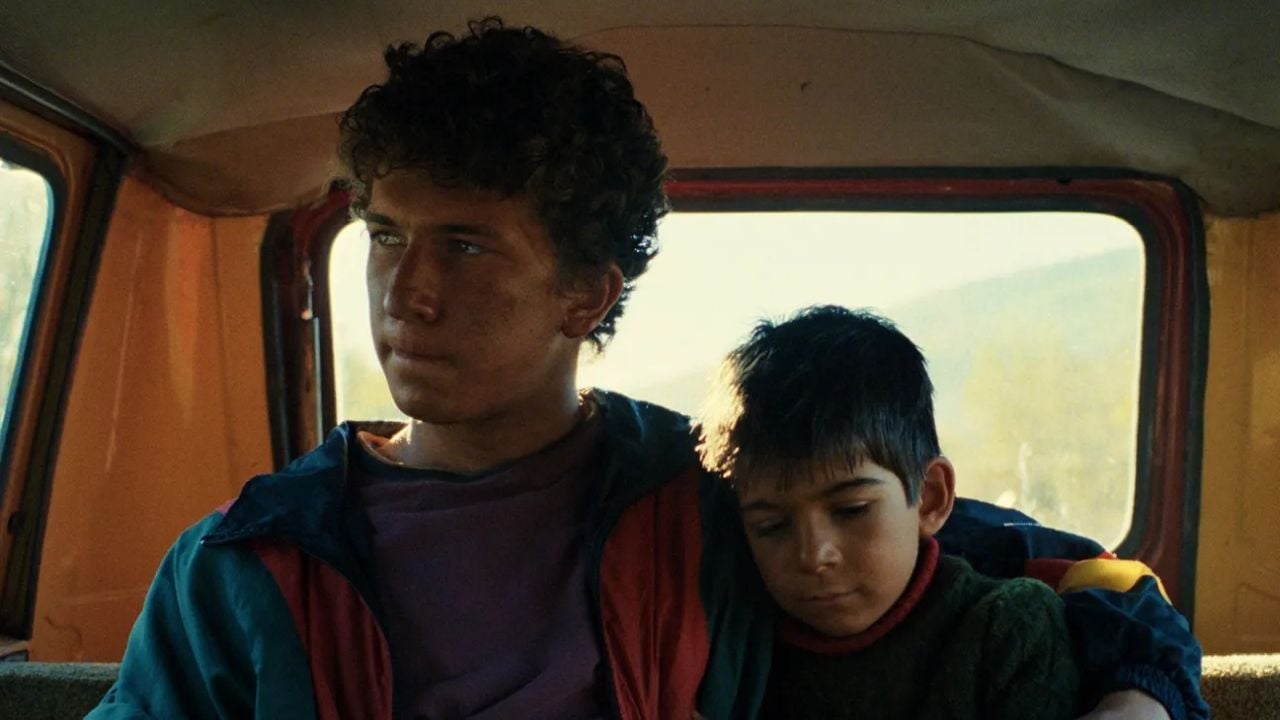
After their mother's death, brothers Ahmet (Arif Jakup) and Naim (Agush Agushev) are finally inseparable.
15-year-old Ahmet (Arif Jakup) lives with his younger brother Naim (Agush Agushev) in a remote North Macedonian village. Since the mother's death, the family situation has been tense: the father (Aksel Mehmet) is strict and withdrawn, Naim no longer speaks a single word and money is becoming increasingly scarce. So the father takes the music-loving Ahmet out of school so that he can look after the family's 19 sheep. And then the teenager, who was sentenced to shepherding work, falls head over heels in love with the self-confident neighbor Aya (Dora Akan Zlatanova), who, however, has already been promised to someone else and is soon to go to the altar.
Music connects the two: While Ahmet experiences brief moments of happiness when he listens to songs with Naim via headphones or his mother's small speakers, Aya uploads TikTok dance videos and plans to perform at an upcoming dance competition in the village, even if this might displease her future husband's family…
Don't trivialize it, but don't dramatize it either
Ahmet is a lanky, curly-haired man who is initially shy, especially when it comes to Aja, but is always very determined to stand up for his brother. His large, alert eyes are full of sensitivity and always flash the sparkling optimism of a boy who, despite everything, longs for something beautiful in life. In his debut role, Arif Jakup knows how to convey the youthful lightness and joy that Ahmet always expresses with a broad smile despite the tense family situation. The relationship between him and the mute Naim is also beautifully worked out – somewhere between a role model and an ally. The brothers share an unshakable bond. They support each other, especially after the death of their mother, while the father doesn't really know how to deal with his sons.
In his debut film, director Unkovski consciously decides not to romanticize or dramatize village life in North Macedonia. He allows the sadness for his deceased mother to constantly resonate as a melancholic tone without letting it completely dominate the proceedings. The three survivors deal with their grief very differently: While the father tries to suppress any joy, Ahmet keeps the memory of his mother alive, while the younger Naim no longer utters a word. Because of this, his father even drags him to an alleged healer, who only further aggravates the family's financial situation. In one of the strongest scenes, which gently shakes up the family dynamic, Ahmet tells his father that although their mother is no longer there, his sons are still alive.
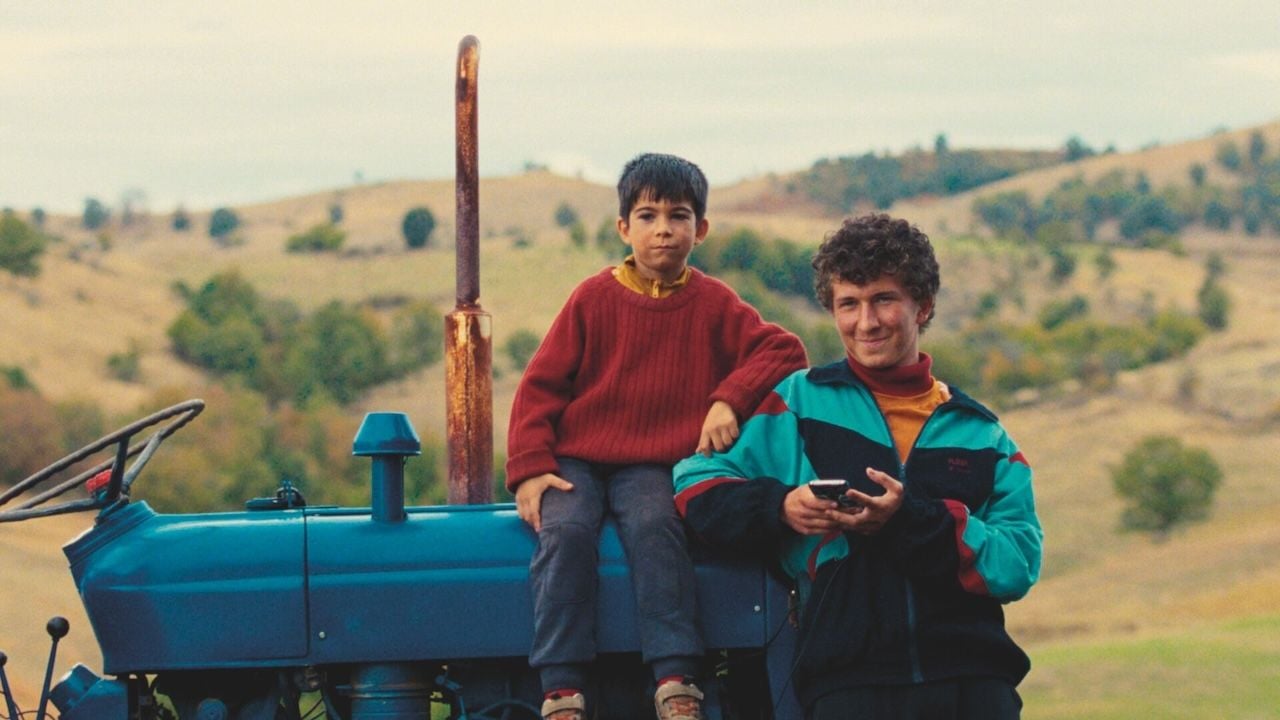
In the title role, Arif Jakup exudes a youthful joy of life that is hard to resist.
Some elements of the coming-of-age story seem very familiar, but the film's specific cultural perspective and tone still set it apart from similar stories. Real DJ turntables for practicing are a long way off in Ahmet's world, but Aya still gives him the titular nickname when he plays the music for her dance performance. Their first meeting is then directly accompanied by pumping Balkan beats and staged in slow motion – completely in keeping with Ahmet's exaggerated perception, who experiences a transported moment when Aya, who previously grew up in Germany, suddenly appears on the field in the characteristic, colorful costume of the Yörük community.
Unkovski allows himself some of these deliberately stylized moments that are out of the ordinary, but do not tip into kitsch, but rather take the young person's perspective and his emotional chaos seriously. While the main character is responsible for the youthful charm, it is the somewhat exaggerated supporting characters that give the film its humor, including the chattering group of women in the village and those with their stubbornness Running gags caring sheep. And of course the lovable but overwhelmed priest, who repeatedly produces slapstick moments with his attempt to combine technology and tradition – including the aforementioned guest appearances of the iconic Windows sound.
Conclusion: “DJ Ahmet” scores with an extremely likeable protagonist and a humor that finely dissects the clash between tradition and modernity, but still takes the real problems in the remote mountain village seriously. Georgi M. Unkovski creates a warm-hearted coming-of-age debut film that tells of loss and family tensions, but at the same time focuses on what brightens up life: the youthful joy of life that the eponymous Ahmet exudes is truly contagious.
We saw “DJ Ahmet” at the Seville Film Festival.