
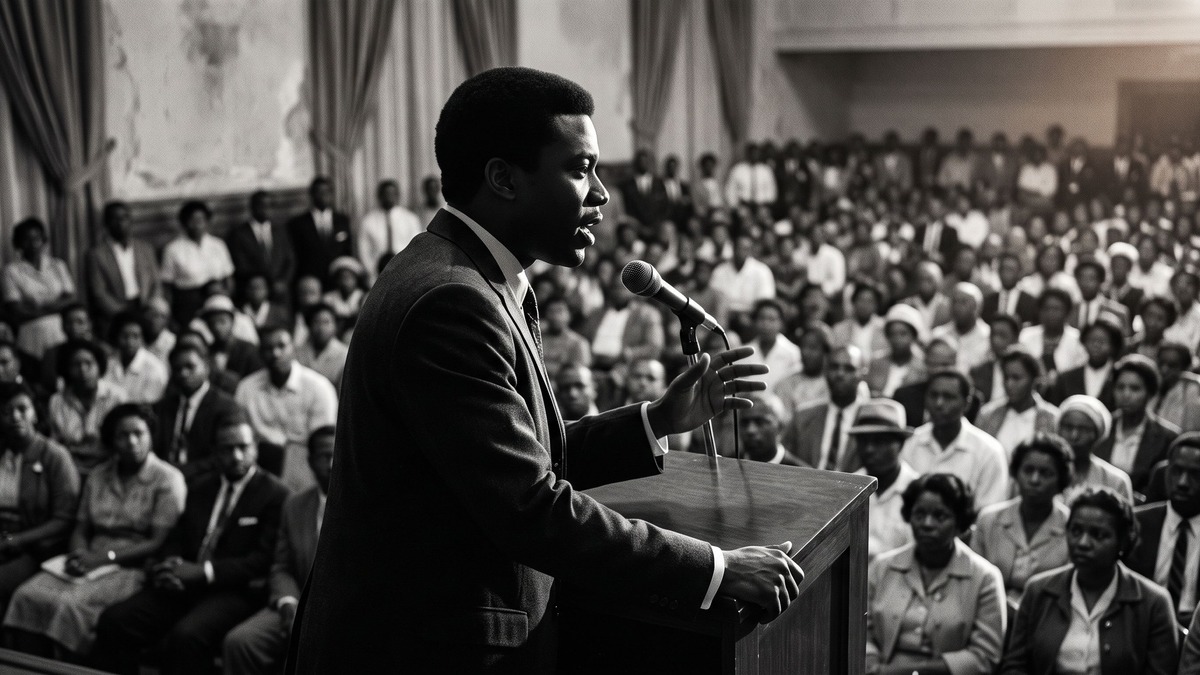
The film is Malcolm X, Spike Lee’s sweeping 1992 biography with Denzel Washington in the title role. Many people who know Washington through Training Day, Man on Fire, and The Equalizer have never sat through this demanding three-hour portrait. This may be the performance that shows the fullest range of what he can do.
The number in the headline needs one useful distinction. The 9.1 shorthand reflects a 91% positive critical result attached to the film in older listings; it is not an average grade of 9.1 out of ten. Scores can shift as reviews are added, but the larger point has remained stable: critics treated the film and Washington’s performance as major achievements.
Two moments that are genuinely difficult to watch
I broke eye contact twice, and neither moment depends on horror-movie shocks. The first arrives before the drama has properly begun, when the opening montage places Malcolm’s words beside real images of the beating of Rodney King. The sequence does not let history remain safely in the past. It connects the film’s subject to violence that was still painfully current when the movie reached theaters.
The second comes near the end. Even viewers who know Malcolm X’s fate can feel the assassination sequence tightening around them. Lee does not treat it as a neat historical checkpoint. The room, the family, the crowd, and the small interruptions all create a terrible awareness of what is approaching. Knowing the outcome makes the scene harder rather than easier.
Washington plays several lives inside one man
The performance begins with speed and surface: sharp suits, dancing, hustling, and the restless confidence of Malcolm Little. Washington makes this younger man entertaining without turning him into a charming myth. There is always nervous energy under the smile, as though the character is trying to outrun the limits already closing around him.
Prison changes the rhythm. The voice becomes more deliberate, the body more controlled, and curiosity gradually replaces bravado. Later, as Malcolm becomes a national figure, Washington commands rooms without relying on volume alone. He can make a pause feel confrontational. He can also show the private cost of maintaining that certainty when political and spiritual doubts begin to grow.
The most impressive element is that these transformations never feel like disconnected chapters. Each version of Malcolm carries traces of the previous one. The wit remains. The alertness remains. Even after his worldview expands, the old instinct to study a room and identify danger never disappears.
Why a celebrated film can still feel underseen
Its length is the obvious obstacle. At more than three hours, the movie asks for attention in a culture increasingly organized around short episodes and quick recommendations. It is also more complex than the simplified public image many viewers bring to Malcolm X. The film follows changes in belief, loyalty, ambition, family life, race, religion, and international politics without reducing them to a single inspirational slogan.
That scale may explain why younger Denzel Washington fans often postpone it. The movie sounds like homework; it plays like an epic. There are crowded streets, intimate conversations, prison confrontations, speeches, comedy, travel, betrayal, and dread. Lee keeps changing the visual energy as Malcolm’s world expands. The result feels alive rather than ceremonial.
The performance that should sit beside his Oscar win
Washington did not need an award to make this performance endure, but it remains striking that many casual viewers know his later winning role better than this one. Here he carries an enormous historical production while preserving the details of a single life. The speeches are powerful, yet some of his finest work happens when Malcolm listens, recalculates, or realizes that certainty has become dangerous.
Calling any film the best of an actor’s career is inevitably personal. Washington has played more immediately lovable characters and more explosive ones. But few roles demand this combination of charisma, physical transformation, intellectual force, tenderness, fear, and moral evolution. Malcolm X does not merely showcase a star. It gives that star enough space to portray a man changing under the pressure of history.
For viewers who have kept postponing it, the running time is not the warning it appears to be. It is the room the story needs. By the final sequence, the film has made its subject feel both monumental and painfully human. That is why the difficult moments land so hard, and why this towering performance still deserves to be discovered by people who think they already know Denzel Washington.