
“Couture” is director Alice Winocour’s most personal film to date. A few years ago she received a cancer diagnosis herself while preparations for Fashion Week were underway in Paris. The leaden feeling of suddenly being confronted with one’s own finiteness, while life around you seems to continue unchecked, forms the emotional starting point of her new film. With Fashion Week and the traditional house Chanel, Winocour chooses an unusual and fascinating background for her drama about life decisions and female solidarity.
As in “Proxima – The Astronaut” (2019), the French director approaches this special world with a casual, documentary look and develops an astonishing closeness to her characters from everyday work processes. Worn by an outstanding ensemble including Angelina Jolie, Vincent Lindon and Ella Rumpf, “Couture” is ultimately less about fashion than about people who have to deal with existential crises under professional pressure.
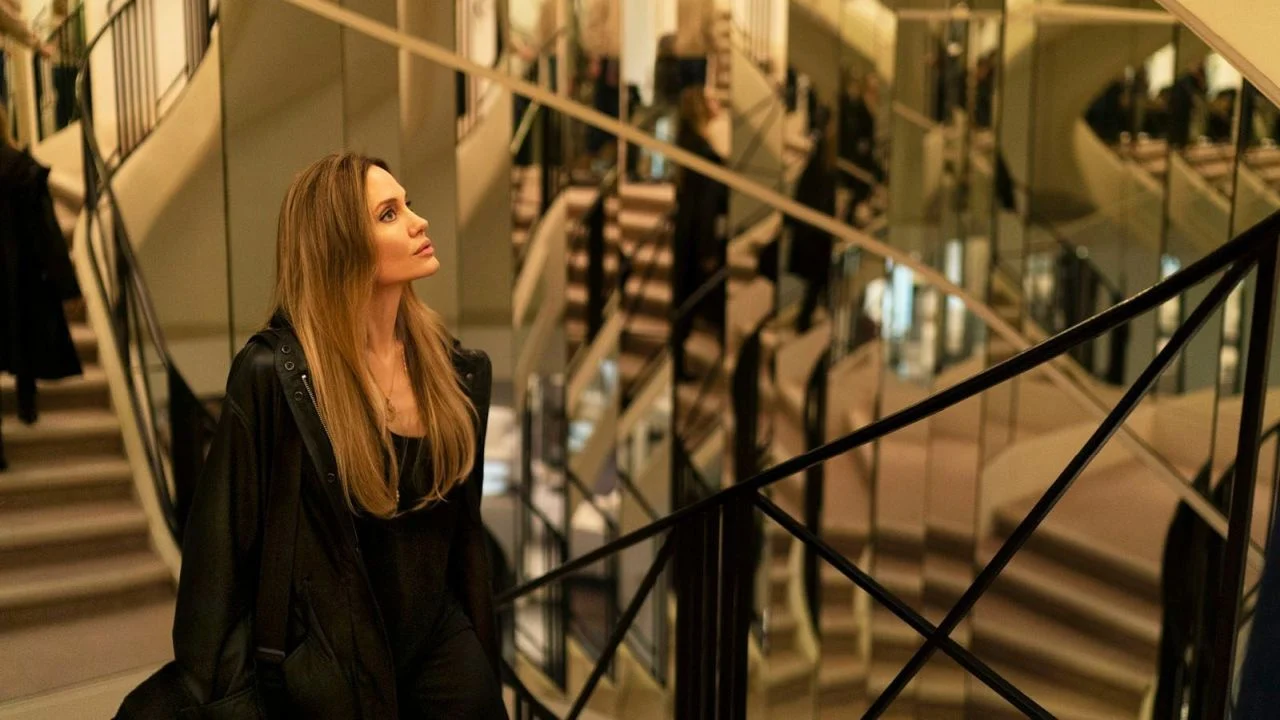
Director Maxime Walker (Angelina Jolie) is at Paris Fashion Week on business – and is confronted with a shocking diagnosis.
Shortly before Paris Fashion Week, American independent director Maxine Walker (Angelina Jolie) is supposed to create a filmic opening sequence for the Chanel fashion show. As soon as she arrives in France, however, she receives a devastating diagnosis that forces her to juggle the stressful shoot, doctor’s appointments and relationship with her estranged daughter all at the same time.
At the same time, pharmacy student Ada (Anyier Anei), who arrived from South Sudan, hopes to give her family a better future with her first job as a model, while experienced make-up artist Angèle (Ella Rumpf) moves between the hectic assignments of Fashion Week and her dream of a career as a writer. The paths of the three women cross again and again behind the scenes of the fashion circus dominated by time pressure and competition…
A unique look behind the scenes
“Useless and necessary” – with these two words, horror film director Maxine answers the question of what fashion means to her right from the start. Words that represent the entire film. Because Alice Winocour is not so much interested in the glamor of haute couture or the actual fashion show, but rather in the people who make it possible in the first place. Instead of focusing on the catwalk, the creations or prominent guests, she consistently focuses her attention on the tailors, make-up artists, models and filmmakers who work behind the scenes. She presents Fashion Week as a permanent state of emergency in which there is actually no room for personal problems.
The authenticity of many scenes is also due to the fact that Chanel gave a film team access to its studios for the first time. The camera repeatedly lingers in close-up shots on hands that are cutting fabrics, sewing dresses, applying make-up to models or perfecting hairstyles. This means that the focus is less on the finished design object and more on the often invisible work behind flawless beauty. The many small observations of everyday work are particularly appealing – such as the custom of incorporating a hair from the seamstress in charge into every dress, which is said to bring good luck. Such casual details give “couture” a credibility that goes beyond mere scenery.
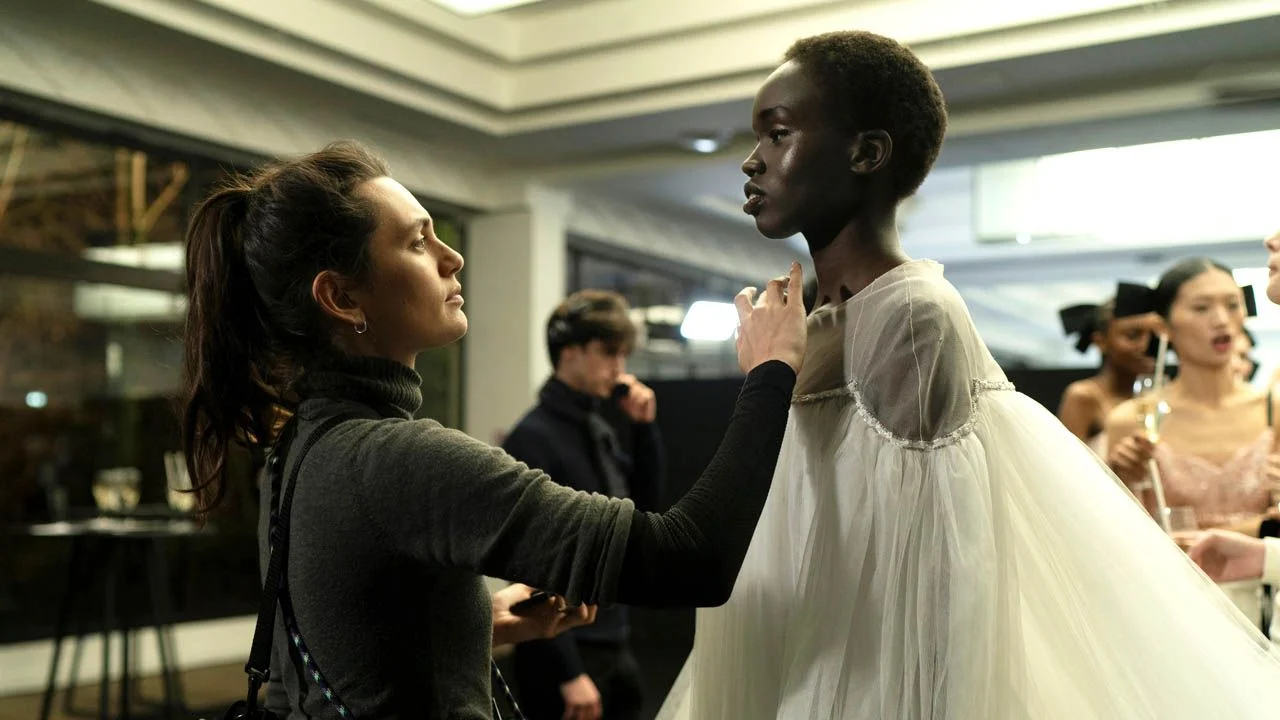
Make-up artist Angèle (Ella Rumpf) and aspiring model Ada (Anyier Anei) also have to struggle with private crises.
At the same time, Winocour translates these work processes into a silent visual language. Adhesive strips, threads and scars run through the film as recurring motifs. While fabrics are sewn together and faces and sometimes feet are made up, the characters have to learn to deal with injuries and fears. The director shows the flawless surface of the fashion world as a carefully constructed ideal in whose machinery people ultimately search for closeness and understanding.
In terms of acting, the ensemble is convincing across the board. Ella Rumpf’s (“Tiger Girl”) Angèle proves to be the film’s emotional anchor. Her figure moves tough and with impressive confidence through the hectic microcosm of Fashion Week. At the same time, she treats her fellow human beings with an empathy that seems extraordinary in this performance-oriented environment. It is her small gestures of attention that give the film its most touching moments.
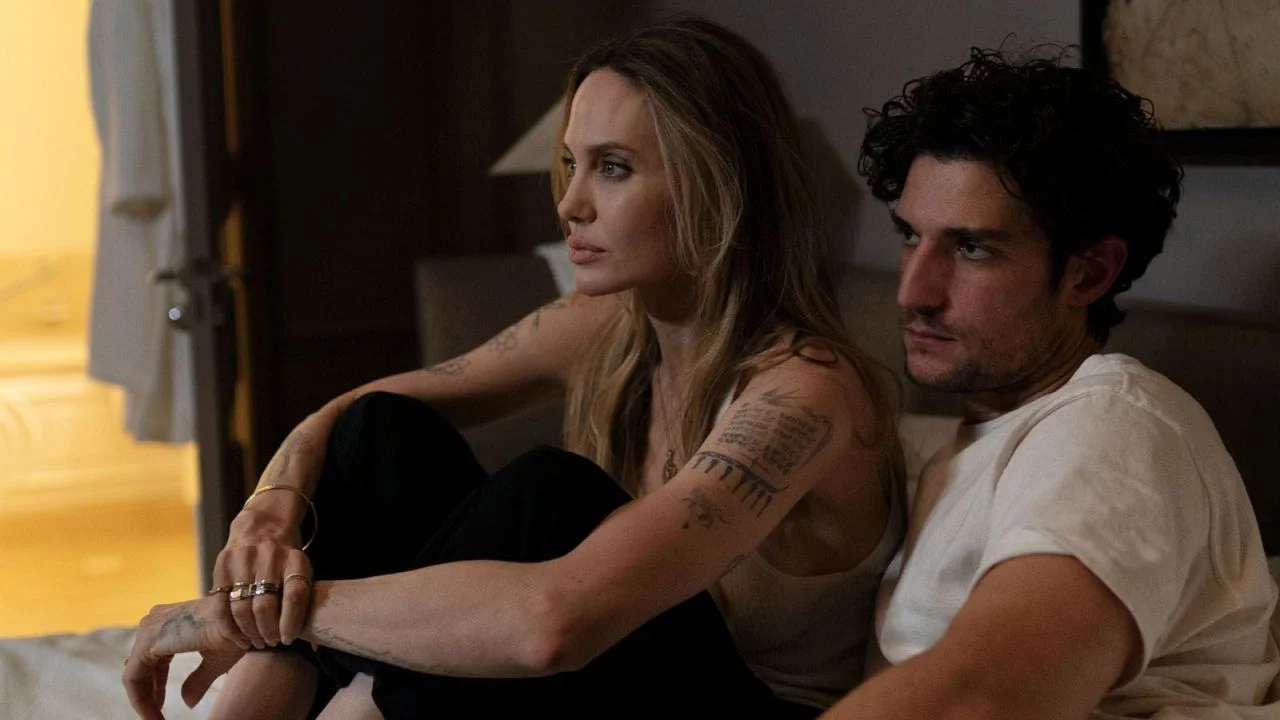
You can tell that the subject of the film is very close to Angelina Jolie.
Because of her own family history and her decision to have a prophylactic mastectomy, Angelina Jolie (“Maria”) has a special approach to the topic of cancer and gives Maxine’s handling of the diagnosis a noticeable emotional depth. Her performance is particularly impressive in the scenes in which Maxine gradually understands the extent of her illness and her professional façade slowly begins to crumble. At the same time, her engaging presence makes it sometimes difficult to believe her in the role of a largely unknown independent director who is discussing the perfect shade of red with her cameraman in a particularly bloody scene from “The Descent.”
In her acting debut, Anyier Anei credibly conveys Ada’s curiosity, overwhelmedness and amazement in the face of the world of haute couture, which is foreign to her. Vincent Lindon (“Les Misérables”), who already starred in Winocour’s debut film “Augustine”, is convincing as a committed doctor, while Ella Rumpf’s “Raw” colleague Garance Marillier (“Titane”) makes a big impression in her small role as a seamstress with only her concentrated looks and movements in the studio.
Small gestures of solidarity
Alice Winocour doesn’t quite achieve the emotional power of her previous films with “Couture”. Precisely because it wants to do justice to several characters equally, the episodic, meandering drama sometimes gets lost in narrative loops. Not each of the parallel episodes is equally important to the overall picture, which means that the stories of Ada and Angèle occasionally come up short. The film celebrates the small gestures of attention and solidarity that have a big impact, especially in an industry sworn to competition and efficiency.
Conclusion: “Couture” tells the stories of three women who, in the hustle and bustle of Paris Fashion Week, are confronted with professional pressure, uncertain future prospects and the finiteness of life. Alice Winocour’s film deftly oscillates between the hustle and bustle of the fashion business and the fleeting but crucial moments of life. “Couture” impressively shows how important empathy and mutual solidarity are – especially among women – in a world in which there often doesn’t seem to be time for compassion.