
Women's football has been enjoying the World Cup title twice (2003 and 2007), especially since the 2000s, when the German footballers won twice. But even if the historiography of international professional women's football for FIFA only begins with the first official World Cup in China, a world championship for women's national teams in Mexico took place in 1971.
However, only die-hard (women) football fans know about this tournament. The sporting event that then wanted to see hundreds of thousands of fans live in the stadiums could have been the starting signal for the global acceptance of women's football – but it turned out differently. The tournament and with him all recordings and photos disappeared into the annals of football history. The Copa 71 was forgotten. The documentary of the same name now tells of this extraordinary sports spectacle and the athletes involved, who were obviously ahead of their time.
Saved from the archive
Rachel Ramsay and James Erskine have for “Copa 71“Rare original shots of the tournament excavated-in color. These are considerable film material, including TV pictures and private super8 material, which was hidden in the archives for 50 years. They are impressive scenes of a women's football tournament that enthusiastic. In front of more than 112,000 people in the legendary Aztec stadium in Mexico-City.
Ramsay and Erskinen present magnificent moments and highlights from the most important games. Including the thrilling final and the other final games, of which the goal -rich semi -final between Denmark and Argentina stood out (the Scandinavians defeated the South Americans 5-0 in the end). We see beautiful goals to be amazed, inspiring tricks and dribbling, heated and body -hugging fights for the ball. And in the stands: crowds that cheer the athletes frenetically. If you do not know that you see recordings from the Women's Football World Cup, you thought what was shown for game scenes from the men's World Cup, which was held in Mexico in front of the same cheers a year earlier.
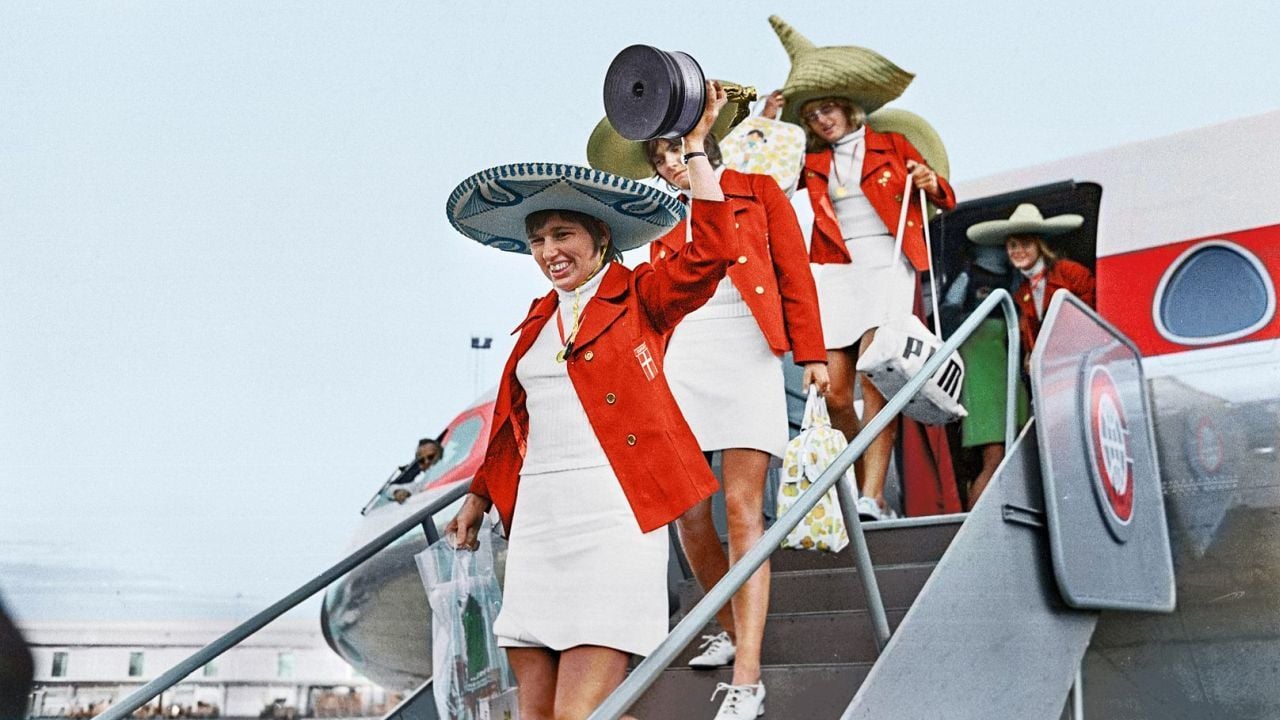
There was already an anniversary greeting at the airport – and more than 100,000 visitors regularly stormed into the stadiums.
The filmmakers are subject to the game scenes with atmospheric o-tones and audio material directly from the place of the event: from loud crowds in front of the stadium to fishing channels and goal celebrations to original comments from (international) reporters. Statements of several World Cup participants of yore can also be heard, who comment on selected players of play and remember an eCdoten realm of an extraordinary mega event under the Mexican sun.
In general, the interviews with the ex-players make a great charm of “Copa 71”. We get to know some of them better, for example the Mexican Silvia Zaragoza and the British Carol Wilson. In addition, other footballers who did not take part in the Copa 71, but were still active at a time, were far from being as well known and accepted as women's football as it is today. For example, defender Ann Stengård, who made her debut in the Danish national team in the mid-1970s. She sums it up with one of the most important sentences in the film: “I don't want to be put in a drawer.”
Prejudices and outdated gender roles
We pursue the path of the Danish and the other national women's football teams, dramaturgically mooned, from the first games to the final-and feel back into 1971. A time that was strongly shaped by socially grown, antiquated views, (apparently) rigid gender roles and harsh resentment. Especially towards women. Some street interviews and passers-by statements from the 1960s and 1970s tell. “This is a curiosity” or “that makes me laugh”, are the hard but at that time widespread judgments of some men who are asked about “women's football”.
Football playing women who roll in the dirt and chase behind a ball? Unimaginable for many men at the time. And also for the (of course exclusively male-occupied) leadership days of the FIFA World Football Association. “Copa 71” also works out how FIFA and some national football associations come across after the success of the 1971 tournament. They wanted to block the global spread of women's football and thus the decisive step towards global acceptance. With success: After the tournament, bans for women's teams hailed or they were prohibited from continuing to play in front of a larger audience in stadiums.

Ouch!
And in Germany? Although there was no ban, but the DFB still had some specifications: women had to play with a youth ball, tunnel shoes were not allowed, halves were shorter than among men. In other countries, FIFA and the national national associations also did everything to rob women's football the attraction and attractiveness. And so the COPA 71 has gradually been forgotten over the decades. FIFA has not officially recognized the tournament. It is just a shame that “Copa 71” only briefly touches some exciting topics and interesting questions, for example after the financial equality of gender in professional football.
Sometimes the instrumental musical accompaniment of the game excerpts and photos of the tournament has a bit dominant and emotionalizing. On the other hand, Ramsay and Erskine rely on well -chosen, suitable evergreens. You can hear empowerment classics of the 1960s and 1970s with a message. They come from strong, self-confident women in rock and pop history, including Carole King (“I Feel the Earth Move”) and Nancy Sinatra (“THESE BOOTS ARE MADE for Walking”).
Conclusion: Without the COPA 71, the first official Women World Cup in China would not have been possible, says former US national player Alex Morgan-and, in the truest sense, hits the black. Because the players of the 1971 World Cup were ahead of their time and did pioneering work, that shows “Copa 71” emphatically and in a captivating way.