
At some point, 79-year-old Maria Angeles (Carmen Maura) once says, there comes a point where you simply no longer understand your children. This is completely independent of whether you have been a good mother to them. Maryam Touzani's film “Calle Málaga – A Home in Tangier” leaves little doubt that Maria Angeles gave her daughter Clara (Marta Etura) a very nice childhood. And yet this situation has now arisen: Clara, who now lives in Madrid and hasn't visited her native Tangier in Morocco for a long time, sits there and tells her mother that she intends to sell her house. She doesn't have to ask because her deceased father left her the house as the sole heir…
… certainly without ever having even thought about such a constellation, Maria is sure of that. And yet Clara, affected by a bad divorce and working against economic hardship in an underpaid job in the care sector, now finds herself forced to take the radical step. She could no longer afford the rent for the apartment in Madrid, wanted to finally own her own home in Spain and therefore decided to sell the apartment in Tangier, where Maria Angeles has lived for over 40 years. She could eventually move to Spain and watch her grandchildren grow up there. And anyway, there is nothing to discuss, the decision has been made. Basta.
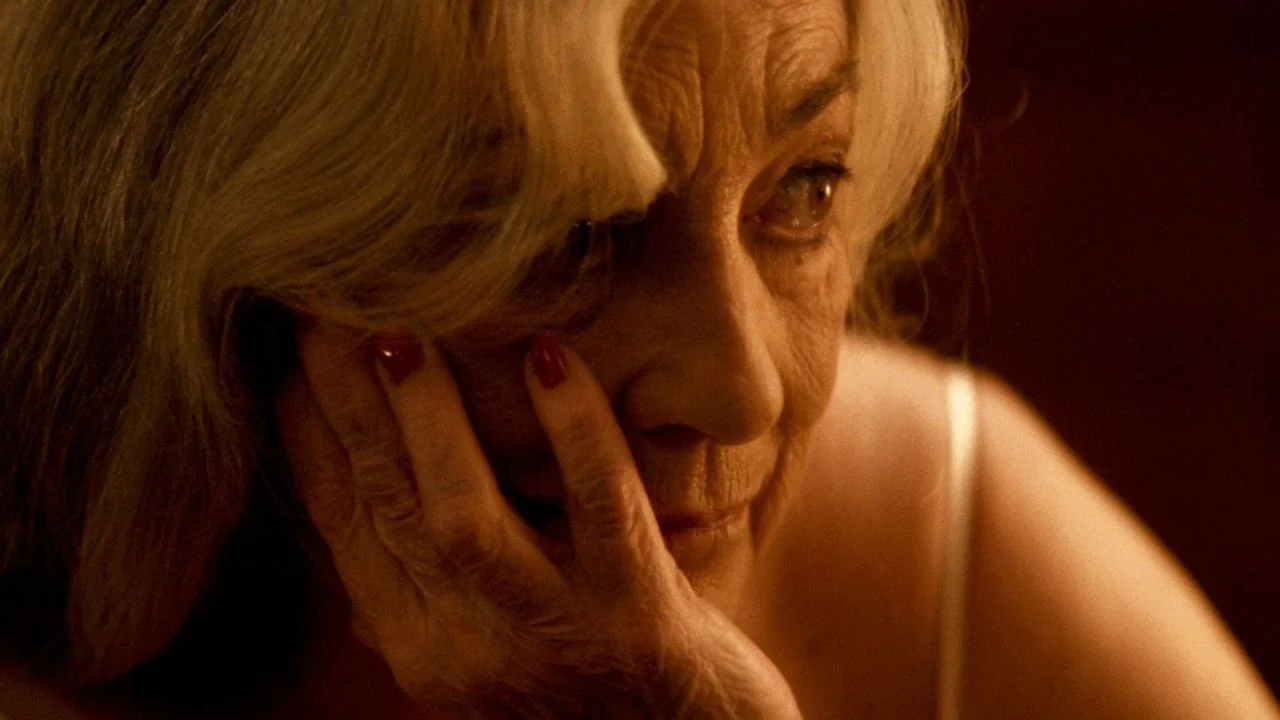
Once again fantastic: it's no coincidence that Carmen Maura is one of the really, really great divas of Spanish cinema!
It is an incredibly cold and brutal scene that occurs at the beginning of “Calle Málaga”. There are two people who were once close, and in a single conversation a chasm opens up that everyone knows will never close again. There are things that cannot be left unsaid, and for Maria Angeles this situation means an involuntary descent into one of the most frightening consequences of growing old: the loss of autonomy. Although she refuses her daughter's plan to take her mother with her to the “Old Homeland” in Spain – Maria Angeles comes from a family of refugees from Franco's fascism who, like quite a few people who were politically persecuted in those decades, settled in Morocco.
At the same time, her only alternative is to move to a retirement home in Tangier. At least until Maria, who is as stubborn as she is – with the courage of desperation – inventive, checks herself out again in order to secretly break into her apartment, which is for sale. There she can return to her old life, at least for a short period of time.
Painfully melancholic
Is “Calle Málaga” another sprightly pensioner arthouse dramedy for a middle-class audience in their prime? At first superficial glance, one might have to answer “yes”, especially when in the second half Maria Angeles' plan to open a sports bar in her apartment for the entire neighborhood and show FC Barcelona and Real Madrid games with home-made and cold beer takes off more and more. This plan enables Maria to gradually buy back the furniture she had long since sold for an apple and an egg – and then the initially grumpy antique dealer Abslam (Ahmed Boulane) turns out to be a suitable love object for an autumn romance that is at least somewhat liberally drawn and surprisingly sexually passionate.
Of course, that sounds pretty cliché at first, but between the expected plot points, the film still has a lot more to offer than just heartwarming and a bit uplifting entertainment cinema for best agers. Because Maryam Touzani knows very well that at the heart of her story there is a very real conflict that cannot be easily resolved – and that is why she spares us anything overly conciliatory that would have inevitably turned “Calle Málaga” into mere kitsch. In addition to the already excellent Carmen Maura (“Women on the Verge of a Nervous Breakdown”) in a beautiful older role, Marta Etura in particular carries the film, whose Clara acts with cruelty, but lets an insecurity shine through through her own desperation, which at the same time reveals sadness about her own callousness as well as an increasingly widespread awareness that she will not receive the forgiveness she wants.
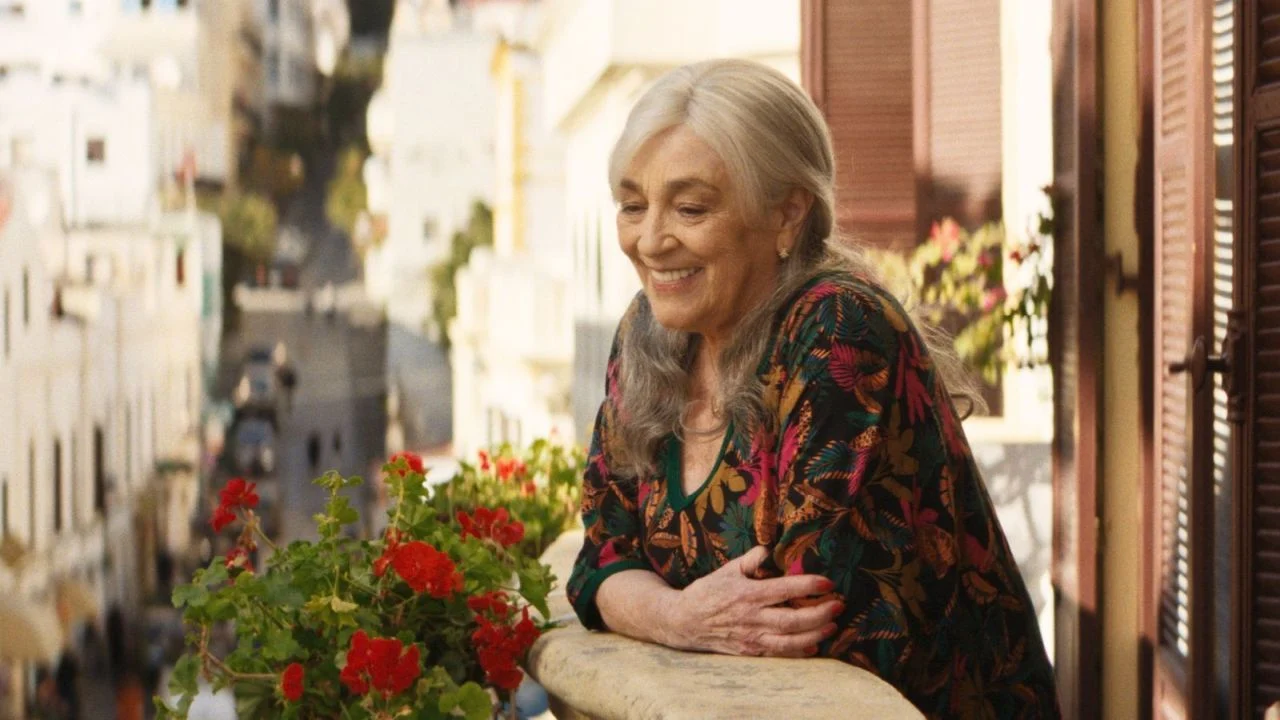
Another strength of the film: You also understand the daughter's position, even if you keep your fingers crossed for the mother.
That is actually the greatest strength of this film, which is only slightly charming at times and is then always gripped by a darker melancholy: that it dares to leave us with a lot of unresolved conflicts. Not necessarily hopeless, because a few fairytale-like things did happen. But everything is solved, everything is decided, everything is resolved in a smile and a hug and a great reconciliation – not everything is at the end of Maryam Touzani's beautiful film, which is perhaps often a little underestimated because of its proximity to the more well-trodden arthouse paths. No hugging, no learning. And that ends it with the aftertaste of a certain helplessness that definitely feels like real life.
Conclusion: You only briefly believe that “Calle Málaga – A Home in Tangier” is just another interchangeable arthouse dramedy about sprightly pensioners who assert their own autonomy using inventive means. Because Maryam Touzani's film is that too, but not only – and with the at least bittersweet ending, with a melancholy that is not so easy to embrace, it also exposes us to darker moods than we are used to in this branch of arthouse cinema.
We saw “Calle Málaga – A Home in Tangier” as part of the Around the World in 14 Films 2025 festival.