
Marcus O. Rosenmüller recently shot Black Forest crime novels and East Frisian mysteries for television. He attracted attention in the cinema with the biopic “Münter & Kandinsky”. Now he delivers one of the most difficult films of the year to endure, which appropriately begins with a warning: “This is not a representation, but reality.” The focus is on cruel human experiments in the Auschwitz concentration camp, but the director and his producer Alice Brauner, who was also responsible for the script, rejected any form of stylization. Instead, the distance-preventing, sober implementation is consciously based on repetitions of similar horror images.
For Alice Brauner, “Block 10” is a particularly personal concern. Her parents, Artur and Maria Brauner, both survived the Holocaust. Like her famous producer father (“Old Shatterhand”, “Hitlerjunge Salomon”) during his lifetime, she also fights against the one-sided culture of remembrance that arises when only the perpetrators are characterized, but not the victims. Brauner conducted intensive research, dealt with court records as well as with contemporary witnesses and their descendants – and ultimately wrote the absolutely ruthless script for “Block 10”.
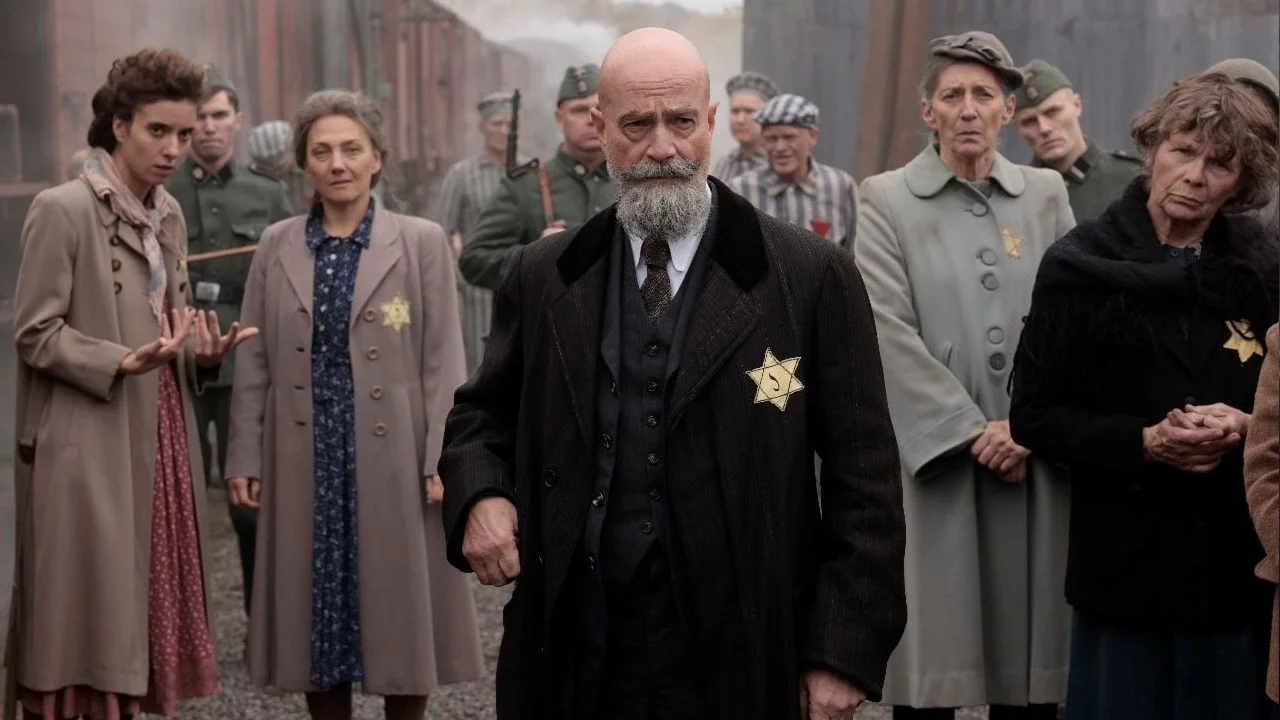
The Jewish doctor Maximilian Samuel (Christian Berkel) is blackmailed with his daughter’s life into helping the Nazis with their forced sterilization campaign.
In September 1942, hundreds of Jews were delivered to the ramp at the Auschwitz concentration camp. So does the gynecologist Dr. Maximilian Samuel (Christian Berkel), his wife and his 20-year-old daughter Liese Lotte (Sarah Maria Sander). Although he himself is spared as a doctor, from now on he has to follow the instructions of Prof. Dr. Carl Clauberg (Axel Prahl), who carries out forced sterilizations on women in Block 10. If he refuses, his daughter, who has now been taken to the extermination camp in Birkenau, is threatened with death…
For 45 years now, only documentaries and no feature films have been allowed to be filmed in Auschwitz. For the exterior shots of the titular “Block 10,” original 360-degree VR material of the entire facility was used for the first time. For reasons of authenticity, the film follows the perspective of the actors; there is no outside or bird’s eye view.
The first time you’ve seen images like this in a feature film
The well-known image of the prisoners arriving at the ramp is followed by a look into the empty corridor of Block 10, which was authentically recreated in the CCC studios in Berlin. From now on, Peter Krause’s camera (“Woodwalkers”) will only leave the rooms together with the actors. When she enters a room for the first time, she looks around exploratively. After the first careful exploration, she withdraws and concentrates entirely on the inmates and doctors.
Some fates stand out from the crowd – at least temporarily. However, it is usually difficult to distinguish the women – all with close-cropped hair and dressed in prisoner’s gray – from one another. So they remain mostly nameless. It’s not about individual fates that might provoke feelings, it’s about the industrialized horror itself and the serial suffering of the women in Block 10. A central motif is repeated over and over again: Immediately after a doctor has carried out one of the painful removals of a healthy ovary, the next procedure follows in the film. There are no dramaturgically cleverly placed breaks.
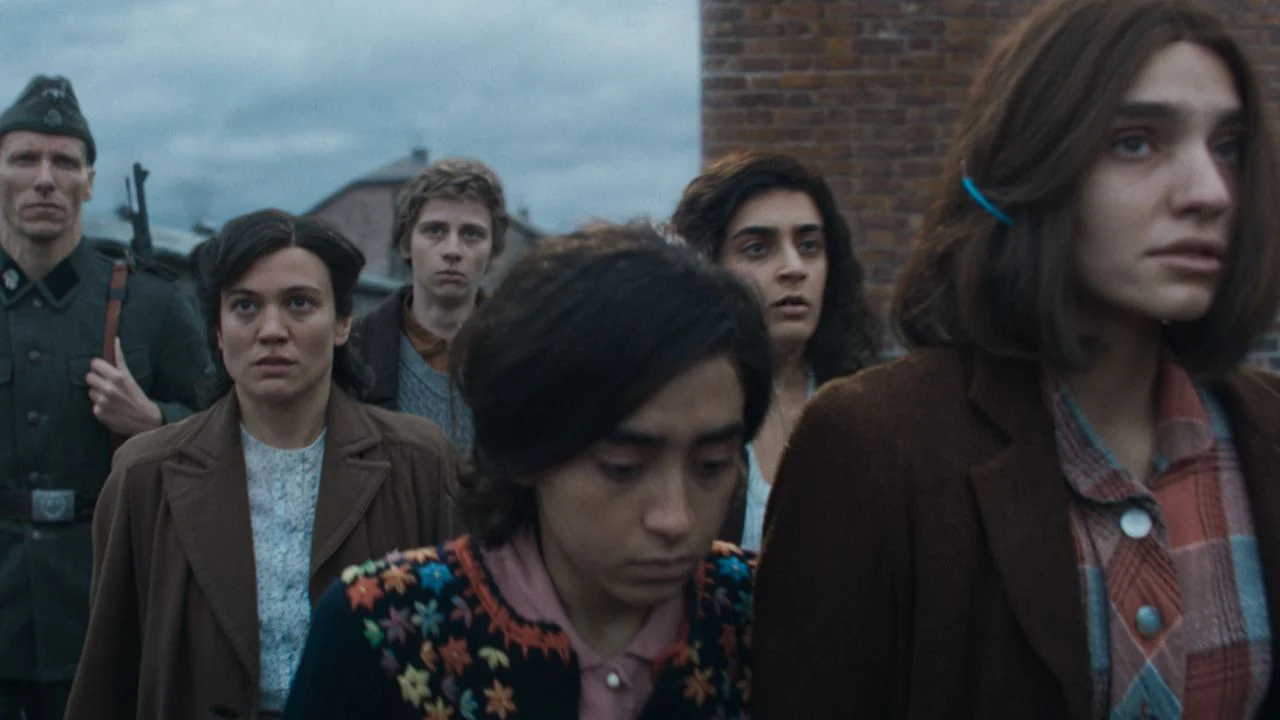
Rarely have the images in a feature film developed such direct, documentary power.
During filming, abdominal prostheses were used, which were cut with a scalpel and a protective metal plate was placed underneath. In order not to aestheticize medical instruments, they are only shown in their use and never in isolation – only the huge formalin poison syringe in the hands of Dr. Clauberg is deliberately emphasized in a striking way. In addition, the Nazi doctors remain emphatically one-dimensional in order to put a stop to any possible “alibi argument” from the perspective of the perpetrators from the outset.
The depiction of the exposed victims is also successful. With one exception in a mass nude scene, naked bodies are only seen in excerpts and from the perspective of the abusive doctor, because the dignity of the people who experienced this should be preserved. For the horrors that cannot be seen, there is a threatening, indefinite background noise that is assigned to the respective rooms. Marcus O. Rosenmüller does not simply reproduce the horrors of Auschwitz, he throws his audience right into the middle of it together with the helpless, blackmailed protagonist, without a net or false bottom.
Conclusion: “Block 10” is a feature film that still feels like a contemporary document and is not looking for attention, but for the truth. The main character’s moral dilemmas are also not ignored. Without the usual dramaturgical ellipses and cuts with which Shoah films aimed at the mainstream audience get out of trouble, in “Block 10” a frightening chapter comes to life in an appropriately radical and authentic way.
We saw “Block 10” as part of the 2026 Munich Film Festival, where the film celebrated its world premiere.